• Hi Guest !

    Welcome to the 500Eboard forum.

    Since its founding in late 2008, 500Eboard has become the leading resource on the Internet for all things related to the Mercedes-Benz 500E and E500. In recent years, we have also expanded to include the 400E and E420 models, which are directly related to the 500E/E500.

    We invite you to browse and take advantage of the information and resources here on the site. If you find helpful information, please register for full membership, and you'll find even more resources available. Feel free to ask questions, and make liberal use of the "Search" function to find answers.

    We hope you will become an active contributor to the community!

    Sincerely,
    500Eboard Management

HOW-TO: M104 / W124 Top-End Rebuild [Cylinder Head / Gasket]

Re: M104 / W124 Top-End Rebuild

:update:

Today (Sunday) I worked in two different sessions, totaling around 7 hours. The good thing is that I made a lot of progress in terms of the "little" jobs that all add up to movement toward getting the job completed. I would say that I'm now 80-85% complete with the job.

The first thing I did was to "check my work" from last night. Specifically, I double-checked my timing chain tensioner work by totally removing and then re-installing & re-torquing the timing chain tensioner. That didn't take too long, but just gave me peace of mind that I'd done the job right the first time.

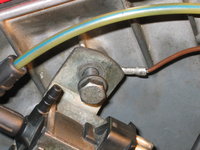
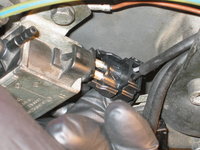
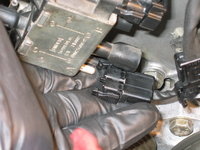
Next up was to reconnect the electrical connection between the car and the ETA, which was done via the large plug that I'd attached the bracket for last night. Closing the swiveling connector finished that job, as I clicked it into place with one finger.
IMG_4390.JPG IMG_4391.JPG IMG_4392.JPG


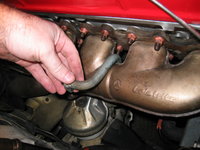
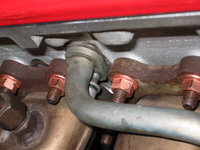
Then, I reconnected the vacuum line that goes from the rear of the exhaust manifold up to the vacuum check valve near the brake booster. This is a critical vacuum line that goes inside the cabin.
IMG_4393.JPG IMG_4394.jpg


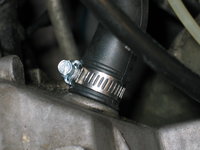
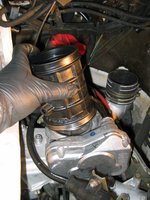
It was then time to connect the large rubber air hose that connects the crossover air pipe & MAF to the ETA. I had just replaced this piece some weeks before I began this job, so it was very fresh. It was a simple matter to slip it over the top of the ETA, and then swivel the ring clamp into a good position so that it is easily accessible if needed in the future. Then I tightened the clamp and all was good. I then stuffed a rag into the top of this rubber pipe so that no dirt or debris got into the ETA butterfly valve area.
IMG_4395.jpg IMG_4396.JPG IMG_4398.jpg IMG_4397.JPG IMG_4399.JPG


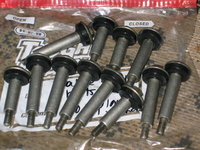
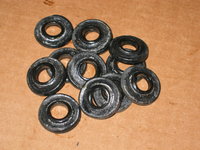
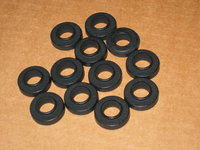
The next job to do was to replace the rubber o-rings that attach to the underside of the valve cover bolts. The old rings were very very smashed down after 20 years, so new o-rings were in order. These are important because they, in effect, seal the valve cover bolts as a source of oil leaks.
IMG_4400.JPG IMG_4401.JPG IMG_4402.JPG IMG_4403.JPG IMG_4405.JPG IMG_4406.JPG IMG_4407.JPG IMG_4408.JPG IMG_4409.JPG IMG_4410.JPG


Another important rubber piece is what I call the "half-moons," which sit at the rear of the cylinder head. These seal the cylinder head at the camshafts in the back, so I guess they could also be called something like "rear camshaft seals." They are included in the factory MB valve cover gasket kit.
IMG_4411.JPG IMG_4412.jpg IMG_4414.JPG IMG_4415.JPG IMG_4416.jpg IMG_4417.jpg


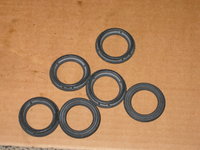
After doing the half-moons, then I replaced the rubber rings that seal off the spark plug holes from getting oil splashed down them under the valve cover. These just press into the underside of the valve cover, and were a quick install. These also came with the valve cover gasket kit from MB.
IMG_4418.JPG IMG_4419.JPG IMG_4420.JPG IMG_4421.jpg


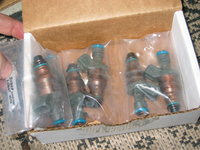
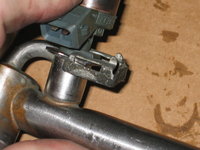
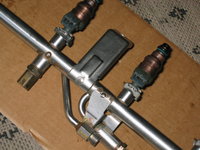
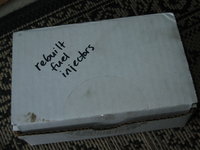
Then it was time to re-install the fuel injectors on the fuel rail, which I had thoroughly cleaned last night. These are pressed into the fuel rail, and then the thin metal clips are slid onto the base of the injector and the fuel rail flange to hold them together. This was a pretty straightforward install.
IMG_4422.JPG IMG_4423.JPG IMG_4424.JPG IMG_4425.jpg IMG_4426.jpg IMG_4427.JPG IMG_4428.JPG IMG_4430.JPG


continued in next post.....
 
Re: M104 / W124 Top-End Rebuild

The next task was quick -- to connect the large vacuum hose at the back of the ETA.
IMG_4431.JPG


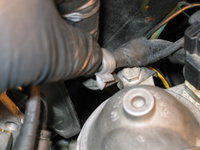
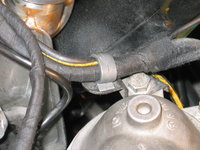
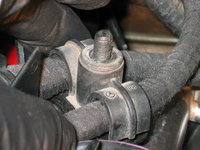
Then I spent some time neatening up the engine compartment, placing some lines and electrical wires back into their original routing and clips. In a couple of cases, I had to replace brittle clips I'd broken while removing the original ones, but I'd ordered everything I needed on my parts orders. Here are a couple of example photos. I also cleaned up the driver's side of the block a bit, which had quite a lot of encrusted grease and crud on it. I didn't get everything, but I got quite a lot of it.
IMG_4433.JPG IMG_4434.JPG IMG_4435.JPG


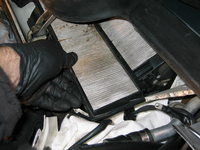
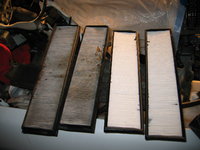
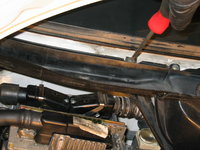
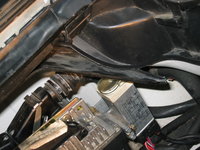
I then turned my attention to the center firewall area, and rain collection area under the windshield wiper. First off, I replaced the cabin air filters (which were about 3.5 years old) with new ones. Then I test-fit the section of inner, insulated center firewall that I'd recently obtained at the wrecking yard for $6.00. It was slightly busted up from age and heat, but NOWHERE NEAR as bad as the one that had been on the car, which you can see in one of my previous posts was shattered into many pieces.

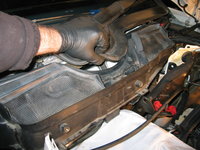
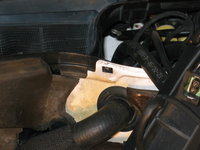
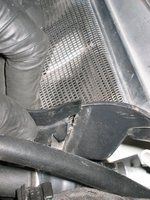
After test-fitting the piece, then I replaced the plastic center water drain and intake air piece, and then installed the center firewall insulation. Then I added the plastic center trim piece, and connected the rain gutter under the windshield on the driver's side to the center rain collection piece I'd just installed. The passenger side rain gutter (which I'd repaired recently with a few spots of JB Weld) will have to wait to be installed until after I get the car's computers and battery re-installed, so it will be one of the very last parts that goes on the car.

Here's how things looked during the engine firewall installation and the cabin air filter replacement.
IMG_4436.JPG IMG_4437.jpg IMG_4438.JPG IMG_4439.JPG IMG_4440.JPG IMG_4441.JPG IMG_4442.JPG IMG_4444.JPG IMG_4446.JPG IMG_4449.JPG IMG_4450.JPG IMG_4451.JPG IMG_4452.jpg IMG_4453.JPG IMG_4454.jpg IMG_4455.JPG


After the firewall and water management system was all installed, I test-fit the new plastic retaining piece (the old one had cracked from heat and age) that snaps into the inner firewall insulation piece. This retaining piece holds the positive battery cable and the wiring harness from sitting against the back end of the engine, and helps keep the heat down that can bake them.
IMG_4456.JPG IMG_4457.JPG IMG_4458.JPG


Then I attached the "Y" vacuum connector to the lower portion of the intake manifold. This was the final remaining vacuum connection to make to the lower portion of the manifold, and the two vac lines branch off to the fuel pressure regulator, and to the switchover valve at the front of the cylinder head.
IMG_4459.JPG


The next job was the biggie of the night ... the installation of the top half of the intake manifold. I carefully worked the intake manifold into place (being careful not to dislodge any of the green rubber seals) and lined up the two plastic openings with the large rubber hoses that connected the two halves of the manifold together. Then I moved the metal clamps up onto the hoses, and tightened them up. Now, the two halves were effective joined. Then I turned my attention to fastening the intake manifold to the cylinder head.
IMG_4460.JPG IMG_4461.JPG IMG_4462.jpg IMG_4463.jpg IMG_4464.JPG


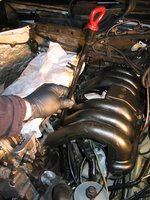
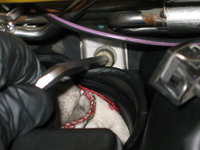
After working the manifold into place and attaching it tentatively with a few of the bolts, it was time to install the oil dipstick into the block. I carefully removed the paper plug I'd made some weeks back that fit into the dipstick hole, and slowly inserted the cleaned off dipstick housing into the block and down into the oilpan. Then I fastened it to the intake manifold with its single 5mm Allen bolt.
IMG_4466.JPG IMG_4467.jpg


Then I connected the two vacuum hoses that extended downward from the plastic portion of the intake to the area under the water pump, and the large connection on the intake manifold. These are the replacements for the two "fossilized" hoses that I accidentally broke off the nipples for (from the intake manifold) when I was removing it.
IMG_4468.JPG IMG_4469.JPG IMG_4470.JPG


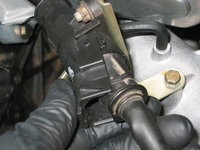
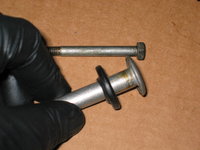
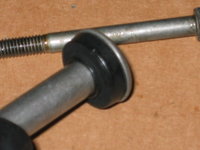
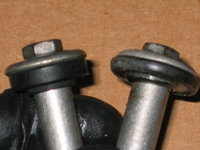
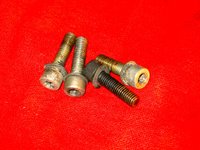
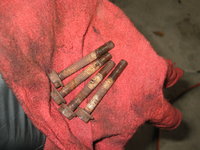
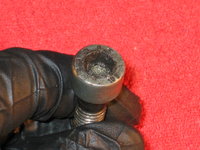
If you remember from earlier in the saga, I had accidentally stripped out the head of one of the Allen bolts that held the intake manifold to the cylinder head, and had to use a large pair of channel-lock pliers to remove it. I had ordered a couple of replacement bolts, and MB has superseded the Allen bolt to a reverse Torx bolt, so I used one of these to replace the stripped out one. I will obtain a used Allen bolt at the wrecking yard the next time I am there so that all of the bolts are of the same type, but this reverse Torx will do for now. Below is a comparison of the Allen and the reverse Torx bolts.
IMG_4472.JPG


Here's another view of the two hoses on the underside of the intake manifold, that I had to replace the "nipple" connection for.
IMG_4473.JPG


Lastly, I replaced the rubber vacuum connector on top of the intake manifold that connects to the transmission modulator.
IMG_4474.JPG IMG_4476.JPG


Cheers,
Gerry
 
Re: M104 / W124 Top-End Rebuild

I wonder why they superseded the Allen with a reverse Torx. Do you think the reverse Torx bolt allows for more torque and less likelihood of stripping?
 
Re: M104 / W124 Top-End Rebuild

I wonder why they superseded the Allen with a reverse Torx. Do you think the reverse Torx bolt allows for more torque and less likelihood of stripping?
MB has replaced a lot of their hardware with inverse Torx. I suspect it's something to do with their automated manufacturing process.

:scratchchin:
 
Re: M104 / W124 Top-End Rebuild

:update:

Monday, being a work holiday for me, was spent with about 4 hours out in the shop, doing various tasks. I would say that the job is now about 85% done, with two major components still yet to be completed:

  • re-installation of the water pump
  • re-installation of the exhaust manifolds

A couple of other minor things need to be done, including replacing the battery tray & battery, injection and ASR/ABS computers, and a few electrical and vacuum connections. Oh, and refilling the car's cooling system with coolant, and testing things.

That said, a lot of progress made today. Here's what I did.

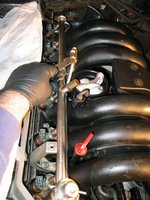
First job was one I was kind of dreading, but it ended up turning out pretty OK. It was the installation of the fuel rail, after tightening down the Allen (and one inverse Torx) bolts holding the plastic intake manifold section to the cylinder head. The rear-most bolts of the fuel rail were the ones I was most anticipating would be worst, but I ended up being able to get the lower-most one with a ball-end 6mm hex key, with a box-end wrench applied to the short end for leverage to tighten it. As the intake manifold bolts only required 25Nm of torque per MB spec, it wasn't a huge deal to tighten them.
IMG_4478.jpg IMG_4479.jpg IMG_4480.jpg IMG_4481.jpg IMG_4483.jpg IMG_4484.jpg IMG_4485.JPG


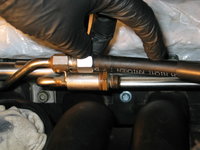
The fuel feed and return lines (which I'd already connected at the the fuel cooler) were next to be attached to the fuel rail, after the rail was bolted into place. This required 14mm and 17mm wrenches. Then I double-checked the other connections at the fuel cooler and all were good. This task too was despatched quite quickly.
IMG_4487.JPG IMG_4488.JPG IMG_4489.JPG IMG_4490.JPG


Here's what the engine looked like this morning, after installing the fuel rail and connecting the fuel lines.
IMG_4486.JPG


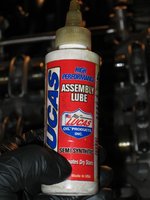
It was then time to turn my attention to the valvetrain again. I wanted to TRIPLE-CHECK things to ensure that the crank and cams were in time, so I rotated the engine two times yet again, and there were no signs of interference, and with the crank back at TDC, everything was in the right position at the cams. So I considered the engine timing a "done deal" and prepared to button things up top-side by using my trusty bottle of assembly lube (which I'd first used for the M117 rebuild) to lube the cam lobes and timing chain, for anticipated first startup in the next few days. I rotated the engine after applying the lube, to work it into the lifters and lobes, and along the timing chain and sprockets.
IMG_4491.JPG IMG_4492.jpg


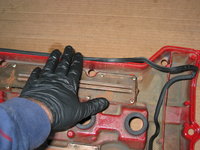
After that, I laid the powder-coated cam cover onto a piece of cardboard, and prepared to install the new MB gasket that fits into it. I carefully removed it from the packaging (note the neat MB hologram on the package!) and ran it along the groove cast into the edge of the magnesium cam cover.
IMG_4493.JPG IMG_4495.JPG IMG_4496.JPG IMG_4497.JPG IMG_4498.JPG IMG_4499.JPG


Here's a view of the gasket carefully pressed into its groove along the edge of the cover. Then it was time to flip the cover right-side up and CAREFULLY lower it into place on top of the cylinder head, taking care not to dislodge the gasket from its groove. I was successful at this the first time (it was MUCH easier than the M119) and I was able to reach around the back of the cover/head and feel (and look with a flashlight) to ensure that things were properly seated and sealed.
IMG_4500.JPG IMG_4501.JPG IMG_4502.JPG IMG_4503.JPG


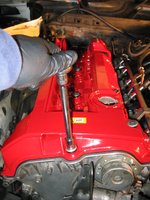
So far so good ... then it was time for the bolts that hold the cover to the head. Torque spec is 8.5 Nm.
IMG_4504.JPG IMG_4505.jpg IMG_4506.JPG IMG_4507.jpg


After tightening, here's what the cam cover looked like snugged down. I added to coup de grace by installing the MB oil cap to the cover, to keep debris from falling into the valvetrain later in the assembly process.
IMG_4508.JPG IMG_4509.JPG


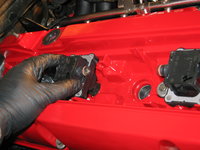
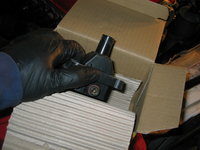
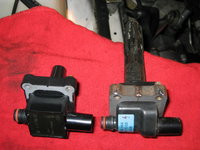
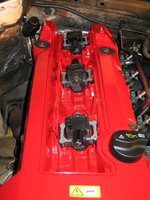
Then it was time to begin installing the ignition parts .. first the coil packs, including a brand-new Bosch coil pack (made in Slovenia) to replace the still-working but last remaining original coil pack on the car.
IMG_4510.JPG IMG_4511.JPG IMG_4512.JPG IMG_4513.JPG IMG_4514.JPG IMG_4515.JPG IMG_4516.jpg


I then installed the ignition wires that connected the coil packs to the two spark plugs that each controlled. I consulted my carefully drawn diagram (from when I disassembled things) for the correct, factory routing of the ignition wires.
IMG_4517.jpg IMG_4518.jpg IMG_4519.JPG


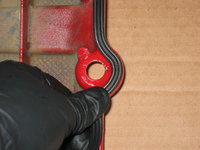
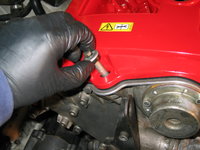
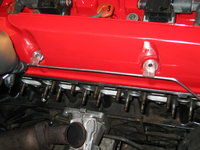
After doing that, then I had an "oops" moment ... I had forgotten to attach the thin, metal EGR tube that ran along the valve cover on the passenger side of the motor from the EGR valve to the switchover valve on the front of the engine. So, I had to remove two of the valve cover bolts and insert them through the eyes on the EGR tube to get it into the proper place. This only took a couple of minutes, though.
IMG_4520.JPG IMG_4521.JPG IMG_4522.jpg IMG_4523.JPG


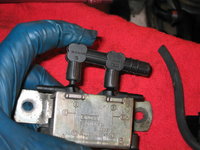
Here's a close-up view of the switchover valve, after I cleaned it up with a bit of brake fluid. Notice one of the air intakes/filters on the bottom is broken off, so I'll need to acquire another one at a junkyard. This doesn't affect the operation of the valve, as this is open to the air, but it is missing a small screen. But I have seen plenty of these valves at the yards, so I'll snag one at my next visit.
IMG_4525.JPG

Continued in next post....
 
Re: M104 / W124 Top-End Rebuild

I then connected the vacuum line from the "Y" connector at the lower part of the intake manifold to the fuel pressure regulator, and then it was time to tackle the upper wiring harness, and wrestling its various tentacles into place, and connecting the ends to the proper connectors. This included additional ignition connections at each of the coil packs.
IMG_4526.JPG IMG_4527.JPG IMG_4528.JPG IMG_4529.jpg IMG_4530.JPG IMG_4531.jpg IMG_4532.jpg


After that, I connected the cam position sensor, and both of the knock sensors on the block to their connectors from the main wiring harness.
IMG_4533.JPG


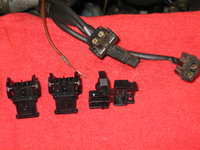
I noticed a lot of broken plastic wiring connectors from the wiring harness, where connecters were exposed to a lot of engine heat. I had anticipated this and had ordered spare connectors with one of my parts orders, so I proceeded to spend the next 15 minutes changing out cracked and broken electrical connectors with factory fresh MB connectors.
IMG_4534.JPG IMG_4535.JPG IMG_4536.JPG IMG_4537.JPG IMG_4538.JPG IMG_4539.jpg IMG_4540.JPG IMG_4548.JPG IMG_4549.JPG


Because all of the major wiring harness wires were now routed correctly, I could use the cable collector to "pin" the positive battery and upper wiring harness cross-wires up against and behind the inner firewall, using the new plastic piece I'd ordered from MB to replace the broken/cracked one I'd been using (which didn't work). It was nice to see things behind the engine as MB had designed them to be !!

IMG_4544.JPG


Here is the engine with the center cover test-fitted over the ignition components, and with the black plastic section over the wiring harness on the left (driver's) side of the engine. This is largely what the engine is going to look like, visually, when the project is done.
IMG_4545.JPG IMG_4546.JPG IMG_4547.JPG

Cheers,
Gerry
 
Re: M104 / W124 Top-End Rebuild

The most amazing part of this whole thread is the fact that you had a day off for MLK Day.....I'm in the wrong profession:banghead:..:nothing:
 
Re: M104 / W124 Top-End Rebuild

:update:

Tonight I spent about 2.5 hours out in the shop after having dinner with the family, doing a couple of errands, and a couple of household chores out and about the property. Musically, it was back to a "Van Halen anthology" night. Conclusion: David Lee Roth and Sammy Hagar Van Halens are a tie. DLR = partying, chicks, fun. SH = more mature viewpoint on life, love, substance. Both are cool.

I tackled the first of two major remaining tasks tonight: installing the water pump. (The remaining biggie is to reinstall the two exhaust manifolds, and I hope to get to that tomorrow night ... or at least one per night for the next couple of nights).

Anyhoo, last night I pulled the water pump (which I'd cleaned up a couple of weeks ago) out of my parts bin in preparation for tonight's install, and noticed that there was a flattened o-ring where the pump body sits against the engine block. Oy ... I hadn't ordered that o-ring, and didn't want to re-install the pump with that nasty, hardened o-ring on there. So, I called the MB of Houston North dealer, and lo and behold, they had a couple of the o-rings in stock. I stopped by their parts department on my way home from work and snagged one .. it was under $5, even with their stupid matrix pricing. But I was willing to pay it, because I needed it. MB Houston North is totally refurbishing their service and walk-up parts building -- it is totally under construction, so the service department is using the Smart portion of the dealership as the service office, and the wholesale parts counter in the adjacent building as the parts department.

So, here's a view of the pump, along with the removal of the old o-ring and installation of the new one.
IMG_4550.jpg IMG_4551.JPG IMG_4552.JPG IMG_4553.JPG IMG_4554.JPG IMG_4555.JPG


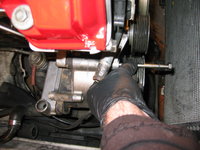
After replacing the o-ring & cleaning/scraping the area where it sits, I carefully lowered the pump down into position (after removing the plug that kept debris from entering the block's water passage) and put it up against the block. Then I inserted one of the four 7mm Allen bolts that held it down, and after that, the other three. Two of them were VERY difficult to tighten; the two lower-most ones because they were at a bad angle and also difficult to see. I had to use a combination of a 3/8" ratchet with extension and wobbly connector, with the Allen socket, to get to them. For one of the bolts, the only way to tighten it was with an Allen key, but I got it tight enough to seal the water passage I think.
IMG_4556.jpg IMG_4557.JPG IMG_4558.JPG IMG_4559.JPG IMG_4560.JPG


After working for about an hour, I got the water pump all snugged down and where it needed to be. Whew ... that was a job. I would not be happy at having to replace M104 HFM water pumps very often...it's not a very fun job. Here's what things looked like with the pump in position. You can see that I also reconnected the two coolant temperature sensors for the engine computer, and for the ACC system.
IMG_4561.JPG


Then I decided to re-install the switchover valve on the front of the cylinder head. This was just held by two 10mm bolts, so not a big deal, but I forgot that there was a brown ground wire from the upper wiring harness that was attached to the top-most bolt, so I had to remove it so I could attach the ground wire's eyelet. No big deal. Then I reconnected all of the electrical connectors in the area from the wiring harness.
IMG_4562.JPG IMG_4563.JPG IMG_4564.JPG IMG_4565.JPG IMG_4566.JPG


The last big task of the night was to re-attach the coolant crossover pipe (coolant return pipe), which goes across the front of the engine, right where the green rubber seal is that seals the upper timing cover to the lower cover. It was held by a 10mm bolt at the water pump (and sealed by a new o-ring) and a 5mm Allen bolt that goes into the cylinder head just forward of the new timing cover seal.
IMG_4567.JPG IMG_4568.JPG IMG_4569.JPG


The last (minor) task was to reinstall the rubber gasket that seals the top of the inner firewall against the underside of the engine hood. This just took a minute was done.
IMG_4570.jpg

Tomorrow night I'll tackle the exhaust manifolds, and reconnect the crossover pipe, and re-install the battery and engine computers that sit behind the battery. I'll probably also bolt up and reconnect the smog pump again. I need to study up on the serpentine belt routing for this engine.

Cheers,
Gerry
 
Re: M104 / W124 Top-End Rebuild

:update:

Well, a bit more fit & finish work tonight, as I continue to "put off" installing the exhaust manifolds. They weren't HORRIBLE to remove (certainly not nearly as bad as the manifolds & rear crossover pipe were on my M117) but for some reason I've not really been wanting to be underneath the car. So, procrastinate I do, while I button up the other things that need it....

Tonight was about 2.5 hours out in the shop.

First off tonight was a good thought ... the very diminished number of parts left in my parts bin at the beginning of the night, which is significantly smaller than what you see below, as I type this...
IMG_4571.JPG IMG_4572.JPG

First little task was to attach one of new plastic cable clips to hold the leads to the emissions valve and the front knock sensor to the thermostat flange. It's these little parts that really make a job "pop" and keep things factory, as MB intended them.
IMG_4574.JPG IMG_4575.JPG


Then I finished up with the two fasteners that hold the upper wiring harness to the top of the engine, and I replaced the plastic top cover over the main portion of the harness. Since everything was already routed, it was pretty much a piece of cake.
IMG_4576.JPG IMG_4577.JPG IMG_4578.JPG IMG_4579.jpg IMG_4580.jpg


From there, I went over to the driver's side inner fender to mount the two connectors that attach to the emissions valve, and then I installed the black plastic cover over the electrical connections. So far, so good.
IMG_4584.JPG IMG_4585.jpg


Then it was time to turn my attention over to the battery compartment, where I needed to route the wiring harness cable to the HFM computer, reattach the ABS/ASR computer, and install the freshly powder-coated battery tray. This too was a fairly quick job. I'd been using the battery area as a repository for tools, brake cleaner, rags, printed FSM instructions, and brake cleaner cans. So I had to clean it out before I could proceed....
IMG_4586.JPG IMG_4587.JPG IMG_4588.JPG IMG_4589.JPG


The two computers went in in quick order, requiring just a Philips head screwdriver.
IMG_4590.JPG IMG_4591.JPG IMG_4592.JPG IMG_4593.JPG IMG_4594.JPG IMG_4595.JPG IMG_4596.JPG


Then I installed the rain gutter on that side, which I'd previously repaired the drip tray for. Also easy and relatively quick.
IMG_4597.JPG IMG_4598.JPG IMG_4600.JPG


After doing that, I moved over to the smog pump, and swiveled it back into its proper position, and installed the 13mm long bolt that secured it.
IMG_4601.JPG IMG_4602.JPG


Lastly, I cut new red rubber vacuum connectors to replace the old ones, from a meter of new tubing I'd ordered from MB. These pieces of red tubing connect the air injection valve at the smog pump, to the switchover valve. After that I reconnected the coolant hose that goes from the lower part of the overflow tank to the crossover pipe, that goes directly to the water pump.
IMG_4603.JPG IMG_4604.JPG IMG_4605.JPG IMG_4606.JPG


As a last step, I did break out the two exhaust manifolds and put them out, so that my next job is to actually INSTALL them. I'll also replace the thermostat (in the water pump) as one of my next tasks. May as well do this, as it's very easily accessible.
IMG_4607.JPG

Cheers,
Gerry


P.S. For those of you who read this far ... here's a 17MB AVI movie file as a little video tour of the engine compartment, taken tonight with my 10 year old digital camera :)
 
Re: M104 / W124 Top-End Rebuild

:update:

It is with some regret, and yet some relief, that I can report that this job is now coming to a close. Effectively it is now done, with only the coolant to refill, the oil to drain and change, and the initial startup and shakedown work to do. Today, I worked for around 7.5 hours in the shop, and the job is now 98% done.

Here's how things shook out today.

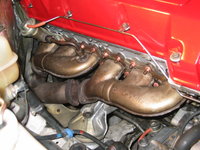
The first order of business was to get both of the exhaust manifolds reattached to the cylinder head, and then to get them connected to their respective downpipes. None of the bolts and nuts are horribly hard to get at, but it did require a fair bit of work under the car, and I hadn't been under there for probably 6+ weeks !! Here is the photographic sequence of how the exhaust manifolds went on.

First, a few photos as I prepared to install the manifolds. I removed the two (identical) MB exhaust manifold gaskets from their packaging. They were thin, two-ply pressed sheet metal, and you can see the Elring logo and the MB star on them. I carefully installed the rear-most one on the cylinder head studs.
IMG_4608.JPG IMG_4609.JPG IMG_4610.JPG IMG_4611.JPG IMG_4612.JPG

Next, I fitted the exhaust manifold into place on the studs, and began bolting into place from above and below.
IMG_4613.JPG IMG_4614.JPG


Then I fitted the second exhaust manifold gasket into place.
IMG_4615.JPG


Going back to the first manifold, now that it was mostly in place, I removed a couple of the copper bolts to install the EGR valve mounting plate, and tightened that into place.
IMG_4617.JPG IMG_4618.JPG IMG_4619.JPG IMG_4620.JPG


Fitting the EGR valve itself into place wasn't a huge deal, but I did have to use a large screwdriver to lever the EGR tube away from the firewall so that I had enough room to attach it to the end of the EGR valve. Then I attached the other end of it to the exhaust manifold, and finally screwed in the self-tapping 10mm bolt into the mounting plate. I cut a new piece of red rubber EGR vacuum line and then connected the EGR valve to the small tube that runs along the valve cover.
IMG_4616.JPGIMG_4621.jpg IMG_4622.JPG IMG_4623.JPG


Then I fit the front-most exhaust manifold into place.
IMG_4624.JPG IMG_4625.JPG


This is what both manifolds looked like when totally bolted up at the top and bottom.
IMG_4626.JPG


Next, it was time to attach the manifolds to the downpipes. The downpipe bolts were quite rusty, so to make them thread a bit easier I lightly coated the tips with a thin coat of motor oil. The four of them installed fairly easily, though I had to lever one of the downpipes over about a centimeter so that it mated up with the end of the manifold. Once I got the bolts started, things popped right into place.
IMG_4627.JPG


The last task with the exhaust manifolds was to re-attach the air injection line, which goes from the smog pump to an opening in the cylinder head. There was a small gasket that had to be attached to this line before it could be bolted up. A quick, single 5mm Allen bolt was all it took to attach that line. I did the same at the smog pump, where the rubber hose attached to the check valve there.
IMG_4628.JPG IMG_4629.JPG IMG_4630.JPG


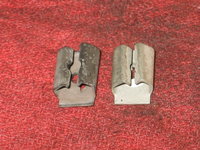
I had almost forgotten the small task of replacing several of the metal, press-in clips that anchor the under-engine encapsulation panel. These clips get sprung from repeated use, so I replaced the ones that were not working as they should. These are cheap and only take 30 seconds (if that) each to replace, so it's a nice maintenance item to do ... even on the .036 !!
IMG_4631.JPG IMG_4632.JPG IMG_4633.JPG


A quick double-check of the ignition coil packs and lines indicated that everything seemed to be in order, so it was time to button up the center panel that covers these important items. Six screws hold this center panel to the cylinder head.
IMG_4634.JPG IMG_4635.JPG IMG_4636.jpg


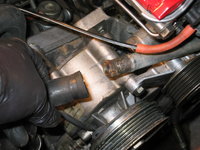
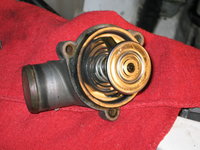
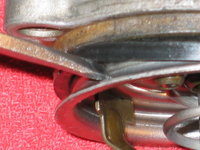
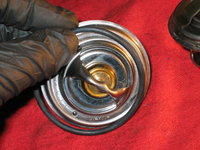
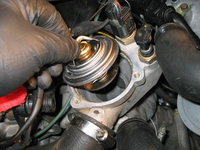
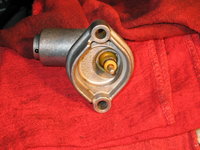
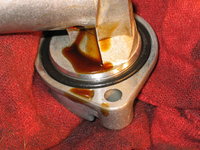
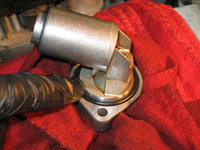
From there, it was another important, but opportunistic job: replacing the thermostat. The old one was working fine, but it's a cheap part to replace, and easy to do, so it was a no-brainer to just take care of this task. I had planned to do it earlier, but then figured it would be easier with the water pump installed on the car instead of sitting on the workbench. The thermostat cover is held on by three 10mm bolts, and was a 5 minute job to replace. Don't forget to replace the rubber o-ring !! The old thermostat was a Wahler, and I replaced it with a Behr unit. Both were made in Germany. Then I reattached the upper radiator hose.
IMG_4641.jpg IMG_4642.jpg IMG_4643.JPG IMG_4644.JPG IMG_4645.JPG IMG_4646.JPG IMG_4647.JPG IMG_4648.JPG IMG_4651.JPG IMG_4652.JPG IMG_4653.JPG IMG_4654.JPG IMG_4655.JPG IMG_4656.JPG


continued in next post....
 
Re: M104 / W124 Top-End Rebuild

If there was an award for great threads on any forum this one would certainly be the winner.
 
Re: M104 / W124 Top-End Rebuild

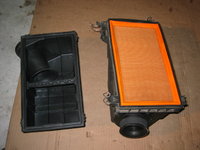
Next up, I turned my attention to the airbox. I had a new air filter, so I opened up the airbox, dumped out the dirt, bugs and other crap that was in the bottom of it, and removed the air filter. It was a Mahle filter, made in Austria. The old filter was actually quite clean, so I was pleasantly surprised.I installed the new Mann filter (made in Brazil) that I had on hand, and buttoned the box back up.
IMG_4657.JPG IMG_4658.JPG IMG_4659.JPG IMG_4660.JPG IMG_4661.jpg


Then I pressed the box into place, with its two prongs at the bottom that fit into rubber grommets, and a flat metal and rubber piece that holds it to the inner fender.
IMG_4662.jpg

Next, I removed the pieces of shop towel and lint-free cloth from the oil filter housing, blew it out, and installed a new Mann oil filter. I will run new, cheap oil and filter for around 500 miles or so, before changing it for good stuff. This should be something that you do after any rebuild. Mainly I want to catch any dirt and crap that fell into the engine when it was open.
IMG_4663.JPG


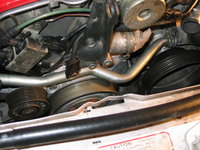
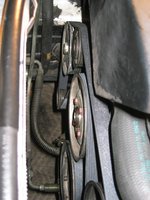
It was then time to install the serpentine belt. I had the routing diagram close at hand, so it was not a big deal to install this. It went smoothly and was a one-man operation, which was nice.
IMG_4664.JPG IMG_4665.jpg


The dreaded fan clutch was up next -- probably the second biggest job of the day behind the exhaust manifolds. First, let's take a look at the fan clutch bolt. First, you can see my original fan clutch bolt (left) which is nearly rounded off. That is a factory replacement bolt that I got off of a wrecked car's M104 engine on the right. And lastly, you see the new bolt (a Torx bolt) that the original Allen style bolt has been superseded to by MB. Unfortunately, I am not aware of a stubby factory Torx socket to tighten and loosen this new superseded bolt, and the clearance is very tight behind the radiator. So, I opted to use the spare (wrecking yard) fan clutch bolt that I had.
IMG_4666.JPG IMG_4667.JPG IMG_4668.JPG


And here you see my little palm ratchet, which makes short work of inserting and snugging down the fan clutch bolt, and gives you a bit of extra room before you have to bring in a ratchet for the leverage to tighten it down to its specified 40+ Nm of torque.
IMG_4671.JPG


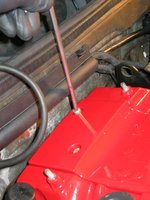
Then it was time to attach the crossover air pipe to the intake system. This was one of the very first things I removed from the engine at the start of the job, and also one of the very last things I re-attached to the car. I positioned the ring clamp on the top of the intake air boot so that it could be accessed from underneath the intake manifold with a long, flat-blade screwdriver. Here you see me tightening it.
IMG_4672.JPG IMG_4673.JPG IMG_4674.JPG IMG_4675.JPG


Then I reattached the intake air temperature sensor, a simple plug-in.
IMG_4676.JPG IMG_4677.JPG


And I re-attached the MAF to the airbox with two metal spring clips, snugged down the crossover tube to the valve cover with two nuts, and aligned the rubber boot correctly before clamping everything down.
IMG_4678.jpg IMG_4679.JPG IMG_4680.JPG


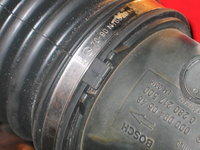
Notice that the rubber corrugated air boot has a specific orientation, as indicated by the large square flange on one end, and the arrow pointing into the groove on the other end.
IMG_4681.JPG IMG_4682.JPG


Then I attached the upper wiring harness connection to the MAF itself.
IMG_4683.JPG IMG_4684.jpg


Here is the fan and fan clutch, and then I'm installing the fan shroud around the fan. It's important to get the tabs at the bottom of the shroud inserted into their slots correctly. You have to get under the front of the car to view that and ensure that everything is lined up correctly.
IMG_4685.JPG IMG_4686.JPG IMG_4687.jpg


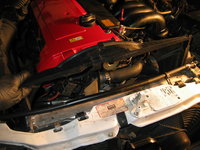
And here's the engine ... everything all back together and completed !!
IMG_4689.JPG


The last task of the night was to install the battery. I didn't connect it to the car yet. Rather I decided to stick it on my Battery Tender for the night, to get it trickle-charged and ready to start the car tomorrow.
IMG_4690.JPG


A few jobs still remain:
  • filling the coolant at the radiator and overflow tank
  • draining the oil from the pan, and pouring in new oil for a short-term oil change
  • double checking all my work
  • doing some additional cleaning at the A/C compressor, alternator and other areas under the car that had heavy oil and dirt accumulation due to the oil leak from the front timing cover
 
Re: M104 / W124 Top-End Rebuild

This has been very cool to watch this whole operation. Thanks, Gerry.
 
Re: M104 / W124 Top-End Rebuild

Unbelievable instruction to all of us who might, one day, get the time/energy/gumption to attempt something like this.

Thanks for your attention to detail Gerry!
 
Re: M104 / W124 Top-End Rebuild

:update:

Well, I am happy to say that all came to a very happy conclusion today, and I consider the job (for the most part) complete. More on the initial startup later on in this post.

Here are the final details that I did to prepare for "first start."

I had trickle-charged the battery overnight, and my Battery Tender showed that the battery was fully charged early this afternoon when I went out to the shop. Here's a photo of the charger on the battery, right before I removed it.
IMG_4693.JPG


Then I installed the last piece onto the car ... the rubber seal for the outer firewall / rain gutter area. Then I cleaned the area at the very base of the windshield, and put the rubber strip back that runs along the bottom of the windshield.
IMG_4694.jpg


At the same time, my 560SEC was a few hundred miles overdue for an oil-change, so I decided to multi-task, and did an oil- and filter-change on that vehicle. Of course, the oil of choice is 20W-50 Brad Penn oil. After doing this, I tightened up the valve cover bolts just a smidge, as I was seeing some seepage of engine oil from the valve cover gaskets on that car in recent months.
IMG_4695.JPG IMG_4696.JPG


Back to the M104. While the SEC was getting a drink of fresh oil, the E320 wagon was getting a drink of MB coolant. I re-used the coolant I'd initially drained from the car, which I had stored in a couple of gallon containers. I had drained approximately 7 out of the 10 quarts total capacity for the system, with the engine block, radiator and coolant overflow reservoir drains. So I filled up the overflow tank here, and then removed the upper radiator hose and used a long funnel to pour the remaining coolant directly into the radiator. Then I re-attached and clamped the upper radiator hose at the thermostat housing.

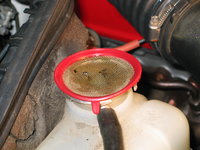
You can see the crap that I strained out of the coolant as I poured it into the overflow tank. Yikes !!
IMG_4697.JPG


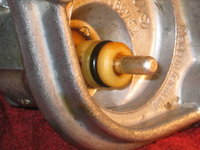
Next, I drained the engine oil, in preparation to pour in 7 quarts of new, cheap Shell 10W-30 motor oil and a new filter. This is mainly for break-in purposes, to capture any dirt and crap that got into the engine while it was apart. When the engine oil was drained, I worked to remedy the source of another moderate engine oil leak -- the engine oil level sensor, which is embedded in the side of the oilpan. It has an o-ring that can leak, and since I had ordered a new o-ring in anticipation of just this situation, it was time to change it. The sensor is only held in with two 10mm bolts, so it was a quick matter to remove it and replace the o-ring while the last remnants of the engine oil were draining into my drain pan.
IMG_4698.JPG IMG_4699.JPG IMG_4700.JPG IMG_4701.JPG IMG_4702.JPG IMG_4703.JPG IMG_4705.JPG


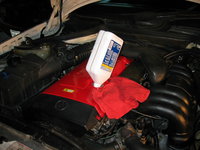
Here's the fill of new oil, which will be fun the first few hundred miles and then replaced with my normal 15W-40 oil.
IMG_4706.JPG


Anticipating my imminent startup, my wife brought me out a steaming hot cup of coffee to enjoy before I started the car, which I most certainly did.
IMG_4707.JPG


And then, it was time for the big test. I put two large, fresh pieces of cardboard underneath the engine, along with a work light shining on them, so that I could view anything dripping down or leaking from the engine while it was running. At the same time, I got two fire extinguishers and placed them within easy reach, for safety purposes (remember that I had replaced two of the fuel lines underhood).

I double-checked that the cap on the coolant overflow reservoir was ajar. I did NOT want it to be twisted tight, so that the cooling system would NOT develop pressure. This is very important on the first-run so that the head gasket obtains a seal between the head and block, and there is no cooling system pressure that could pressurize the system and force coolant into places where it should not be in the yet-to-be-sealed head gasket.

Then I reconnected the battery terminals to the freshly charged battery, and got behind the wheel of the car for the first time in nearly eight weeks. I turned the key to the accessory position, and immediately heard the ETA cycle when it was energized. The purpose for doing this was to pressurize the fuel system and get fresh fuel up to the fuel system underhood. I waited a few seconds, and turned the key OFF and then to ACC again, and repeated the process for a third time.

It was time to let 'er rip. I turned the key to START, expecting a long cranking period, or a cacophony of noise or other problem. Instead, the engine caught and started immediately ... in about one second. It immediately started running, and settled into its cold-engine "higher idle" mode and then gradually started settling down to its normal 550-600 RPM idle. Everything sounded proper and normal (and very familiar) in terms of the engine idling characteristics.

As the engine began to heat up, I saw the needle begin to come up off the 40C marker. I went inside the car and turned the heat to HOT and the fan to HI, with the system setting on ECONOMY so that it would radiate maximum heat. At the same time, smoke began rising off of the exhaust manifolds and downpipe as the chemicals I'd used to clean things, including the head and block, began to burn off. This "burnoff" process continued for a good 30 minutes, as the car continued to get up to full operating temperature.

For quite some time, there was NO heat coming out of the vents. This meant that the system had not yet burped itself, so I kept checking the coolant temp and waiting for the heat to make its appearance out of the vents. The gauge climbed very briefly to 80C....then to 100C....and then it started coming back down to a proper 87C temperature. The top of the radiator was only warm at this time, indicating that coolant hadn't made its way fully through the system yet. Still no heat out of the dashboard side heat vents.

FINALLY, after about 25 minutes, the heat made its appearance, and then I knew the system had burped itself and coolant was getting through to the heat exchanger. The coolant level in the overflow tank had gone down by about 2 inches as well (I had overfilled it knowing this would likely happen) and it was just about right.

I ran the engine for 45-50 minutes total, so that I knew it was nice and hot and that the new head gasket had sealed itself. Looking under the car, there were NO drips of anything liquid. I shut down the car after 50 minutes, as I have some additional work to do to reset the car alarm (which was absent mindedly flashing the parking and taillights), reset the car's radio code, and re-attach the encapsulation panel underneath. Before I do that though, I will run the car for a good 50 miles to ensure that nothing is leaking, and do a good shake-down session. Perhaps I'll drive the car to work one day next week.

In any case, I was relieved to know that there were no major, worst-case issues that happened with the car. I am hopeful that the leak from the timing cover was fixed, but only time will tell on that one. The good thing is that in the future, I will be able to do that timing cover sealing job in approximately 4-6 hours of labor, as it is fairly simple.

I am looking forward to getting the car out on the road in the next few days to see if there are any differences in the driving characteristics, particularly when the car is cold. The reason I say this is because the timing chain was stretched a few degrees, and although the car's computer can compensate for this, it will be interesting to drive a car that is 100% "in time" as it came from the factory (i.e. the new chain and crank/cam timing settings are spot on). Also with the rebuilt fuel injectors, I am eager to see if there are any changes in efficiency and fuel mileage in the future.

It was a moderately challenging project, but not nearly as daunting as it would have been had I not done my M117 a few years back. I am happy to report that I didn't have a SINGLE washer, nut, bolt or other part left over after the process. Everything went right back together the same way it came apart.

I do have a few extra parts that I'd ordered, some of which were things like gaskets and seals that ended up being part of larger kits such as the head gasket kit, or the timing chain tensioner. In the coming days or weeks, I will list these extra parts in the Parts for Sale section, if anyone is interested in them.

I hope this was a good and informative read, and that it inspires someone to do this job in the future (or helps them out of a tough spot). I went out of my way to replace all soft items I could, and I realize that most folks will just want to re-use their stuff that is still good and be done with it. That is fine, but it's all incremental labor, and none of the parts for this job are expensive (the timing chain tensioner was the single most expensive part, at around $120). The head gasket kit was also just over $100, and the valve cover gasket kit was also one of the more expensive parts, but well under $100. Most of the hoses and gaskets were $30 and below, and it's 100% worth replacing them while everything is out of the car.

I replaced the ETA (as it was original) and this was $400 for a very slightly used one on eBay -- if you need to get a used one with a "good" date range (i.e. 1999 or later) you can get them for around $250 or so on eBay. The wiring in these does not deteriorate like the originals do. It is significantly more expensive to get your stock one rebuilt -- Beckmann quoted me $800 to rebuild mine. No, thank you.

For you M104 owners on the board, this is a totally do-able project. I'll do some follow-up posts that detail the types of tools that I needed to do this. Nothing was too exotic, fortunately. A special thanks to GSXR for his help with the eBay ETA, and to quicksilver500 with the suggestion of getting the injectors tested and cleaned. Thanks guys! And thanks to the rest of you for your continuing encouragement, and for inspiring me to do this job in the first place.

Cheers,
Gerry
 
Re: M104 / W124 Top-End Rebuild

Congratulations, Gerry! I'll bet you are relieved that it started without a hitch. I'm not sure I understand the part about letting the car heat up and sealing the head gasket before closing the radiator cap. Is this a Mercedes thing or is it applicable to all engines when replacing the head gasket? I never did this on the American heads I've replaced.
 
Re: M104 / W124 Top-End Rebuild

Congratulations, Gerry! I'll bet you are relieved that it started without a hitch. I'm not sure I understand the part about letting the car heat up and sealing the head gasket before closing the radiator cap. Is this a Mercedes thing or is it applicable to all engines when replacing the head gasket? I never did this on the American heads I've replaced.
Jon,

Here's an excerpt from the M104 service manual. Basically it says that the engine has to get up to operating temperature (so it swells & forms a seal) before the cooling system can be pressurized. That could mean pressure-testing the system, or letting the system build up pressure naturally as/when it reaches operating temperature. So it is advised to leave the coolant reservoir cap off so no pressure develops in the cooling system, during the first running of the engine.

Screenshot 2014-01-26 22.18.34.jpg

Hope this helps explain things.

Cheers,
Gerry
 
Re: M104 / W124 Top-End Rebuild

That is interesting. Do you think the FelPro gaskets like the one in this pic would be the same or does Mercedes have some special type of head gasket?
 

Attachments

  • IMG-20111202-00424.jpg
    IMG-20111202-00424.jpg
    1.2 MB · Views: 23
Re: M104 / W124 Top-End Rebuild

Jon,

Here's an excerpt from the M104 service manual. Basically it says that the engine has to get up to operating temperature (so it swells & forms a seal) before the cooling system can be pressurized. That could mean pressure-testing the system, or letting the system build up pressure naturally as/when it reaches operating temperature. So it is advised to leave the coolant reservoir cap off so no pressure develops in the cooling system, during the first running of the engine.

View attachment 25861

Hope this helps explain things.

Cheers,
Gerry

That is very interesting. I've never had to do that on a rebuild. It must be either an MB precaution or the gasket material.
 
Re: M104 / W124 Top-End Rebuild

Thanks for the great thread. I have this job in my future. I was very impressed at how realistic your time estimate was. The m104 has a 1.9 bar (27.5 psi) expansion tank cap. I believe this extra pressure compared to other setups is the basis for the precaution. I think the main concern is to not do a pressure test to check for leakage before the head gasket heat bonds.
 
Last edited:
Re: M104 / W124 Top-End Rebuild

Congratulations Uncle Gerry!

Many thanks for the considerable effort that you expended on creating/writing/photographing/chronicling this epic journey for us!

Regards,
Eric
 
Re: M104 / W124 Top-End Rebuild

Great work Gerry. You must have a tremendous sense of accomplishment. And I will bet that you are excited to drive it today.

BTW, how well will it do in the snow/ice tomorrow? Weird weather! It's dry up here in Dallas, but cold and very windy today.
 
Re: M104 / W124 Top-End Rebuild

All 124's have either 1.2 bar or 1.4 bar caps... early cars were 1.2, I'm not sure when it changed to 1.4 bar. None were 1.9 bar.

However, the cap max rating has nothing to do with actual pressure in the system. With engine temps under 100C, the pressure is usually under 8 psi (about 0.6 bar). Data courtesy of Jeremy on the Fruitbird forum (click here), he plumbed in a pressure gauge to his 124 and monitored the actual pressure vs engine temp. Max pressure he saw was 10-12psi (0.8-0.9 bvar) on warm days.

I think the MB warning is to not pressure test the system to full rated spec (1.2-1.4 bar) before the engine has been run up to temp. I don't think it's required to run the engine to temp with the cap removed, but it definitely wouldn't hurt, and is probably cheap insurance.

:seesaw:
 
Re: M104 / W124 Top-End Rebuild

Well, it's a moot point as the engine was run up to (and at) operating temp for more than 40 minutes in the garage (it is still up on the ramps). I was advised (outside of the MB service manual) to do this on the first run.

It is likely I will take it out for its shakedown cruise tonight before bringing it back into the garage for further work:

  • Full cutting & buffing of external paint
  • Removal of front seats and repair of driver's seat drive cable
  • Full interior vacuum & detail

The car has factory ASR (actually the full "cold weather" package, which is unusual on the S124) so it does fairly well in inclement weather, although having had the car only in Portland and in Houston, there hasn't been a lot of inclement weather to speak of. The cold weather package includes things like orthopedic seats, ASR, front seat heaters, and front headlight wipers.

Cheers,
Gerry
 
Re: M104 / W124 Top-End Rebuild

I read the list of the work you had done at the machine shop at post #126. Did they clean your lifters? Does the m104 have hydraulic lifters? My 1995 wagon, with 223,000 miles, acts like it has a sticky lifter on the rare occasion it sits for a week, which is maybe twice a year. after reading this thread I am leaning toward having the head worked on at machine shop rather than just changing the gasket. Can anyone recommend a machine shop with MB experience in CT? Thanks

I was wrong when I said my car has a 1.9 bar expansion tank cap, it is a 1.4 bar cap like gsxr said
 
Re: M104 / W124 Top-End Rebuild

They did remove and clean the lifters. It is 100% absolutely a "no-brainer" if the head comes off, NOT to spend the few hundred bucks to have the head gone through, pressure tested, valve guides checked, valve seals replaced, and things cleaned up.

Too many of the how-tos out there are just slap-dash head gasket replacements, instead of making the time and effort to go through things with a fine-tooth comb and replace the things that wear out with age. For example, I found numerous things (such as the bubbled out fuel lines underhood, and the ETA internal wiring) that were major issues and would (sooner or later) have resulted in significant problems.

With regard to the lifters. Yes...the M104 has hydraulic "bucket" tappets, which have a round, flat top that the cam lobe presses downward to activate the valve. While probably not as low-friction as a roller setup, it does have far less friction than the more antiquated "cam follower" setup that the M117 has. It is extremely common, when a 104 has sat for a few days, or in very cold weather, for a bit of lifter ticking for a few seconds (say 2-5 seconds) at a cold startup. I have heard this on my own motor perhaps once or twice a year since I first got the car. This is NOT a problem, just a loss of hydraulic pressure in the bucket over a few days, that is rapidly replenished when the oil pump starts pushing oil around after the car starts up. Sometimes lighter weight oils can help this situation.

When I first started my M104 last night, I had a clicky lifter, but it went away after a few minutes as the engine and oil heated up, and got circulated around, and the lifter got refilled with oil. The sound actually concerned me enough after I ran the engine last night, that I pulled the cam cover and did a microscopic inspection of the lobes on both cams, overall lubrication, and of the buckets themselves (height when lobe pressure is off of them) to ensure that there was no wear. I had the cover off, inspection completed, and cover back on and bolted up in 30 minutes. Thankfully, the M104 cam cover has better rear clearance than the M119 does in the W124, so it's much easier to get the cover on & correctly sealed the first time ;)

My reason for doing this was paranoia, because when I did my M117 three years ago I actually DID have a lubrication issue after the rebuild (I had reused the cam oiler tubes & just changed the plastic fittings) that resulted in the flattening of one of the new cam's lobes, requiring replacement with a second, TRW cam and a new oiler tube. I now have 33,000 trouble-free miles on this rebuild.

A competent machine shop is worth their weight. It will introduce some extra time into the equation while you're waiting for the head to be done (2+ weeks in my case) but it allows you to do some other inspection and maintenance, make parts orders, and otherwise get ready for when you do get the head back.

Talk to Jimbo, he knows good MB related resources in CT.

Cheers,
Gerry
 
Re: M104 / W124 Top-End Rebuild

Tonight I did a shakedown drive of about 10-12 miles, to put the car through its paces. All 100% well, no major leaks other than a few residual drops of oil that were up on the engine and moved through the motion of the car. All in all, the car drove about the same from what I could tell. The only difference was that it felt a bit "crisper" or more "eager" and perhaps the torque curve (for example if you hit the gas pedal to kickdown 1-2 gears) seemed a bit steeper/stronger, but that could just be my butt dyno talking there.

One small oil leak overnight came from the oil level sender, despite the new o-ring that I had installed. Bottom line is that this level sender is leaking from the INSIDE rather than from the external housing where it mates to the outside of the oil pan. The only thing I can do is to replace it, so I ordered a new one tonight. They are only $45, so not a horribly expensive part. I knew the old one was leaking significantly but thought I'd try to put a new o-ring on it to seal it up, but it was leaking from the plastic where the plastic electrical plug mates up to the aluminum housing, and thus was not really fixable. Since it was likely original and lasted nearly 20 years, I can't complain I guess.

Also, after working fine last night and the first part of tonight, the oil pressure needle started flickering up and down as the engine/oil started getting hot. I don't know if this is a "lower electrical wiring harness" issue with a bad wire, but seeing as I have a spare sender, I will replace the sender and examine the pressure sender electrical wire for any obvious visual faults. I am pretty sure my oil pressure is quite good.

I'll replace these two parts later this week when I get them, and in the meantime clean up the mountain of tools out in the shop that I used for this massive job. It's probably going to take me an hour and a half-can of brake cleaner just to clean everything up.

Here is this job, by the numbers:

Total shop labour hours: 74
Total hours for transit (machine shop, auto parts store, etc.): 8
Total "slop time" hours (admiring work, checking work, researching, etc.): 11
Total cups of coffee drank in shop: 9
Total 60-ounce (1.75-liter) styrofoam cups drank of Diet Coke: 18
Total cans chlorinated brake cleaner used: 17
Total cans engine degreaser used: 1.5
Total quarts of oil used: 7

Cheers,
Gerry
 
Re: M104 / W124 Top-End Rebuild

Here is this job, by the numbers:

Total shop labour hours: 74
Total hours for transit (machine shop, auto parts store, etc.): 8

Cheers,
Gerry

Nice job.

When we did these under warranty, the head gasket
replacement paid 7.5 hours.

If the head was warped (rare) we got an extra 2.0 hours.

So, with diagnosing about a 10.0 hour job.

I think Chilton time is around 14 or 16 hours.
I'll ckeck my time guide when I get home.
 
Re: M104 / W124 Top-End Rebuild

One small oil leak overnight came from the oil level sender, despite the new o-ring that I had installed. Bottom line is that this level sender is leaking from the INSIDE rather than from the external housing where it mates to the outside of the oil pan. The only thing I can do is to replace it, so I ordered a new one tonight. They are only $45, so not a horribly expensive part. I knew the old one was leaking significantly but thought I'd try to put a new o-ring on it to seal it up, but it was leaking from the plastic where the plastic electrical plug mates up to the aluminum housing, and thus was not really fixable. Since it was likely original and lasted nearly 20 years, I can't complain I guess.
The OM60x engines use the same sender, and I had the same leak... as you discovered, if it leaks between the plastic center and the housing, you must replace the entire sender. :(


Also, after working fine last night and the first part of tonight, the oil pressure needle started flickering up and down as the engine/oil started getting hot. I don't know if this is a "lower electrical wiring harness" issue with a bad wire, but seeing as I have a spare sender, I will replace the sender and examine the pressure sender electrical wire for any obvious visual faults. I am pretty sure my oil pressure is quite good.
If your pressure sender is original, that is likely the cause. A new one should fix it. It isn't likely to be the lower harness, nor the gauge, but you'll find out soon enough. The aftermarket Hella sender is $10-$20 cheaper via aftermarket sources, compared to parts.com, and is identical to OE.

Congrats on the successful marathon!

:wootrock:
 
Re: M104 / W124 Top-End Rebuild

If your pressure sender is original, that is likely the cause. A new one should fix it. It isn't likely to be the lower harness, nor the gauge, but you'll find out soon enough. The aftermarket Hella sender is $10-$20 cheaper via aftermarket sources, compared to parts.com, and is identical to OE.
This is a case when I ordered both senders from AHAZ, although I could have gotten the oil level sender a few bucks cheaper via parts.com. However I saved enough with the oil pressure unit (and I threw on a few Hengst M104 oil filters) that it made sense to just go with AHAZ for the entire order. I'll do a how-to in the near future with the level sender. I did one already on the M119 for the pressure switch.


Nice job.

When we did these under warranty, the head gasket
replacement paid 7.5 hours.

If the head was warped (rare) we got an extra 2.0 hours.

So, with diagnosing about a 10.0 hour job.

I think Chilton time is around 14 or 16 hours.
I'll ckeck my time guide when I get home.
Thanks, Sir! Yeah I looked up the book time and it seemed to be around 10-11 hours. I did a LOT of cleaning, inspection, replacing of parts, more cleaning, and extra jobs such as replacing the thermostat, various o-rings and seals, etc. and of course this would add to the time that any tech would charge for such a job. I stopped by my indy last night on the way home from work to give him a final progress report on the job, and he said that for such a job, they'd probably charge around $2,000-$2,500. He figured that their techs would put 20-25 hours into the job, but wouldn't be able to actually charge the client for all the time spent. He also said they wouldn't bother with all the cleaning and parts replacement that I did, unless required (i.e. me replacing the third [original] coil pack with a new one).
 
Re: M104 / W124 Top-End Rebuild

Thanks, Sir! Yeah I looked up the book time and it seemed to be around 10-11 hours. I did a LOT of cleaning, inspection, replacing of parts, more cleaning, and extra jobs such as replacing the thermostat, various o-rings and seals, etc. and of course this would add to the time that any tech would charge for such a job. I stopped by my indy last night on the way home from work to give him a final progress report on the job, and he said that for such a job, they'd probably charge around $2,000-$2,500. He figured that their techs would put 20-25 hours into the job, but wouldn't be able to actually charge the client for all the time spent. He also said they wouldn't bother with all the cleaning and parts replacement that I did, unless required (i.e. me replacing the third [original] coil pack with a new one).

On that note, I know that it takes me many times longer to fix something or a maintenance. And there is no way to make the time value of money equation work. But like most of you, doing my own work gives me a huge sense of accomplishment AND I know how well the job was done. There is no second guessing as to whether part of the job was done improperly (unless I screwed it up.) I learn so much from tinkering with cars and it is a huge part of my ownership enjoyment.

I think where I "save" money on cars is being in touch with the car when a part is starting to fail. Or to know typical problems that are easily addressed that might save you from a tow or an incompetent mechanic who throws parts at a car.

It is clear to me that Gerry has a passion for cars and their mechanicals, but also to document and share his vast knowledge. That is demonstrated by this site and by his thorough DIYs - not to mention his large circle of friends in the car community.

We love you man....
 
Re: M104 / W124 Top-End Rebuild

OK, Chilton time for just the head gasket is 14.5 hrs.

Replace cylinder head, transfer all parts, etc is 18.5 hrs

So I was close on my guess.

If I was doing my car at home , (if I had a M104) I would spend 3 or 4 hrs a night, maybe. I am on the lazy side.

I would guess, head off first night.
Disassemble for machine shop second night.
Clean everything nice third night.
Reassemble and have head ready to go on forth night.
Install head and button up fifth night.

So more then likely a 20 hour job for me at home.

In a shop, on a lift with air tools, off one day, together the next work day head returns, due to machine shop.
 
Re: M104 / W124 Top-End Rebuild

Will you keep us posted as to how the pressure sender replacement goes on the m104?

I have heard about how difficult the front cover/ Bermuda Triangle reseal is. Posts 146-147 make it look easy or at least doable. Was it really as straight forward as it seems? How much time do you think it would take you to do just that part of the job? I have a headgasket that is weeping but the front cover is a mess. I am wondering about doing just the cover now while the weather is cold and leaving the rest for warmer weather. I get a chuckle out of the fact that our prime car repair season is the exact opposite of yours.
Thanks again for the great posts.
 
Re: M104 / W124 Top-End Rebuild

You can do a Bermuda Triangle re-seal in probably 4-6 hours, MAX, the first time you do it. If you know what you're doing and take good care, 2-4 hours. I am sure clarkz71 is probably under 2 hours in doing this type of job. The main thing is to have the right sealants (there are two different types required that MB specifies). I always recommend that you go with the sealants (or EXACT aftermarket equivalent) that MB specifies .. do NOT use generic RTV for the corners of the BT, if you know what I mean.... use the MB stuff or its industry equivalent.

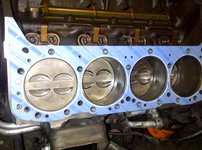
I have only started repairing cars in the winter this year. When I did my M117, I had a "window" of good weather from Feb. 1 through May 1, so I started that job on Feb. 28 and finished May 1, literally. I have expanded my window now to pretty much year around as I have gotten acclimated to Houston/Texas weather. On Sunday it was 73F outside, so I did that finish-up work in shorts and t-shirt. Same thing in the photo where I was fitting the head onto the block.....

Cheers,
Gerry
 
Re: M104 / W124 Top-End Rebuild

Yes, I'd say 2.0 hrs. is about right.

I remember a valve cover gasket was 0.9 hrs.

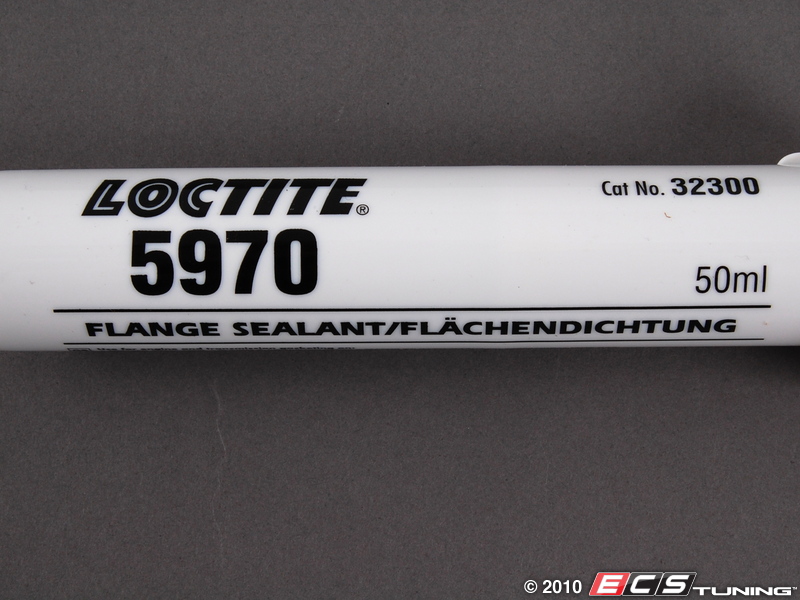
The Mercedes sealant is Loctite 5970

proxy.php
 
Re: M104 / W124 Top-End Rebuild

Will you keep us posted as to how the pressure sender replacement goes on the m104?

I have heard about how difficult the front cover/ Bermuda Triangle reseal is. Posts 146-147 make it look easy or at least doable. Was it really as straight forward as it seems? How much time do you think it would take you to do just that part of the job? I have a headgasket that is weeping but the front cover is a mess. I am wondering about doing just the cover now while the weather is cold and leaving the rest for warmer weather. I get a chuckle out of the fact that our prime car repair season is the exact opposite of yours.
Thanks again for the great posts.
There is a HOW-TO on the oil pressure sender on the M119 here. It's the identical part to the M104.


OK, Chilton time for just the head gasket is 14.5 hrs.

Replace cylinder head, transfer all parts, etc is 18.5 hrs

So I was close on my guess.

If I was doing my car at home , (if I had a M104) I would spend 3 or 4 hrs a night, maybe. I am on the lazy side.
A very large chunk of my time spent was photographing and documenting in my notebook the work done, step by step. I would say this would have been a total of 10 hours of the total time, probably close to an hour a night just spent on taking photographs and writing/drawing in my shop notebook. I believe in total that I took well over 700 photographs.


The upper timing cover reseal is not that difficult of a job. For the record when you do it, you MUST pre-insert the lower left bolt into the cover BEFORE you re-install it, as it is impossible to insert the bolt into the cover after it is mounted because the long bolt cannot clear the smog pump pulley.

It is also important to add the center o-ring seal to the rear of the timing cover, at the time you replace the cover back onto the end of the cylinder head. This ring comes with the MB head gasket kit. It's easy to forget these two items.

Lastly, one common mistake is that people insert the metal pin that goes through the upper left (driver's side) timing chain rail BEFORE they install the timing cover. It is EXTREMELY difficult to replace the timing cover when this timing chain pin is in place, because it provides an additional item that must be fit "straight on" into its hole in the timing cover before the cover is pressed backward over the green "C" seal and into place. This often causes the seal to be "rolled" and thus not form a good seal. So the strong advice here is to only press in the timing chain rail pin AFTER the timing cover is pressed and bolted into place.

Cheers,
Gerry
 
Re: M104 / W124 Top-End Rebuild

By the way, as an additional resource for those who may do an HFM-injection M104 top-end rebuild in the future, here is a listing of the individual vacuum connections under the hood. I documented these as a "checklist" so that when I put everything back together, I had the correct color vacuum lines routed from the right place TO the right place.

Hope this helps folks.

Cheers,
Gerry

M104.99X Vacuum Line Reference Table

[TABLE="class: grid, width: 700, align: left"] [TR] [TD]Line Number
[/TD] [TD]Line Color
[/TD] [TD]Routing Description
[/TD] [TD="align: center"]Repl?
[/TD] [/TR] [TR] [TD]1
[/TD] [TD]yellow w/white stripe
[/TD] [TD]Changeover valve to transmission control vac line (by brake booster)
[/TD] [TD="align: center"]Y
[/TD] [/TR] [TR] [TD]2
[/TD] [TD]black
[/TD] [TD]Connection from intake manifold to transmission modulator
[/TD] [TD="align: center"]Y
[/TD] [/TR] [TR] [TD]3
[/TD] [TD]black
[/TD] [TD]Connection from EGR valve (exhaust manifold) to switchover valve via small, thin metal pipe externally routed along cylinder head
[/TD] [TD="align: center"]Y
[/TD] [/TR] [TR] [TD]4
[/TD] [TD]black w/white stripe
[/TD] [TD]Connection from switchover valve to air pump switch valve, passenger side
[/TD] [TD="align: center"]Y
[/TD] [/TR] [TR] [TD]5
[/TD] [TD]yellow w/white stripe
[/TD] [TD]Connection from switchover valve dual rubber vacuum connector to vacuum check valve at "Y" rubber fitting at lower intake manifold
[/TD] [TD="align: center"]Y
[/TD] [/TR] [TR] [TD]6
[/TD] [TD]black w/white stripe
[/TD] [TD]Connection from "Y" rubber fitting at lower intake manifold to fuel pressure regulator
[/TD] [TD="align: center"]Y
[/TD] [/TR] [TR] [TD]7
[/TD] [TD]white
[/TD] [TD]Connection from intake manifold to "pressure sensor"
[/TD] [TD="align: center"]Y
[/TD] [/TR] [TR] [TD]8
[/TD] [TD]large diameter black
[/TD] [TD]Connection from ETA to "regeneration valve" on driver's side inner firewall
[/TD] [TD="align: center"]Y
[/TD] [/TR] [/TABLE]
 
Re: M104 / W124 Top-End Rebuild

On that note, I know that it takes me many times longer to fix something or a maintenance. And there is no way to make the time value of money equation work. But like most of you, doing my own work gives me a huge sense of accomplishment AND I know how well the job was done. There is no second guessing as to whether part of the job was done improperly (unless I screwed it up.) I learn so much from tinkering with cars and it is a huge part of my ownership enjoyment.

I think where I "save" money on cars is being in touch with the car when a part is starting to fail. Or to know typical problems that are easily addressed that might save you from a tow or an incompetent mechanic who throws parts at a car.

It is clear to me that Gerry has a passion for cars and their mechanicals, but also to document and share his vast knowledge. That is demonstrated by this site and by his thorough DIYs - not to mention his large circle of friends in the car community.

We love you man....

I'm sensing another bromance.....:smiley_emoticons_ro:
 
Re: M104 / W124 Top-End Rebuild

I was making my first parts order today to do this job on my wife's wagon. The dealer showed both sealants you listed as no longer available. They use A 003 989 98 20 10 which describes itself as "surface sealing". They had no suggestion as a replacement for the sealant for the corner "dabs", which to my mind is the most important sealant. Any ideas?
 
Re: M104 / W124 Top-End Rebuild

I was making my first parts order today to do this job on my wife's wagon. The dealer showed both sealants you listed as no longer available. They use A 003 989 98 20 10 which describes itself as "surface sealing". They had no suggestion as a replacement for the sealant for the corner "dabs", which to my mind is the most important sealant. Any ideas?
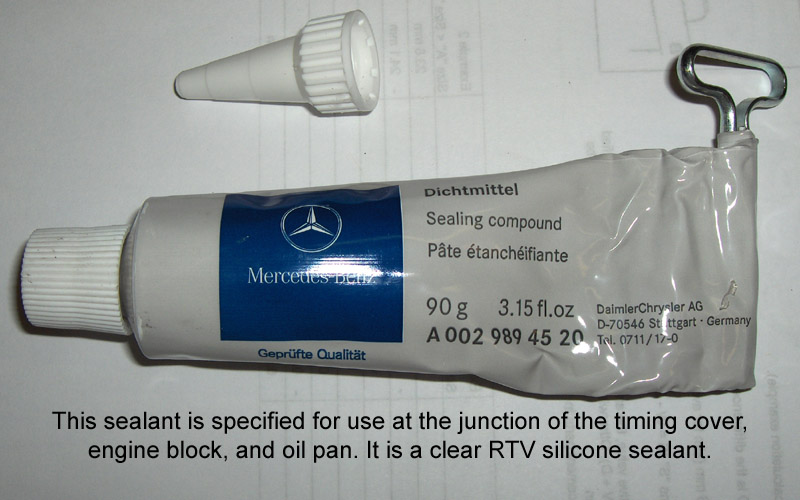
From my parts list, these are the two sealants that MB specifies for the job:

Capture1.GIF

Capture2.GIF

The orange anaerobic sealant is used for both the timing cover sealing surfaces, and the intake cam solenoid. The item being sealed should be installed within 10 minutes of this sealant being applied.

The clear RTV sealant is used for the "dots" or "globs" at the ends of the timing cover seal. It is best to install the part being sealed and let this cure at least overnight before continuing further. Meaning install the timing cover and seal (with the globs of sealant) and wait overnight to let it cure.

Cheers,
Gerry
 
Re: M104 / W124 Top-End Rebuild

003-989-98-20-10 is the black/gray sealant that many techs like to use as a universal replacement. It's claimed to be Loctite 5970, which is supposed to be similar or identical to "Right Stuff".

I am not sure where this should or should not be used. My experience with 003-989-98-20-10 is that it takes a VERY long time to set, it remains sticky/gooey for like 1-2 weeks. That probably is irrelevant for most folks, but something to keep in mind if you use it. I haven't yet removed items which were assembled with it, so I don't know how difficult it is to clean off.

The anaerobic sealants are very easy to clean, they turn into a dry powder when you scrape the old residue. About a million times easier than cleaning old RTV.

proxy.php


:5150:
 
Re: M104 / W124 Top-End Rebuild

The Mercedes sealant is Loctite 5970

proxy.php

Did you guys miss this?

This is also available from BMW

And it sets up real fast, unless it's expired, which in that case never sets up.

Shelf time is only 1 year, check the date

Dave, you had expired sealant
 
Re: M104 / W124 Top-End Rebuild

And it sets up real fast, unless it's expired, which in that case never sets up.

Shelf time is only 1 year, check the date

Dave, you had expired sealant
Ah, interesting. Thanks for the info about the setting time, Clark.

I don't remember the date on the tube vs date that I used it. But even if past the 1-year limit, it does still seal acceptably. I used it on a differential cover where the OE Hylomar would not seal with synthetic gear lube, and the expired 003-989-98-20-10 took a week to set, but it's still sealing fine.

I'll double-check before using it in the future.

:deniro:
 
Re: M104 / W124 Top-End Rebuild

Gerry did you recently buy those two sealants? Those are the two my dealer says the parts numbers are no longer good for.

002-989-45-20-10

002-989-47-20-10

View attachment 25975

View attachment 25976
Those number are RIGHT off the parts lists that I received with my parts orders, so they are current numbers. Some of the sealants have been superseded (which I found out) but the two that you need are the orange stuff, and the clear RTV stuff that I used in the last few posts in this thread. I can take photos of the part numbers tonight. I think I actually sent GSXR a photo of the two boxes of sealant, so perhaps if he has access to the photo I sent him, he can post it up here.
 
Re: M104 / W124 Top-End Rebuild

I just called another dealer who had 002 989 47 20 10 in stock but they confirmed that 002 989 45 20 10 the dab for the corners of the seal is no longer a good number and not superseded. I guess you got the last tube. Any ideas what I should use to replace it?
 
Re: M104 / W124 Top-End Rebuild

Sounds like the 002-989-45-20-10 (clear RTV) might have been killed off. But it is very, very strange there is no supercession. Maybe Clark can provide a dealer TSB indicating the replacement?

:detective:

proxy.php
 
Back
Top