• Hi Guest !

    Welcome to the 500Eboard forum.

    Since its founding in late 2008, 500Eboard has become the leading resource on the Internet for all things related to the Mercedes-Benz 500E and E500. In recent years, we have also expanded to include the 400E and E420 models, which are directly related to the 500E/E500.

    We invite you to browse and take advantage of the information and resources here on the site. If you find helpful information, please register for full membership, and you'll find even more resources available. Feel free to ask questions, and make liberal use of the "Search" function to find answers.

    We hope you will become an active contributor to the community!

    Sincerely,
    500Eboard Management

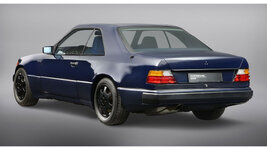
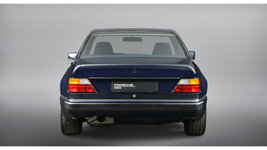
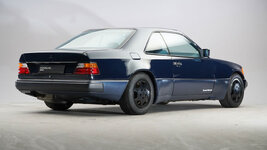
The Porsche W124 Coupe test mule

This is the coolest concept i've ever seen. Imagine if that was actually produced in any quantity. Looks like a very tight fit in that engine bay.
 
This Mercedes C124 has a Porsche engine and 300 hp. The prototype is one of the few survivors of a stopped project.

Engineers in vehicle development use "mules" to test parts of cars that are not yet finished. This could be an engine or a complete chassis, for example. The advantage of this is that the entire car does not have to be finished - development is faster - and new technology can be tested inconspicuously - ideally, no one will notice. This can be very helpful when a manufacturer is planning a completely new model series. Porsche, for example. In the late 1980s, the sports car manufacturer was considering a four-seater sports car. Twenty years before the Panamera's premiere, it was almost ready.

Porsche engineers built eight mules for testing. The new technology was barely visible from the outside. One of the prototypes still exists today; Porsche even has studio-quality photos of it. The body was donated by a Mercedes 230 CE from the W124 series. Porsche installed a V8 engine with 300 hp. This is somewhat reminiscent of the 500E, which premiered in Paris in the fall of 1990. The flared wheel arches and tire dimensions (225/55 ZR 16) are also strongly reminiscent of the 500E. But the Porsche engine has a displacement of 3.6 liters instead of five and is coupled to a manual transmission.

Things are tight under the hood, and it is easy to see in some places that this is not a production car. However, Porsche lettering can only be found on the starter battery. Incidentally, this sits where the 500E has its control units: in the rear left of the engine compartment.

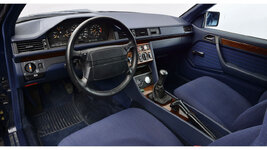
Inside, Porsche installed its own seats with integrated headrests, an airbag steering wheel, and a gearshift lever from its in-house parts warehouse. Instead of a foot-operated parking brake, this C124 has a handbrake stick on the center console.

However, the development of the coupe did not make it to series production: In 1992, head of development Ulrich Bez and CEO Arno Bohn had to leave. Wendelin Wiedeking became head of Porsche, stopped the project and concentrated all the ailing company's energies on the new Boxter (986) series and the new 996 911 with water-cooled engines and many common parts. The 928 was phased out, and there was no V8 until the Cayenne. And of course - almost simultaneously with the 989 prototypes - in the 500E, which Porsche assembled in Zuffenhausen.


Translated with www.DeepL.com/Translator (free version)
 

Attachments

  • 1.jpg
    1.jpg
    75.3 KB · Views: 26
  • 2.jpg
    2.jpg
    94.2 KB · Views: 25
  • 3.jpg
    3.jpg
    64.9 KB · Views: 26
  • 4.jpg
    4.jpg
    54.8 KB · Views: 25
  • 6.jpg
    6.jpg
    71.3 KB · Views: 26
  • 5.jpg
    5.jpg
    57.3 KB · Views: 25
  • 7.jpg
    7.jpg
    117.2 KB · Views: 29
  • 8.jpg
    8.jpg
    120 KB · Views: 31
  • 9.jpg
    9.jpg
    169.6 KB · Views: 29
  • 10.jpg
    10.jpg
    172.5 KB · Views: 29
  • 11.jpg
    11.jpg
    69.6 KB · Views: 26
This Mercedes C124 has a Porsche engine and 300 hp. The prototype is one of the few survivors of a stopped project.

Engineers in vehicle development use "mules" to test parts of cars that are not yet finished. This could be an engine or a complete chassis, for example. The advantage of this is that the entire car does not have to be finished - development is faster - and new technology can be tested inconspicuously - ideally, no one will notice. This can be very helpful when a manufacturer is planning a completely new model series. Porsche, for example. In the late 1980s, the sports car manufacturer was considering a four-seater sports car. Twenty years before the Panamera's premiere, it was almost ready.

Porsche engineers built eight mules for testing. The new technology was barely visible from the outside. One of the prototypes still exists today; Porsche even has studio-quality photos of it. The body was donated by a Mercedes 230 CE from the W124 series. Porsche installed a V8 engine with 300 hp. This is somewhat reminiscent of the 500E, which premiered in Paris in the fall of 1990. The flared wheel arches and tire dimensions (225/55 ZR 16) are also strongly reminiscent of the 500E. But the Porsche engine has a displacement of 3.6 liters instead of five and is coupled to a manual transmission.

Things are tight under the hood, and it is easy to see in some places that this is not a production car. However, Porsche lettering can only be found on the starter battery. Incidentally, this sits where the 500E has its control units: in the rear left of the engine compartment.

Inside, Porsche installed its own seats with integrated headrests, an airbag steering wheel, and a gearshift lever from its in-house parts warehouse. Instead of a foot-operated parking brake, this C124 has a handbrake stick on the center console.

However, the development of the coupe did not make it to series production: In 1992, head of development Ulrich Bez and CEO Arno Bohn had to leave. Wendelin Wiedeking became head of Porsche, stopped the project and concentrated all the ailing company's energies on the new Boxter (986) series and the new 996 911 with water-cooled engines and many common parts. The 928 was phased out, and there was no V8 until the Cayenne. And of course - almost simultaneously with the 989 prototypes - in the 500E, which Porsche assembled in Zuffenhausen.


Translated with www.DeepL.com/Translator (free version)

Thanks for posting
 

Who has viewed this thread (Total: 1) View details

Who has watched this thread (Total: 1) View details

Back
Top