• Hi Guest !

    Welcome to the 500Eboard forum.

    Since its founding in late 2008, 500Eboard has become the leading resource on the Internet for all things related to the Mercedes-Benz 500E and E500. In recent years, we have also expanded to include the 400E and E420 models, which are directly related to the 500E/E500.

    We invite you to browse and take advantage of the information and resources here on the site. If you find helpful information, please register for full membership, and you'll find even more resources available. Feel free to ask questions, and make liberal use of the "Search" function to find answers.

    We hope you will become an active contributor to the community!

    Sincerely,
    500Eboard Management

Electric car impact on fuel availabilty and pricing in future(?)

Right - I assume most charging would be off peak so the grid delta shouldn't be too bad. On road fast charging is a small component of most people's charging. We've already seen insane drops in those charging times in the last 5 years and that should continue. 2035 is quite a long time away in automotive years - most OEMs will be able to get 2 or 3 full product cycles in between now and then so adding 200 mi in <10 mins should be feasible. It's gone from >40 to <20 from 2016 to 2022.

 
I'm sure these children "mining" Cobalt in the Congo are just over-the-moon with California going "green."

There's no question in my mind that if any of this was happening closer to home, we'd be pursuing a different path.
Batteries aren't the answer, IMO.
You may or may not be right about batteries not being the answer but we have to start somewhere. We'll either develop better batteries or other tech to store energy as time goes by.
 
Thank goodness most of that dirty mining and processing is done somewhere else.

View attachment 153397
(Salar de Atacama salt flats in northern Chile)
I believe that there is or soon will be an open pit lithium mine in Nevada called Thacker Pass. Interesting note in Wikipedia

"The mine is projected to burn approximately 26,000 gallons of diesel fuel every day during operation (9.5 million gallons/year).[20] Projected carbon dioxide emissions from the plant and associated off-site transportation are estimated at 152,000 tons/year.[20] "
 
You may or may not be right about batteries not being the answer but we have to start somewhere. We'll either develop better batteries or other tech to store energy as time goes by.

But in the meantime, we're trashing far-off people and places.

Same goes goes for PV panels... 95% of them are made in Asia. And that is an incredibly dirty process, start to finish. Including the mining.

It comes down to out-of-sight, out-of-mind. In my neck of the woods, you've got the Loonies demanding the county's diesel school busses get dumped in favor of EV-powered ones. Nevermind the current bus fleet is quite new, thank you. And there are serious questions of EV operability in cold weather.

The batteries are made somewhere else.
The busses are assembled somewhere else.
The electricity is generated somewhere else.
The transmission occurs over someone else's neighborhood. It's all NIMBY. But then when a company wants to turn waste into something useful in the next county (close to the border).... in this case coal fly ash into rockwool insulation.... ZOMGBBQ!!!!!! we cannot have that anywhere near us. It'll kill everyone. And make our homes less valuable.

It's all very tiring.
 
But in the meantime, we're trashing far-off people and places.

It comes down to out-of-sight, out-of-mind. In my neck of the woods, you've got the Loonies demanding the county's diesel school busses get dumped in favor of EV-powered ones. Nevermind the current bus fleet is quite new, thank you. And there are serious questions of EV operability in cold weather.

What we do in the West, especially among coastal areas, is that we export poisonous pollution. We export poison, and then we tell ourselves what a great job we are doing saving the planet. We pat ourselves on the back for our virtuosity, and then we lecture others about their “dirty lifestyles”…lifestyles that we enable through pollution exports.
 
Here's one of the very few chargers in my area that's located at a grocery store. There are two spots and they're always empty.
I circled the reason in red.
Regardless of the cost for the juice, nobody is going to go through the trouble of hooking up for the pathetic charge rate of 8kw. It's just not worth it, IMO. If you're in the store for 45 minutes, you're gonna get 6kwh of juice. Which is around 20 miles of range.
The chargers do have large video screens which spew forth adverts to passersby... likely the only reason they exist in the first place.

View attachment 153328
Gave it a shot at this grocery store charger... turns out it was even crappier than expected.

1662133607750.png

7.1kw is totally useless in a public setting. I was in the store for maybe 20 minutes, so roughly 5-6 miles of juice added to the battery.

There was a Rivian on the other charger with newly-minted temp tags. Those trucklets are getting in the low 2's miles per kwh.
 
Huh. Mixed messages here.

Yes, I know, I know... it's only 4pm-9pm. Can you set a timer on your home charger?

1662321319920.png

1662321400976.png
 
So good! and so sad. Thank you.

If you want to help our environment, and I hope everyone does, stop consuming so much. Of everything.

Reuse, repair, repurpose, and demand quality products that aren't manufactured to be obsolete. Can you say URO?
 
That would result in charging losses X2.
What do you mean? (Perhaps I am being dense). So if someone already has PV solar on their place and then gets an EV ….. is there something inherently less desirable about getting batteries to store energy produced during the day (rather than selling that energy back to the grid at poor prices).
 
Assuming you already have solar, battery storage should help a lot - I think. The 3 big questions are:

1) How much battery storage (kWh / Ah) would be needed to be useful for vehicle charging overnight?
2) What is the physical size of the battery storage (lead-acid could be YUGE, and heavy!)
3) Cost for the above?

:detective:
 
What do you mean? (Perhaps I am being dense). So if someone already has PV solar on their place and then gets an EV ….. is there something inherently less desirable about getting batteries to store energy produced during the day (rather than selling that energy back to the grid at poor prices).
Energy is "lost" when charging a battery. Your scenario would introduce a second charging event in converting the solar energy into stored energy onboard the BEV.

The amount "lost" will vary, but it is not insignificant.
 

"The RAC said its research showed the cost to charge an electric car on a pay-as-you-go basis at a publicly accessible rapid charger had increased by 42% since May to an average of 63.29p per kWh."

"Electric car (EV) owners who use "rapid" public charging points were paying almost the same for electricity as they would for petrol per mile."


The RAC is the UK AAA.
 
Assuming you already have solar, battery storage should help a lot - I think. The 3 big questions are:

1) How much battery storage (kWh / Ah) would be needed to be useful for vehicle charging overnight?
2) What is the physical size of the battery storage (lead-acid could be YUGE, and heavy!)
3) Cost for the above?

:detective:

Energy is "lost" when charging a battery. Your scenario would introduce a second charging event in converting the solar energy into stored energy onboard the BEV.

The amount "lost" will vary, but it is not insignificant.
Holy Crap,

This here says that the “average” battery system is USD $15K PLUS installation.

UhhMmmmmmmm ….. no. That’s just silly…..
that’s like THREE WHOLE SETS of E500E Euro headlights! 🤣🤣🤣🤣

 
Holy Crap,

This here says that the “average” battery system is USD $15K PLUS installation.

UhhMmmmmmmm ….. no. That’s just silly…..
that’s like THREE WHOLE SETS of E500E Euro headlights! 🤣🤣🤣🤣

Thats for the 13kwh system.
Which, if you use it for charging your BEV, will give you about 40 miles of range.
 
If you want to help our environment, and I hope everyone does, stop consuming so much. Of everything.

Reuse, repair, repurpose, and demand quality products that aren't manufactured to be obsolete. Can you say URO?
”Live simply, so others may simply live.” What a concept?

I read that on a bumper sticker in my hippie college town probably 30 years ago. Captured exactly what I was thinking and changed my life.

Well, that + having to write a paper on McDonald’s conservation efforts in order to graduate.😂🤣 Styrofoam anyone?

maw

EDIT… listening to too much of this didn’t help much (or hurt, depending upon your perspective)… Sting | Discography | One World (Not Three)
 
Now I see why the Apetera www.aptera.us is the way to go. Super lightweight (1900+ lbs) / small battery / solar charging possible.


View attachment 154768

All the current crop of 5000+ lbs EVs seem totally absurd to me. @RicardoD - hope you get your Aptera soon!
How would you like to be on the freeway in your Aptera with nothing but Semi-Trucks surrounding you doing 70mph?

No way for me:jono:
 
Thats for the 13kwh system.
Which, if you use it for charging your BEV, will give you about 40 miles of range.
Read the comments as well. The systems are not silent, and some people had loud/noisy inverter issues. May not be a problem depending where your battery pack is located, but this was news to me.

:blink:
 
How would you like to be on the freeway in your Aptera with nothing but Semi-Trucks surrounding you doing 70mph?

No way for me:jono:
Yeah me neither. I am fortunate that my day to day driving probably totals less than 30 miles a day, and almost never do I find myself on an Interstate with nothing but semi-trucks.

I could see myself in an Aptera for daily transport tasks. As it stands I drive a 4000 lbs 5 seater CUV up and down a bunch of hills, 10 miles roundtrip, twice a day on city streets, for school duty. It is a bit of a waste since I don’t get past 40mph. I can see using an Aptera for day to driving and using the CUV if I need to get on the Interstate……… so very different from Southern California I know…..

As for something like a bigger BEV like a Tesla or Ioniq5, I cannot think of a compelling reason to replace my inexpensive hybrid CUV with an expensive BEV Tesla/Ioniq5 with all the charging / range anxiety issues. Seems to me it would be, for ky own driving patterns, paying a lot more to get more complexity and headaches.
 
Yeah me neither. I am fortunate that my day to day driving probably totals less than 30 miles a day, and almost never do I find myself on an Interstate with nothing but semi-trucks.

I could see myself in an Aptera for daily transport tasks. As it stands I drive a 4000 lbs 5 seater CUV up and down a bunch of hills, 10 miles roundtrip, twice a day on city streets, for school duty. It is a bit of a waste since I don’t get past 40mph. I can see using an Aptera for day to driving and using the CUV if I need to get on the Interstate……… so very different from Southern California I know…..

As for something like a bigger BEV like a Tesla or Ioniq5, I cannot think of a compelling reason to replace my inexpensive hybrid CUV with an expensive BEV Tesla/Ioniq5 with all the charging / range anxiety issues. Seems to me it would be, for ky own driving patterns, paying a lot more to get more complexity and headaches.
@Jlaa, I have had a similar experience with the Semi’s on the Chicago Expressway in a VW Bus in 1975. At the time the Semi’s were allowed to drive in all lanes. I had my wife, 2 kids and our dog surrounded by Semi’s. We were fearful of our lives. It was quite a scary moment that I have never forgotten.

PS: I don’t know if the Semi’s are still allowed to drive in all lanes in Chi-Town.
 
To be fair, it seems solar PV + batteries would solve the issue of the grid not having enough capacity at night?
This is the refrain I hear from most in this industry, who are looking to capitalize in the near future. Batteries solve 70% of the problem by adding endpoint capacity and facilitating priced transfers to and from the grid (thereby smoothing prices). More charging capacity being most of the rest of the solution. In that vain, see here…

U.S. approves 50 states' EV charging plans

More charging capacity I can see coming quickly. Better batteries and transaction capabilities are not as clear to me, although I haven’t tuned in just yet. Money pouring into the industry in the name of Infrastructure will surely land on my desk soon enough.

My gut tells me we'll need to rethink our utilities laws along the way though, and that is likely to be the holdup on consumer energy transaction capabilities (surprise, surprise).

maw
 
Last edited:
@Jlaa, I have had a similar experience with the Semi’s on the Chicago Expressway in a VW Bus in 1975. At the time the Semi’s were allowed to drive in all lanes. I had my wife, 2 kids and our dog surrounded by Semi’s. We were fearful of our lives. It was quite a scary moment that I have never forgotten.

PS: I don’t know if the Semi’s are still allowed to drive in all lanes in Chi-Town.
I lived in Chicago for several years as well @TerryA! This was 2-3 decades ago though, not 4-5 decades ago.
Even then, going on the Kennedy .... and especially on the Eisenhower or the Stevenson was SUPER dangerous. Semis EVERYWHERE going full tilt booogie. And, as you approached the loop with all the concrete to the left and right of you ... that was a scary experience. Add in wintertime with snow/ice/sleet and .... no thanks.

Northern California 101 / 880 driving behavior is much more laid back. I think part of the reason is because tons of semis go THROUGH Chi-town, and NorCal SF Bay area is more of an end-point, not a "connector" of the eastern and western parts of the country!
 
Last edited:
@Jlaa I think you must mean 280. Good lord, what a drive - I live in SF and commuted South on it for 2-3 years. Smooth as glass, minimal traffic, and gorgeous views. 880 on the other hand is the Road Warriror East Bay highway that is trafficked by more trucking going into/out of Oakland.

That Stanford study is interesting, my expectation is that optimum charging time will change as the grid changes. All the work I've seen post IRA has suggested that other baseline parts of the grid aren't going away (namely Nuclear and Hydro). I'm actually really excited for the opportunity here for the US to get back to the big infrastructure projects that helped make us what we are as a country starting 100 years ago that we've since seemed to shift away from, mostly in the 70s it seems.
 
Definitely! The failure of the US to execute large scale public works project in a timely and cost effective manner in the last 30+ years is nowhere more clear than in its failure to expand the fleet of nuclear power plants, but you can also see it in things like California High Speed Rail or Boston's Big Dig. That said, the prohibitively large cost of building large scale nuclear plants makes them susceptible to these sorts of overruns. The more likely candidate for expansion is Small Modular Nuclear reactors which can be built for <$1B, making them more accesible to other investors and more scalable in time.
 
I think spinning nuclear power back up in this country is a long, LONG road to travel.

I grew up near Pilgrim. Noisy people hated that thing. Noisy people will always hate nukes.
Look at all the decommissionings in progress across the country. Look at the problems with the Vogtle expansion in GA. Yucca's dead.

That's more than just a headwind for the foreseeable future.
 
Last edited:
Definitely! The failure of the US to execute large scale public works project in a timely and cost effective manner in the last 30+ years is nowhere more clear than in its failure to expand the fleet of nuclear power plants, but you can also see it in things like California High Speed Rail or Boston's Big Dig. That said, the prohibitively large cost of building large scale nuclear plants makes them susceptible to these sorts of overruns. The more likely candidate for expansion is Small Modular Nuclear reactors which can be built for <$1B, making them more accesible to other investors and more scalable in time.

I think spinning nuclear power back up in this country is a long, LONG road to travel.

I grew up near Pilgrim. Noisy people hated that thing. Noisy people will always hate nukes.
Look at all the decommissionings in progress across the country. Look at the problems with the Vogtle expansion in GA. Yucca's dead.

That's more than just a headwind for the foreseeable future.
I am watching the "Fast Breeder" Natrium Reactor project in Wyoming with great interest. Supposedly these things are based off nuclear-submarine reactor technology, and can be spun up for USD 1B-4B as opposed to USD 25B for "conventional" reactor types.


On the flip side of the equation, some scientists and Greenpeace claim that this kind of nuclear power is not needed and that we need to go all in on wind and solar exclusively.


Personally I think folks that see the world in black and white (all in one direction or the other) are too idealistic. Perfect is the enemy of good.
 
I am watching the "Fast Breeder" Natrium Reactor project in Wyoming with great interest. Supposedly these things are based off nuclear-submarine reactor technology, and can be spun up for USD 1B-4B as opposed to USD 25B for "conventional" reactor types.
Very interesting read. Would be nice if the lifespan was longer than 60 years, but you gotta start somewhere.


On the flip side of the equation, some scientists and Greenpeace claim that this kind of nuclear power is not needed and that we need to go all in on wind and solar exclusively.
This is flat-out unpossible. It's difficult to comprehend how such smart people are unable to accept this. :facepalm:


Personally I think folks that see the world in black and white (all in one direction or the other) are too idealistic. Perfect is the enemy of good.
And, there's a lot of focus on things like CO2 emissions, which could be drastically reduced if all hoomans on the planet would just stop breathing. :rolleyes: As if CO2 was the biggest problem in the world today. :facepalm:

It's unrealistic to force the world to an EV utopia while simultaneously expecting the not-yet-complete utopia to be powered by completely clean power sources. With additional power consumption comes additional power generation, and wind & solar literally are unable to supply the expected demand. Unless all the consumers/consumption becomes orders of magnitude more efficient solar/wind will never cut the mustard. If/when battery technology improves dramatically, that's another story (but comes with questions about clean mining of exotic minerals, cost to recycle, etc etc).

:grouphug:
 
The challenge I have is how fervent pro nuclear types are. I love nuclear, but also, no project has been completed anywhere near on time or on budget in a loooong time, and even when complete, frequently the delivered cost of electricity is pretty high in part because there is so much debt to be paid down. A lot of these new projects are trying to change that, and good for them. The push to 100% renewables is probably wrong but even baking in a ton of excess capacity, transmission, and storage, the delivered $/kWh would likely be 25% less than nuclear. This also isn't made easier by the sometimes absurd costs required to keep nuclear plants running. Keeping the Diablo Canyon plant in CA running is probably the right idea, but PG&E (no paragon of competence btw) wanted $12B to do so. There's a lot you can buy w that much money so it's prudent to push back on those numbers and make sure it's being spent properly.

That said, anyone who at this stage in the climate game says 'we can't be doing science projects' is a moron. 30-50 years ago most of the technology we have today was a science project. I'm not a huge fan of carbon capture bc it's the favorite of fossil fuel companies and they've been unreliable when it comes to telling us what's best environmentally, but if it comes down in cost by two orders of magnitude (ie 99%) like solar did over the last 50 years I'm all for it. So investing in these new ideas (carbon capture, nuclear, etc) is critical to making sure we can be successful long term, even if they sound silly today. Also, one number to keep in your head: For carbon capture to work at the scale we need it to, we need 2x the pipelines that oil and natural gas has today, and those were built to transport something valuble, not a waste product.

Also, if you haven't already, watch Chernobyl. That show is great.
 
Last edited:
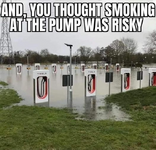
Exploding?


"EV batteries that have been waterlogged in the wake of the hurricane are at risk of corrosion, which could lead to unexpected fires, according to Jimmy Patronis, the state's top financial officer and fire marshal. "


1665100714418.png
 
Rivian recalling nearly ALL cars?!?! Rivian shares skid after EV maker recalls nearly all vehicles
Rivian shares skid after EV maker recalls nearly all vehicles

And raw materials are still scarce.
Factbox: Automakers accelerate drive to secure battery raw materials

Something tells me this wave may come slower than we think or want.

maw


Moderator edit: Article pasted below, in case of paywall problems:

Rivian shares skid after EV maker recalls nearly all vehicles​

Oct 10, 2022 (Reuters)

CPMZFKMVAZOSBLH5DGLJBI4GXE.jpg
The logo of startup Rivian Automotive's is seen at the electric vehicle factory in Normal, Illinois, U.S. April 11, 2022. Picture taken April 11, 2022. REUTERS/Kamil Krzaczynski


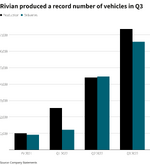
Shares of Rivian Automotive Inc (RIVN.O) fell about 9% on Monday after the electric-vehicle maker recalled nearly all its vehicles, exacerbating investor concerns that the company may not be able to meet its 2023 production target.

The Amazon.com Inc-backed (AMZN.O) firm on Friday recalled about 13,000 vehicles due to a possible loose fastener that could cause the driver to lose steering control.

Rivian started selling its EVs in the third quarter of last year, and has so far delivered 13,198 vehicles. read more

"We have greater concerns on 2023 production expectations," RBC Capital Markets said in a note on Monday. The addition of battery packs and motors as well as downtime required at the plant to ramp up capacity could derail Rivian's pace of production, it said.

While the broad recall could hurt the brand and cause lingering credibility issues for future production, Wedbush Securities said in a note, it does not believe the recall would impact Rivian's production or delivery goals for the year.

Shares of the company fell to $30.79 in early trading - the lowest in over a month. They have fallen 67.3% this year due to a selloff in equities driven by an uncertain macro-economic environment and a production forecast cut.

The company in March cut its 2022 production forecast in half to 25,000 due to sticky supply-chain issues. read more
Wall Street expects Rivian to make 23,590 vehicles this year, according to Visible Alpha.

A local court in Georgia, where Rivian is building its $5-billion manufacturing plant, last week rejected a joint proposal by the state's Department of Economic Development and the company to secure local incentives for its project in the state.

The local development authority had said in May the company would gain incentives of $1.5 billion from the state.

chart.png
Reuters Graphics
 
Last edited by a moderator:
I just had a study done for installing solar at the Flagstaff house, which would be an ideal place to do it with the wealth of sunshine and a large roof area that is exposed to the sun the better part of the day.

When it all came down to the bottom line, it didn't make good fiscal sense. I could potentially replace my consumption from the electric utility for at least 10 months out of the year and produce enough excess power to get a good payback, but - the up front cost to do so was more than what I would have gotten out of the array over the projected 30 year life. And that's with the government subsidies. That, and I could take the money I would have to pay out to do it and invest it over that same period and come out much farther ahead.

And yes, battery systems are stupid expensive (and this proposal didn't include one) and just don't make sense at this time from a cost-benefit standpoint. The technology just isn't there yet.

I-280 is a wonderful road. I can recall living in San Francisco and taking my 250C or 300SD out on the 280 early on Sunday mornings and letting them unwind.

I could see an Aptera working in a place like Flagstaff. Plenty of sun, a long trip would be under 20 miles, if that. Not sure I would want to get out on I-40 in one, though. The truck traffic, much like people described in the Chicago area (lots of experience with the Dan Ryan and the Edens) is pretty exciting, to say the least. I looked at the Aptera, but to be honest, it wouldn't cost that much more for a "real" EV car or a decent hybrid that would be more practical should I want to drive to Phoenix, 90 minutes away.

Dan
 
Last edited:
I saw my first Toyota BZ4X yesterday. The sticker was just under 52K for a dual-motor Limited model. If Toyota dealers manage to not mark this up, this will sell like hotcakes. For reference, My sibling just bought a Tesla Model Y for 72K..... and prices have gone up since my sibling placed the order.

IMG_2980.jpegIMG_2979.jpegIMG_2978.jpegIMG_2973.jpegIMG_2971.jpegIMG_2972.jpeg
 
This will also sell like hotcakes. Less than USD$30K, about 200hp, and 57 MPG?
After 2 Prii that were ugly as sin, slow as turds, but ultra thrifty and reliable, I swore them off.
But, given inflation (and hidden costs like the average insurance bill of a Tesla is $4,000), I could get another Prius daily beater car ....... for HALF the price of high school tuition!

@duuder looks like our daily beater has just arrived. 🤣


1668695193840.png

1668695152854.png


1668695168214.png
 
Back
Top