• Hi Guest !

    Welcome to the 500Eboard forum.

    Since its founding in late 2008, 500Eboard has become the leading resource on the Internet for all things related to the Mercedes-Benz 500E and E500. In recent years, we have also expanded to include the 400E and E420 models, which are directly related to the 500E/E500.

    We invite you to browse and take advantage of the information and resources here on the site. If you find helpful information, please register for full membership, and you'll find even more resources available. Feel free to ask questions, and make liberal use of the "Search" function to find answers.

    We hope you will become an active contributor to the community!

    Sincerely,
    500Eboard Management

Electric car impact on fuel availabilty and pricing in future(?)

I lost the screen where I was able to turn off the "Auto Stop/Start" feature on the loaner car. Can't find it. Hundreds of swipes, presses and curses later. It's still MIA.

I [heart] in-car technology.

Auto Stop/Start sucks. I cannot express how much I loathe it. Seems like older models had an easy-to-find button to control it.
Agree. Like a new phone, it is nice to play around with the menu and customize every small setting so that when I drive with my key, it is set to my settings. But, it is painful to try to do it frequently with other people cars or loaners.

when did buttons go out of style? I get it on phones due to real estate...

by the way how is it implemented? For example, if you turn on ass warmer in touch screen, is it a software key value being set and then main controller controls the ass warmer switch? I need to find wiring diagrams of a modern car.
 
The loaner is a Porsche. On the Cayenne platform, they've gone to a combination of dedicated flat surface haptic feedback buttons. Physical buttons for a few things. And then a mess of a touchscreen for everything else.

I've seen reviews of the new 911, where Porsche went with a greater number of physical buttons.

Ass warmers have their own haptic flat "button." You have to look for it. It pretty much sucks.

The Auto Start/stop touchscreen "button" was next to the Sirius screen. But then it went away. :thumbsdown:

I think they want you to do custom "Driver" setups for everything.
 
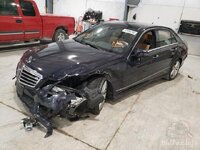
A lady turned left smack into my wife's E550 - totaled. She says she would like "something newer".
I find a '16 E63 AMGs on CarMax (whole 'nother story).I take it for a test drive. Damn Stop/Start on that
car should be outlawed. It sits dead then when I add more pedal WHAM! it jumps like a frog. Damn near
rear ended a Lexus.
She wouldn't have liked it anyway...
 
A lady turned left smack into my wife's E550 - totaled. She says she would like "something newer".
I find a '16 E63 AMGs on CarMax (whole 'nother story).I take it for a test drive. Damn Stop/Start on that
car should be outlawed. It sits dead then when I add more pedal WHAM! it jumps like a frog. Damn near
rear ended a Lexus.
She wouldn't have liked it anyway...

Getting a couple hundred horsies when you only need a handful is such a wonderful oh shit moment. :doh:

On my '14 S, I used Sport (S) instead of Comfort. The car was so much more predictable. Can't remember if I had to spin the dial every time or just had it programmed into the AMG button. My wife absolutely loved that car.
 
Sorry to hear about the E550, but glad she is ok!

My crusty old 2008 E63 P30 has no damned Stop/Start feature besides the key. Probably too old for her tastes though. Is the deceased E550 a W211 or W212?

:duck:
 
It's quite probable that it will end somewhere in Eastern Europe. I suppose it will go for pennies on salvage auction, go for its overseas journey and then get "repaired". It is very likely that it may even loose its dramatic history and will be born as completely healthy. Having attractive price it will sooner or later find a buyer. East from Oder River labour cost are much lower than in the western world. There are quite a few companies which make good profit on finding and repairing such cars here.
 
The Auto Stop/Start button is mocking me. Went to run some errands today... the button is right there next to the Sirius screen when I'm sitting in my garage. Make my first stop, and then it's gone. And it never made an appearance for the rest of the trip.

These turbo cars are really awful pulling away from a dead stop. You get nothing. And then more nothing. And then BOOST(!!1!1)

I really think this Stop/Start "feature" is a consumer conditioning effort by manufacturers to make them loathe their newer ICE cars.
 
The operative difference between the WSJ, and operations like the WaPo and NYT, is that at the WSJ the news and editorial operations are 100% independent of each other. Headed up by different people, with separate staffs and lines of reporting. Editorial page coverage and views do not seep into the news operation, and Vice versa.
The WSJ did nice job of holding the line on verifiable news during the past administration despite some questionable decisions on the editorial side. I need to jump on the next deal for a WSJ subscription, tired of running into blocked content cause I am a free loader trying to read a good WSJ article.
 
The WSJ did nice job of holding the line on verifiable news during the past administration despite some questionable decisions on the editorial side. I need to jump on the next deal for a WSJ subscription, tired of running into blocked content cause I am a free loader trying to read a good WSJ article.
TIP: Generally you can get past the paywall with pretty much any newspaper site If you enter the URL for the article at www.outline.com. Bookmark that site and then just paste the URL.
 
TIP: Generally you can get past the paywall with pretty much any newspaper site If you enter the URL for the article at www.outline.com. Bookmark that site and then just paste the URL.
Tried this on IdahoPress and it returned no result, on a WSJ link it said "not supported"... maybe it's borked?

1614042055300.png
 
Tried this on IdahoPress and it returned no result, on a WSJ link it said "not supported"... maybe it's borked?

The WSJ did nice job of holding the line on verifiable news during the past administration despite some questionable decisions on the editorial side. I need to jump on the next deal for a WSJ subscription, tired of running into blocked content cause I am a free loader trying to read a good WSJ article.


iamadamdev/bypass-paywalls-chrome <-- You are welcome. 😉
 
I am extremely late to the party here as I've been addressing the concerns of my county commissioners due to the recent hack of the City of Oldsmar's water treatment plant - Oldsmar is a bedroom community of Tampa in an adjacent county.

Anyway...

My 25kW water cooled Toyota industrial engine powered Kohler generator set will consume anywhere from 1-3.5/gallons per hour of propane, depending on load.

I have a 500 gallon in-ground tank in my front yard, which will have 400 gallons of propane in it at any given time (you only fill tanks to 80% so there is a "wetting surface" in the tank for the propane to vaporize.) Averaging maybe 2 gallons/hour, that's roughly 200 hours of operation.

Propane, for all intents and purposes, does not have a shelf life like gasoline.

I hate cars with "push to start" arrangements as well as ones that shut the engine off when you come to a stop.

I learned to read using the WSJ. My banker Dad would come home in the evening, lay on the living room floor, and read the WSJ. I would sit with him and read the stories, but my favorite was the engravings. I was always amazed at how all those lines could come together to make a picture.

And now back to calming the nerves of my commissioners and their constituents...

200.gif

Dan
 
my favorite was the engravings. I was always amazed at how all those lines could come together to make a picture.
The WSJ has as part of its web site, an "engraving maker". This is what I use as my avatar for the forum here. You just upload a photo, and a few seconds later you have your "engraving."


Unfortunately, you need to be a subscriber to use it :)
 
The wife swapped Cayenne loaners yesterday. The factory won't allow >15 days at a time for dealer reimbursement.
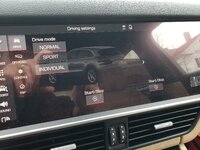
So I jump in the new one today... and I'm greeted with this
20210226_122624.jpg


So the last one didn't want me to disable the Stop/Start and this new one offer me multiple buttons.

I [heart] in-car tech.
 
I totally missed the memo that GM announced their demise in 2035.

:watchdrama:


Toyota Warns (Again) About Electrifying All Autos. Is Anyone Listening?​

By Bryan Preston Mar 19, 2021 12:50 PM ET

Depending on how and when you count, Japan’s Toyota is the world’s largest automaker. According to Wheels, Toyota and Volkswagen vie for the title of the world’s largest, with each taking the crown from the other as the market moves. That’s including Volkswagen’s inherent advantage of sporting 12 brands versus Toyota’s four. Audi, Lamborghini, Porsche, Bugatti, and Bentley are included in the Volkswagen brand family.

GM, America’s largest automaker, is about half Toyota’s size thanks to its 2009 bankruptcy and restructuring. Toyota is actually a major car manufacturer in the United States; in 2016 it made about 81% of the cars it sold in the U.S. right here in its nearly half a dozen American plants. If you’re driving a Tundra, RAV4, Camry, or Corolla it was probably American-made in a red state. Toyota was among the first to introduce gas-electric hybrid cars into the market, with the Prius twenty years ago. It hasn’t been afraid to change the car game.

All of this is to point out that Toyota understands both the car market and the infrastructure that supports it perhaps better than any other manufacturer on the planet. It hasn’t grown its footprint through acquisitions, as Volkswagen has, and it hasn’t undergone bankruptcy and bailout as GM has. Toyota has grown by building reliable cars for decades.

When Toyota offers an opinion on the car market, it’s probably worth listening to. This week, Toyota reiterated an opinion it has offered before. That opinion is straightforward: The world is not yet ready to support a fully electric auto fleet.

Toyota’s head of energy and environmental research Robert Wimmer testified before the Senate this week, and said: “If we are to make dramatic progress in electrification, it will require overcoming tremendous challenges, including refueling infrastructure, battery availability, consumer acceptance, and affordability.”

Wimmer’s remarks come on the heels of GM’s announcement that it will phase out all gas internal combustion engines (ICE) by 2035. Other manufacturers, including Mini, have followed suit with similar announcements.

Tellingly, both Toyota and Honda have so far declined to make any such promises. Honda is the world’s largest engine manufacturer when you take its boat, motorcycle, lawnmower, and other engines it makes outside the auto market into account. Honda competes in those markets with Briggs & Stratton and the increased electrification of lawnmowers, weed trimmers, and the like.

Wimmer noted that while manufactures have announced ambitious goals, just 2% of the world’s cars are electric at this point. For price, range, infrastructure, affordability, and other reasons, buyers continue to choose ICE over electric, and that’s even when electric engines are often subsidized with tax breaks to bring pricetags down.

The scale of the switch hasn’t even been introduced into the conversation in any systematic way yet. According to FinancesOnline, there are 289.5 million cars just on U.S. roads as of 2021. About 98 percent of them are gas-powered. Toyota’s RAV4 took the top spot for purchases in the U.S. market in 2019, with Honda’s CR-V in second. GM’s top seller, the Chevy Equinox, comes in at #4 behind the Nissan Rogue. This is in the U.S. market, mind. GM only has one entry in the top 15 in the U.S. Toyota and Honda dominate, with a handful each in the top 15.

Toyota warns that the grid and infrastructure simply aren’t there to support the electrification of the private car fleet. A 2017 U.S. government study found that we would need about 8,500 strategically-placed charge stations to support a fleet of just 7 million electric cars. That’s about six times the current number of electric cars but no one is talking about supporting just 7 million cars. We should be talking about powering about 300 million within the next 20 years, if all manufacturers follow GM and stop making ICE cars.

Simply put, we’re gonna need a bigger energy boat to deal with connecting all those cars to the power grids. A LOT bigger.

But instead of building a bigger boat, we may be shrinking the boat we have now. The power outages in California and Texas — the largest U.S. states by population and by car ownership — exposed issues with powering needs even at current usage levels. Increasing usage of wind and solar, neither of which can be throttled to meet demand, and both of which prove unreliable in crisis, has driven some coal and natural gas generators offline. Wind simply runs counter to needs — it generates too much power when we tend not to need it, and generates too little when we need more. The storage capacity to account for this doesn’t exist yet.

We will need much more generation capacity to power about 300 million cars if we’re all going to be forced to drive electric cars. Whether we’re charging them at home or charging them on the road, we will be charging them frequently. Every gas station you see on the roadside today will have to be wired to charge electric cars, and charge speeds will have to be greatly increased. Current technology enables charges in “as little as 30 minutes,” according to Kelly Blue Book. That best-case-scenario fast charging cannot be done on home power. It uses direct current and specialized systems. Charging at home on [alternating] current can take a few hours to overnight to fill the battery, and will increase the home power bill. That power, like all electricity in the United States, comes from generators using natural gas, petroleum, coal, nuclear, wind, solar, or hydroelectric power according to the U.S. Energy Information Administration. I left out biomass because, despite Austin, Texas’ experiment with purchasing a biomass plant to help power the city, biomass is proving to be irrelevant in the grand energy scheme thus far. Austin didn’t even turn on its biomass plant during the recent freeze.

Half an hour is an unacceptably long time to spend at an electron pump. It’s about 5 to 10 times longer than a current trip to the gas pump tends to take when pumps can push 4 to 5 gallons into your tank per minute. That’s for consumer cars, not big rigs that have much larger tanks. Imagine the lines that would form at the pump, every day, all the time, if a single charge time isn’t reduced by 70 to 80 percent. We can expect improvements, but those won’t come without cost. Nothing does. There is no free lunch. Electrifying the auto fleet will require a massive overhaul of the power grid and an enormous increase in power generation. Elon Musk recently said we might need double the amount of power we’re currently generating if we go electric. He’s not saying this from a position of opposing electric cars. His Tesla dominates that market and he presumably wants to sell even more of them.

Toyota has publicly warned about this twice, while its smaller rival GM is pushing to go electric. GM may be virtue signaling to win favor with those in power in California and Washington and in the media. Toyota’s addressing reality and its record is evidence that it deserves to be heard.
Toyota isn’t saying none of this can be done, by the way. It’s just saying that so far, the conversation isn’t anywhere near serious enough to get things done.

Bryan Preston served as chief of staff at the Texas Railroad Commissioner. The Texas Railroad Commission regulates oil and gas production in the Lone Star State, which is the nation’s top energy-producing state. He is the author of Hubble’s Revelations: The Amazing Time Machine and Its Most Important Discoveries. He’s a veteran and a Texan.

 
Toyota for the win. What is particularly fascinating is that Toyota did not get to be where it is today by doing all kinds of capital-vaporizing and debt-inducing acquisitions (looking at you, VW). Toyota got to #1 by being consistent at delivering high quality, low cost cars for decades. It ain’t sexy, but it works and has incredible staying power.

Toyota is like the Berkshire Hathaway of automobiles.
 
...and on a related note, the book "The Toyota Way" is quite an interesting read. They pioneered a lot of the production efficiencies in use globally, not just in the automotive industry.

1616533449238.png
 
There's a really good article in today's Wall Street Journal that talks about the costs of EVs vs. gas-powered cars, with a very misleading/incomplete graph that shows over time, how much better and more environmentally friendly that EVs are.

I’ll try to pull it.

Unfortunately, it doesn't show the environmental impact of the FULL lifecycle of the EV, from the creation of the materials to the disposal of the batteries, and replacement of the batteries with new ones over time, etc.
 
...and on a related note, the book "The Toyota Way" is quite an interesting read. They pioneered a lot of the production efficiencies in use globally, not just in the automotive industry.

View attachment 128823

Lean? It's now the standard for manufacturing. Oddly enough Mercedes Benz had it right 30-40 years ago with a handful of models and a handful of engines, all interchangeable. Better reliability, less likeliness of shortages on parts.... then they lost their minds and started making Coupe SUV's.
 
I totally missed the memo that GM announced their demise in 2035.

:watchdrama:


Toyota Warns (Again) About Electrifying All Autos. Is Anyone Listening?​

By Bryan Preston Mar 19, 2021 12:50 PM ET

Depending on how and when you count, Japan’s Toyota is the world’s largest automaker. According to Wheels, Toyota and Volkswagen vie for the title of the world’s largest, with each taking the crown from the other as the market moves. That’s including Volkswagen’s inherent advantage of sporting 12 brands versus Toyota’s four. Audi, Lamborghini, Porsche, Bugatti, and Bentley are included in the Volkswagen brand family.

GM, America’s largest automaker, is about half Toyota’s size thanks to its 2009 bankruptcy and restructuring. Toyota is actually a major car manufacturer in the United States; in 2016 it made about 81% of the cars it sold in the U.S. right here in its nearly half a dozen American plants. If you’re driving a Tundra, RAV4, Camry, or Corolla it was probably American-made in a red state. Toyota was among the first to introduce gas-electric hybrid cars into the market, with the Prius twenty years ago. It hasn’t been afraid to change the car game.

All of this is to point out that Toyota understands both the car market and the infrastructure that supports it perhaps better than any other manufacturer on the planet. It hasn’t grown its footprint through acquisitions, as Volkswagen has, and it hasn’t undergone bankruptcy and bailout as GM has. Toyota has grown by building reliable cars for decades.

When Toyota offers an opinion on the car market, it’s probably worth listening to. This week, Toyota reiterated an opinion it has offered before. That opinion is straightforward: The world is not yet ready to support a fully electric auto fleet.

Toyota’s head of energy and environmental research Robert Wimmer testified before the Senate this week, and said: “If we are to make dramatic progress in electrification, it will require overcoming tremendous challenges, including refueling infrastructure, battery availability, consumer acceptance, and affordability.”

Wimmer’s remarks come on the heels of GM’s announcement that it will phase out all gas internal combustion engines (ICE) by 2035. Other manufacturers, including Mini, have followed suit with similar announcements.

Tellingly, both Toyota and Honda have so far declined to make any such promises. Honda is the world’s largest engine manufacturer when you take its boat, motorcycle, lawnmower, and other engines it makes outside the auto market into account. Honda competes in those markets with Briggs & Stratton and the increased electrification of lawnmowers, weed trimmers, and the like.

Wimmer noted that while manufactures have announced ambitious goals, just 2% of the world’s cars are electric at this point. For price, range, infrastructure, affordability, and other reasons, buyers continue to choose ICE over electric, and that’s even when electric engines are often subsidized with tax breaks to bring pricetags down.

The scale of the switch hasn’t even been introduced into the conversation in any systematic way yet. According to FinancesOnline, there are 289.5 million cars just on U.S. roads as of 2021. About 98 percent of them are gas-powered. Toyota’s RAV4 took the top spot for purchases in the U.S. market in 2019, with Honda’s CR-V in second. GM’s top seller, the Chevy Equinox, comes in at #4 behind the Nissan Rogue. This is in the U.S. market, mind. GM only has one entry in the top 15 in the U.S. Toyota and Honda dominate, with a handful each in the top 15.

Toyota warns that the grid and infrastructure simply aren’t there to support the electrification of the private car fleet. A 2017 U.S. government study found that we would need about 8,500 strategically-placed charge stations to support a fleet of just 7 million electric cars. That’s about six times the current number of electric cars but no one is talking about supporting just 7 million cars. We should be talking about powering about 300 million within the next 20 years, if all manufacturers follow GM and stop making ICE cars.

Simply put, we’re gonna need a bigger energy boat to deal with connecting all those cars to the power grids. A LOT bigger.

But instead of building a bigger boat, we may be shrinking the boat we have now. The power outages in California and Texas — the largest U.S. states by population and by car ownership — exposed issues with powering needs even at current usage levels. Increasing usage of wind and solar, neither of which can be throttled to meet demand, and both of which prove unreliable in crisis, has driven some coal and natural gas generators offline. Wind simply runs counter to needs — it generates too much power when we tend not to need it, and generates too little when we need more. The storage capacity to account for this doesn’t exist yet.

We will need much more generation capacity to power about 300 million cars if we’re all going to be forced to drive electric cars. Whether we’re charging them at home or charging them on the road, we will be charging them frequently. Every gas station you see on the roadside today will have to be wired to charge electric cars, and charge speeds will have to be greatly increased. Current technology enables charges in “as little as 30 minutes,” according to Kelly Blue Book. That best-case-scenario fast charging cannot be done on home power. It uses direct current and specialized systems. Charging at home on [alternating] current can take a few hours to overnight to fill the battery, and will increase the home power bill. That power, like all electricity in the United States, comes from generators using natural gas, petroleum, coal, nuclear, wind, solar, or hydroelectric power according to the U.S. Energy Information Administration. I left out biomass because, despite Austin, Texas’ experiment with purchasing a biomass plant to help power the city, biomass is proving to be irrelevant in the grand energy scheme thus far. Austin didn’t even turn on its biomass plant during the recent freeze.

Half an hour is an unacceptably long time to spend at an electron pump. It’s about 5 to 10 times longer than a current trip to the gas pump tends to take when pumps can push 4 to 5 gallons into your tank per minute. That’s for consumer cars, not big rigs that have much larger tanks. Imagine the lines that would form at the pump, every day, all the time, if a single charge time isn’t reduced by 70 to 80 percent. We can expect improvements, but those won’t come without cost. Nothing does. There is no free lunch. Electrifying the auto fleet will require a massive overhaul of the power grid and an enormous increase in power generation. Elon Musk recently said we might need double the amount of power we’re currently generating if we go electric. He’s not saying this from a position of opposing electric cars. His Tesla dominates that market and he presumably wants to sell even more of them.

Toyota has publicly warned about this twice, while its smaller rival GM is pushing to go electric. GM may be virtue signaling to win favor with those in power in California and Washington and in the media. Toyota’s addressing reality and its record is evidence that it deserves to be heard.
Toyota isn’t saying none of this can be done, by the way. It’s just saying that so far, the conversation isn’t anywhere near serious enough to get things done.

Bryan Preston served as chief of staff at the Texas Railroad Commissioner. The Texas Railroad Commission regulates oil and gas production in the Lone Star State, which is the nation’s top energy-producing state. He is the author of Hubble’s Revelations: The Amazing Time Machine and Its Most Important Discoveries. He’s a veteran and a Texan.
There were similar arguments about cars, internet and mobile phones. How long did it take for electric cars to reach 2% market share, 10 years? Pushing off takes the most torque. Thereafter "economies of scale" take off. In +/- 15 years +/- half of the cars will be electric. My uneducated thoughts aloud
 
Thereafter "economies of scale" take off. In +/- 15 years +/- half of the cars will be electric.
Unless they can have one fully charged in under 10 minutes, it's doubtful. The Ipod was a revolution that was quickly replaced by the smartphone. As was the GPS. In my simple mind, the fully electric car will transition into something more convenient and future proof, which might just be more efficient gasoline engines.
 
IMO, charge time is really irrelevant, at least it will be in time. Even now, the top of the line Tesla Model S has a range of over 400 miles, at least in ideal conditions. I would venture a guess that even on driving trips, most folks wouldn't drive more than 300 miles in a day and even if they did, a Supercharge would get you to 80% in 30 minutes or less...about the right amount of time for the whole family to take a bio break and prep for the next leg of the journey. And that's now.

In the future, as battery technology gets better, we'll see electric cars with 500, 600, maybe 1000 miles of range. At that point, so what if it take 6 hours to charge, you pull into the hotel, plug in and in the morning, you have enough fuel for 2 to 3 days worth of driving.

At home, you charge every week or two or just top off every now and then, never having to drive to a gas station. This seems way more convenient to me.
 
In the future, as battery technology gets better, we'll see electric cars with 500, 600, maybe 1000 miles of range. At that point, so what if it take 6 hours to charge, you pull into the hotel, plug in and in the morning, you have enough fuel for 2 to 3 days worth of driving.
Assuming that a 300 room hotel will have 300 charging stations, that might work.
 
There's a really good article in today's Wall Street Journal ... Unfortunately, it doesn't show the environmental impact of the FULL lifecycle of the EV, from the creation of the materials to the disposal of the batteries, and replacement of the batteries with new ones over time, etc.
Environmental impact of the EV lifecycle, from mining the raw materials to disposing/recycling, is almost an entirely separate discussion. It's not a rosy picture. Again, unless the technology changes dramatically, this is an inconvenient truth which is generally swept under the carpet as internal combustion engines are vilified and burned at the stake. I'm not anti-EV, I actually like them, but I don't think forcing them out in <15 years is either possible nor a good idea.


There were similar arguments about cars, internet and mobile phones. How long did it take for electric cars to reach 2% market share, 10 years? Pushing off takes the most torque. Thereafter "economies of scale" take off. In +/- 15 years +/- half of the cars will be electric. My uneducated thoughts aloud
While I get where you are coming from, internet/devices and vehicles are apples/oranges. Small handheld devices that offer convenience that everyone wants isn't the same as transportation that many people can't survive without (specifically in rural areas, i.e. "flyover" regions betwixt the huge cities). EV will continue to increase in number and popularity naturally, but some entities with agendas are trying to force it to happen in (IMO) a ridiculous timeframe, barring quantum leaps in technology occurring, like, today.

:grouphug:
 
Totally agree. I'm very much not into their styling direction under Gordon Wagener, S class coupe aside. What's up with the two tone on the EQS? Eugh...like a bad modern Camry. And the Hood/grill and shutline treatment on the new S class is terrible, way worse than any Sacco car when he seemed to design (design, not style) the car with those practical craftsmanship considerations in mind.

The Lucid Air looks nice IMO, not too spaceship-like, but also not just a reskin of an ICE sedan - good balance between new and old. Reminds me of something Jaguar or French.
 
The EQS is ok...not great, not ugly...just ok. It's a conservative shape with some oddly flashy details. Range seems low given the battery size. Hopefully it'll do better in the real world.

On topic: Premium fuel here in the San Diego area is over $4.00 a gallon already and summer is still a couple months away. I suspect more EV sales coming soon.
 
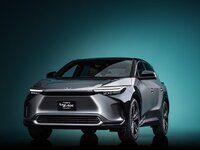
My first EV will be ....... a Toyota. The BZ4X. For an everyday car, I care about four things:

601E16F5-1132-4C86-AAA2-CA4723E77CAE.jpeg 1BB1166C-710F-4360-8D3D-D09C94731560.jpeg

1) Reliable
2) Inexpensive for what you get
3) Doesn’t look too bad
4) Relaxing to drive

My German stuff in the garage, which are all fuel swillers, are the complete opposite.


Actually the BZ4X is built off the same TNGA platform as my current Hybrid AWD Venza ... and I am thrilled with my Venza. So tranquil, plenty of accelerative power for an everyday car, super comfortable, and it cost less than 30K.
 
Looks like MB is fully on the EV wagon.
Saw the article last week that all new vehicle platforms will be electric only starting 2025...and they will sell electric only by 2030....

Let's see what folks in DC do about the EV rebate....
 
Hold. Toyota licensed the Aztek body design from :gm: / Pontiac? :blink:

Add this to the list of things I never thought I'd see.

:yayo:

If you think that this is bad, you've never seen an Alfa Romeo Arna. This is when Afla Romeo and Nissan collaborated, and built a car from Nissan styling and Alfa mechanicals

1627316760934.png
 
Looks like MB is fully on the EV wagon.
Saw the article last week that all new vehicle platforms will be electric only starting 2025...and they will sell electric only by 2030....

Let's see what folks in DC do about the EV rebate....
Yes, MB announced last week that they are going electric-first as of 2025, and electric-only in 2030. Basically no gasoline engines after 2030. That's not very far away.

Other car manufacturers are doing this as well. At companies like Ford, internal combustion powertrains are going into "sustaining" engineering, with only small incremental improvements to be made in the future, and near-zero further investment being made into R&D.

 
Well, we will see how it develops. The EU plans to ban new ICEs from 2035 on, if they are not powered with renewable/Sustainable fuels only. But this is not sure yet, because the single countries have to decide on it. And right now, 75% of all EV Charge Points are in three countries only. So you can imagine how the rest of the EU looks like with Charge Points.
A good friend is working for a global Company which develops renewable Diesel, gasoline and airplane fuel. So far, they are selling it in a few European contries and a few American states. It is a direct replacement for fossil fuels and can be used without any modification or problems. Interest and demand are rising from all sites right now... I just hope People realize that EV only is the wrong way soon enough!
 
Well, we will see how it develops. The EU plans to ban new ICEs from 2035 on, if they are not powered with renewable/Sustainable fuels only. But this is not sure yet, because the single countries have to decide on it. And right now, 75% of all EV Charge Points are in three countries only. So you can imagine how the rest of the EU looks like with Charge Points.
A good friend is working for a global Company which develops renewable Diesel, gasoline and airplane fuel. So far, they are selling it in a few European contries and a few American states. It is a direct replacement for fossil fuels and can be used without any modification or problems. Interest and demand are rising from all sites right now... I just hope People realize that EV only is the wrong way soon enough!
Somehow, human nature (intellectual laziness?) has us all gravitating towards single-factor-explanations for everything, or single-source-solutions for every problem.

Battery Electric Vechicles are very nice to drive. However, I can't imagine a world wherein every single vehicle weighs 5000+ lbs or a world that is littered with used-up battery backs filled with toxic metals. In the 1980s we realized what a disaster nuclear waste from nuclear fission powerplants were for the world. We should recognize that toxic-metal-laden batteries represent the same threat.

1627399240942.png

I'm encouraged that more rational people don't glom onto BEVs like sheep, and are still exploring things like alternative fuels, or hydrogen power (Toyota Mirai, etc.)
 
I finally gave in and paid one Benjamin to reserve F-150. hopefully, will get it at some point in 2022. It was the combination of low price and generosity of taxpayers (EV rebate) and built in generator that tipped me over.
 
I finally gave in and paid one Benjamin to reserve F-150. hopefully, will get it at some point in 2022. It was the combination of low price and generosity of taxpayers (EV rebate) and built in generator that tipped me over.
Is the inbuilt generator V8 powered(?)
 
Battery Electric Vechicles are very nice to drive. However, I can't imagine a world wherein every single vehicle weighs 5000+ lbs or a world that is littered with used-up battery backs filled with toxic metals. In the 1980s we realized what a disaster nuclear waste from nuclear fission powerplants were for the world. We should recognize that toxic-metal-laden batteries represent the same threat.
The biggest drivers are 1) Lobbying and 2) Taxation
Right now the environmental and electric car lobbies have a foothold and municipalities , local, state and federal governments have an opportunity to penalize the masses in the new of doing good

They all know well and good that if everybody went out today and bought an electric car, many infrastructures will collapse
 
Back
Top