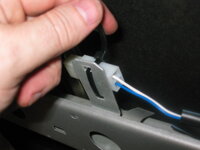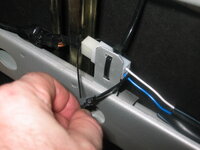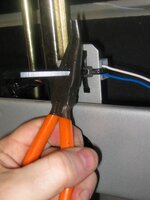

G-wagen models differ from many MBs of the 1960s through 2000s through their use of an electrically-controlled door-locking system, rather than the vacuum control system found on most sedans, coupes, and the like. With this system, each door has an electric actuator, which in the earlier W463 models is controlled through a master door-locking system relay, and a "5-wire" door-lock actuator in the driver's side door that sends locking/unlocking electric signals to the other actuators at the vehicle's other doors and rear-door.
Recently, I had the electric door lock actuator fail on my 1995 G320's front passenger-side door. This is the "two-wire" slave actuator, which is found on the front passenger and both rear doors. This same actuator is also currently used on all four doors of present-day G-wagens, controlled by a revised, modernised, electronically controlled locking system.
For my system, a quick diagnosis showed plenty of electrical power at the connection to the door lock actuator, indicating a failure of the actuator itself. This is not an uncommon failure.
To replace the actuator, you have to remove the inside door panel of the G-wagen. This is a fairly simple and straightforward process, and takes about 15 minutes to accomplish. Simple hand tools are all that is needed.
I will revise this HOW-TO once I receive the replacement door lock actuator and install it.
Tools needed:
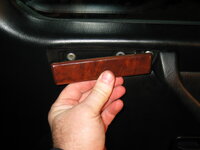
The first step is to CAREFULLY prise the small strip of wood away from the door panel. This is held on by two plastic pins, which fit into softer pin-holders embedded in the door panel. You can see these round pin-holders in the photo. Use a plastic trim removal tool to prise the wood away from the door. Often, one or both of these pins are already broken and the trim has been glued to the door panel, so take extreme care in the removal and work accordingly.
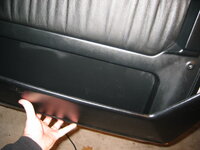
Next, with a medium-sized Philips screwdriver, remove the six screws that hold the door pocket onto the trim panel. This is an important step, because these screws go THROUGH the trim panel and into the door itself, not only holding the pocket to the door panel, but also the inside door panel to the door itself. These screws are recessed but easy to remove.


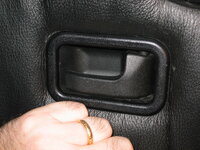
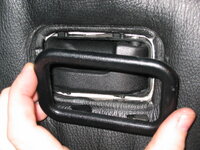
Then, you need to remove the plastic bezel surrounding the door pull. This is a part that slides directly toward the rear of the door. You need to press it in slightly as you slide it. To get some additional leverage, you may need to use the edge of your plastic trim panel removal tool. It is also easy to break the hooks on the back of this panel, so again take care. If you do break this piece, it is only a few dollars for a replacement from MB. It's actually to have a couple of extras on hand, as they do get brittle from age and repeated removals and installations.
After that, you can remove the door handle. This is held onto the vehicle by three screws, and a metal hook at the aft part of the door. This hook goes THROUGH the inner door liner and hooks inside the lip of the door frame, and effectively holds the aft center portion of the inner door liner to the door frame itself.
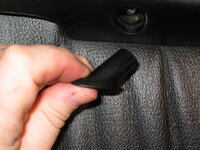
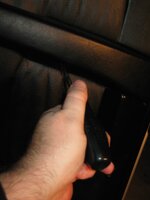
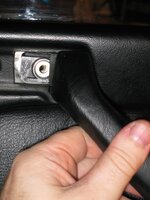
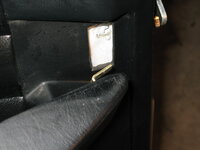
The screws are located underneath the main part of the arm rest, with the third screw being at the top of the door handle, and revealed by the removal of the wood in the first step. Use a medium to large Philips head screwdriver to remove the door handle screws. You will also need to prise out the plastic plugs that cover the two screws in the main handle, as shown in the first two photos below.
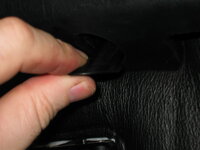

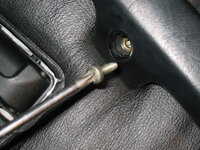
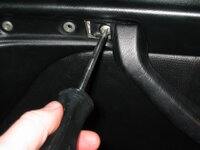

From there, you need to remove the two small Philips head screws that hold the top of the door panel to the door frame. Use a SMALL Philips head screwdriver to remove these two trim screws. There is a one screw at the top right, and another at the top left.
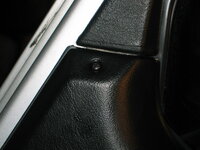
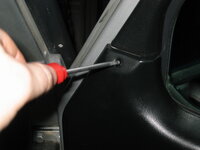

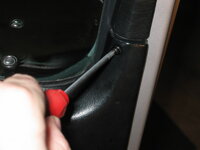
After removing the two upper trim panel screws, then unscrew the door lock knob, as you would with any MB.
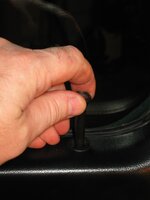
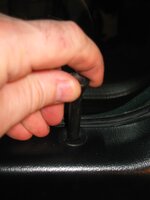
Then, carefully lift the door panel away from the door. As there are no plastic hooks on the rear of the door panel, as there are with the W124 models, it should just lift away. Be careful and work slowly on this.
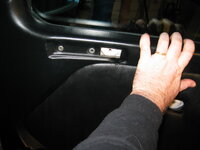

After removing the door panel, you will see the plastic-encased door frame. Carefully peel back the plastic to expose the window regulator, door lock actuator and other parts inside the door frame itself. As the doors are quite large, there is plenty of space to work when removing and installing parts, if/when needed.
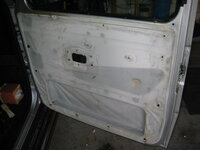
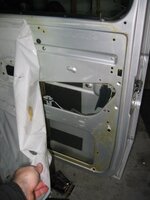
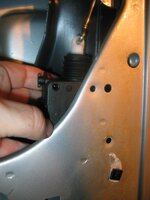
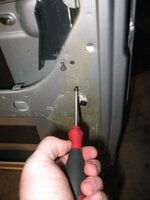
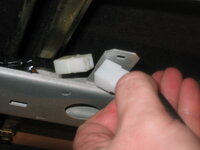
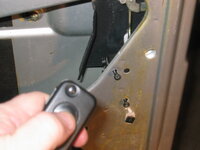
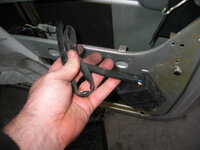
For this next portion of the HOW-TO, I'm going to concentrate on the removal of the door lock actuator. It is mounted to the aft portion of the door frame, near the locking mechanism, with two Philips head screws. It is connected to the door lock itself via a vertically placed metal rod that is several inches in length. You can see this below.
I will continue this section when I replace the old actuator with the newly received unit.
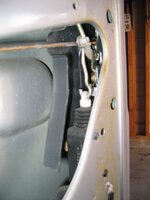


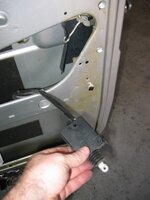


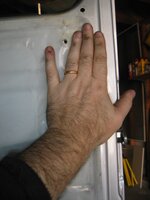
And to close out the job, here I am buttoning up the plastic to the door frame, before re-installing the inner door panel in the reverse order to how I removed it.
Recently, I had the electric door lock actuator fail on my 1995 G320's front passenger-side door. This is the "two-wire" slave actuator, which is found on the front passenger and both rear doors. This same actuator is also currently used on all four doors of present-day G-wagens, controlled by a revised, modernised, electronically controlled locking system.
For my system, a quick diagnosis showed plenty of electrical power at the connection to the door lock actuator, indicating a failure of the actuator itself. This is not an uncommon failure.
To replace the actuator, you have to remove the inside door panel of the G-wagen. This is a fairly simple and straightforward process, and takes about 15 minutes to accomplish. Simple hand tools are all that is needed.
I will revise this HOW-TO once I receive the replacement door lock actuator and install it.
Tools needed:
- Small Philips head screwdriver
- Medium Philips head screwdriver
- Large Philips head screwdriver (optional)
- Plastic trim removal tool (or a very small flat-blade screwdriver, used CAREFULLY)
The first step is to CAREFULLY prise the small strip of wood away from the door panel. This is held on by two plastic pins, which fit into softer pin-holders embedded in the door panel. You can see these round pin-holders in the photo. Use a plastic trim removal tool to prise the wood away from the door. Often, one or both of these pins are already broken and the trim has been glued to the door panel, so take extreme care in the removal and work accordingly.
Next, with a medium-sized Philips screwdriver, remove the six screws that hold the door pocket onto the trim panel. This is an important step, because these screws go THROUGH the trim panel and into the door itself, not only holding the pocket to the door panel, but also the inside door panel to the door itself. These screws are recessed but easy to remove.
Then, you need to remove the plastic bezel surrounding the door pull. This is a part that slides directly toward the rear of the door. You need to press it in slightly as you slide it. To get some additional leverage, you may need to use the edge of your plastic trim panel removal tool. It is also easy to break the hooks on the back of this panel, so again take care. If you do break this piece, it is only a few dollars for a replacement from MB. It's actually to have a couple of extras on hand, as they do get brittle from age and repeated removals and installations.
After that, you can remove the door handle. This is held onto the vehicle by three screws, and a metal hook at the aft part of the door. This hook goes THROUGH the inner door liner and hooks inside the lip of the door frame, and effectively holds the aft center portion of the inner door liner to the door frame itself.
The screws are located underneath the main part of the arm rest, with the third screw being at the top of the door handle, and revealed by the removal of the wood in the first step. Use a medium to large Philips head screwdriver to remove the door handle screws. You will also need to prise out the plastic plugs that cover the two screws in the main handle, as shown in the first two photos below.
From there, you need to remove the two small Philips head screws that hold the top of the door panel to the door frame. Use a SMALL Philips head screwdriver to remove these two trim screws. There is a one screw at the top right, and another at the top left.
After removing the two upper trim panel screws, then unscrew the door lock knob, as you would with any MB.
Then, carefully lift the door panel away from the door. As there are no plastic hooks on the rear of the door panel, as there are with the W124 models, it should just lift away. Be careful and work slowly on this.
After removing the door panel, you will see the plastic-encased door frame. Carefully peel back the plastic to expose the window regulator, door lock actuator and other parts inside the door frame itself. As the doors are quite large, there is plenty of space to work when removing and installing parts, if/when needed.
For this next portion of the HOW-TO, I'm going to concentrate on the removal of the door lock actuator. It is mounted to the aft portion of the door frame, near the locking mechanism, with two Philips head screws. It is connected to the door lock itself via a vertically placed metal rod that is several inches in length. You can see this below.
I will continue this section when I replace the old actuator with the newly received unit.
And to close out the job, here I am buttoning up the plastic to the door frame, before re-installing the inner door panel in the reverse order to how I removed it.