• Hi Guest !

    Welcome to the 500Eboard forum.

    Since its founding in late 2008, 500Eboard has become the leading resource on the Internet for all things related to the Mercedes-Benz 500E and E500. In recent years, we have also expanded to include the 400E and E420 models, which are directly related to the 500E/E500.

    We invite you to browse and take advantage of the information and resources here on the site. If you find helpful information, please register for full membership, and you'll find even more resources available. Feel free to ask questions, and make liberal use of the "Search" function to find answers.

    We hope you will become an active contributor to the community!

    Sincerely,
    500Eboard Management

Timing chain skipped several teeth (320kmi E420)

Phoenix127

E500E Enthusiast
Member
So recently my ‘94 E420 engine (320,000 miles) began stumbling barely idling in sonic drive through. Shut it off. Got my food and the engine refused to fire. Pushed it to a parking spot and puzzled over the issue. Eventually called a roll back and had it loaded and hauled home. After charging the battery the next day it started but made sounds I have never heard before like a chugging almost clanging. Shut it off and pulled plugs. Passenger side plugs were all wet. Drivers side looked fine.

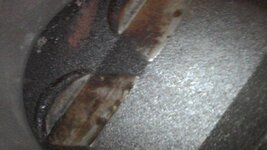
Pulled both valve covers and after trying to pin the camshafts discovered the passenger side intake camshaft was about 80 degrees out! A little more investigation revealed a damaged upper cam rail and apparently some of its remnants became lodged between the dual sprocket teeth possibly lifting the chain up enough to slip. I tried using a bore scope but didn’t see any obvious evidence, broken metal etc. although some piston crown areas seemed to lack equal carbon buildup.

I am working to get it timed correctly and order repair parts but question if the engine is scrap. Would it be better to just get a salvage yard engine at this point?
 
It's basically free (besides a few hours labor) to re-time the cams and fire it up. You could also do a cold compression test after re-timing the cams as a quick test before trying to start it. If it runs & idles normally, you may have gotten lucky. Does your borescope include a mirror to inspect for valve damage? If the valves didn't touch pistons, there's no reason you couldn't fix it. I'd confirm normal compression at a minimum, before investing in all the parts/labor to replace all the chain rails, new gaskets, etc etc.

If valves kissed pistons, yep, cheaper to swap engines... and at that point, just upgrade a 5.0L as there's almost zero extra cost and all the labor is identical. Not worth the investment to pull the head unless you have a LOT of free time and can't locate a spare engine nearby.

:v8:
 
The evidence of timing chain jumping.
 

Attachments

  • E0F8E918-4594-414E-A3D3-CCDE066CCDF5.png
    E0F8E918-4594-414E-A3D3-CCDE066CCDF5.png
    7.1 MB · Views: 61
  • BF2D6A2A-534A-42FF-8143-80F4B3E00CF1.jpeg
    BF2D6A2A-534A-42FF-8143-80F4B3E00CF1.jpeg
    2.4 MB · Views: 61
  • 8298F36B-FD25-4F5E-9DA5-8448B977B0DD.jpeg
    8298F36B-FD25-4F5E-9DA5-8448B977B0DD.jpeg
    1.3 MB · Views: 61
Update: compression test results were between 160psi and 190psi. There was no correlation between heads. I measured cold leak down setting each cylinder with closed valves and using my air compressor at only 100psi shutting the ball valve and waiting for pressure drop. Not a real leak down tester, but again each cylinder was similar taking about 20-25 seconds to drop to 30psi. Beginning to think I might have gotten really lucky. and planning to order a timing chain and a basket of chain rails...Thoughts?
 
Last edited:
Based on that info... I agree, you may have gotten lucky. Rolling in a new chain is not fun, btw, if done with cam sprockets in place and cams rotating. Taking apart the intake cam adjusters is the other nuisance, this is needed to access two of the inner chain rails, unless you remove the entire camshaft with adjuster attached. Lots of labor, not much cost in parts.

:seesaw:
 
Update: compression test results were between 160psi and 190psi. There was no correlation between heads. I measured cold leak down setting each cylinder with closed valves and using my air compressor at only 100psi shutting the ball valve and waiting for pressure drop. Not a real leak down tester, but again each cylinder was similar taking about 20-25 seconds to drop to 30psi. Beginning to think I might have gotten really lucky. and planning to order a timing chain and a basket of chain rails...Thoughts?
I would get yourself a leak down tester from harbour fraud or similar places and I can provide m119 cold leak down resultos for comparison of a healthy motor in link below:


A borescope would also be essential. I have a cheap ebay andriod version and it works fantastically well. Check to see if any of the pistons have signs of valves having contacted them. If not - yes you got real lucky and I hope that is the case!

I bought a Febi timing chain kit for my m119 S500 about a year ago and it was German Made IWIS chain etc inside FYI. If you search this board I have posted photos of that Kit and my engine timing / rebuild photos.
 
Forgot to mention - if replacing the timing chain, you'll need a chain crimp tool (not cheap), or have to use alternate methods to peen the link to retain the side plate. Also, on the OE master link, the center plate is pressed on (using the factory tool). This may be a challenge without the proper tool. I forget if aftermarket links have slide-on center plates.

Unless the chain is either damaged or stretched excessively, it may not need replacement.
 
Forgot to mention - if replacing the timing chain, you'll need a chain crimp tool (not cheap), or have to use alternate methods to peen the link to retain the side plate. Also, on the OE master link, the center plate is pressed on (using the factory tool). This may be a challenge without the proper tool. I forget if aftermarket links have slide-on center plates.

Unless the chain is either damaged or stretched excessively, it may not need replacement.
Any timing chain links I have used have been OE IWIS and the centre link slides on without a press. The outer plate does need pressed on however using the chain crimp tool then crimp the chain. I bought a £50 approx chain tool on ebay which was great and done 3x MB timing chain jobs this year so far.

The Febi / IWIS m119 chain kit I purchased had the chain complete. Aka it did not require crimping which I preferred but also means the timing cover has to come off to replace a complete chain. Probably better using a split chain for easier installation and timing cover stays on.
 
One of the OE master links had the center plate pressed on, in addition to the outer plate... or I'd swear it did. However, I may be getting M119 mixed up with OM602/OM603 engines...

:oldster:


:update:

It was the OM60x engine master link that definitely had the pressed-on center link. Dug up an old email from 15 years ago (2006).

The new [OM602 / OM603] OE/dealer timing chain includes a new master link. The OE/dealer master link has blue side plates, and has a pressed-on center link AND pressed-on end plate. The factory chain tool includes special dies that allow proper pressing on of both plates... then you switch dies to swage the link pins. The factory tools press the center plate on to the precise location required, ditto for the end plate. When all done, it looks identical to the rest of the links, except for the blue color! I think it would be very hard to do this without the factory tools. The aftermarket links have a slip-fit center plate (I forget what they have for end plates.)


The M119 may not have the pressed-on center plate - I'd have to double check. :scratchchin:
 
After further review.... I removed the intake cam and have discovered damage to the cam followers. What does this require? Head removal ? New cam followers? Start over with a used engine?
 

Attachments

  • 79E06C4F-24A9-4570-9069-7A2AE087A281.jpeg
    79E06C4F-24A9-4570-9069-7A2AE087A281.jpeg
    1.7 MB · Views: 43
  • 7D06CA2B-F8A8-4E7D-9800-9B398F2CA4FF.jpeg
    7D06CA2B-F8A8-4E7D-9800-9B398F2CA4FF.jpeg
    2 MB · Views: 43
After further review.... I removed the intake cam and have discovered damage to the cam followers. What does this require? Head removal ? New cam followers? Start over with a used engine?
Are your oil tubes blown at those followers? This thread on Peach Parts describes the same problem, which they believe was caused by lack of lubrications due to popped oil tubes. I’d imagine those cam lobes would be somewhat damaged too.


Since you already have that cam out, can’t you just pull those followers out and replace them? They are just pressed in I believe, so no need to remove the head.
 
No, all oil tubes are in place and they seem alright. I examined each “cap” and they are all in place.
 
Last edited:
At a minimum the cam followers (lifters/tappets) need to be replaced, and the camshaft lobes need close inspection. The followers should pull out easily with a suction cup. The FSM recommends against using a magnet but that could be used if necessary. Also, as mentioned in the PP thread above, press each with your fingers... they should be firm, if any are "soft" they are failing internally.

The abnormal wear shown in your photo is likely due to the lifters not rotating in their bore. Normally they will rotate so the wear is not all in the same place. See if they will rotate easily by hand - compare to the others on the same head. If those don't easily rotate, see if you can figure out why.

Just curious, what brand/type/viscosity oil have you been using, and how often was it changed?

:blink:
 
After further review.... I removed the intake cam and have discovered damage to the cam followers. What does this require? Head removal ? New cam followers? Start over with a used engine?
How many lifters were like that - all of them?

Both banks?

What was the engine oil pressure gauge reading at hot idle before you stripped it down? (Assuming the oil pressure sensor is good that is - generally they require replacement by now)

That kind of damage makes me wonder is there some garbage in the lower sump pan (Guide rails or RTV slugs) plugging up the oil pickup tube causing oil starvation issues. Or Oil pump failure. I would be getting an oil pressure test gauge hooked up and testing the engine when hot as soon as you have it up running again.
 
No, all oil tubes are in place and they seem alright.
Just confirming, you checked the bottom end of all 16 tubes, correct? You can't see the popped end clearly without a mirror, or using an L-shaped tool (Allen wrench, etc) to see if the bottom cap is missing.

Did you have any lifter "ticking" noise, even intermittently, prior to this failure?

I agree with @JC220 that it would be a good idea to drop the lower oil pan and inspect the sump pickup for debris. With the chain rail disintegration, you need to do this anyway, to clean the plastic parts out of the sump.

FWIW, I've seen an engine with the pump screen completely blocked with rail debris, yet it had been running for years like that without damage, and no reduction in oil pressure. Pics below. Not that I recommend this, lol! Just that if you find the screen visibly blocked, it doesn't automatically mean the engine is toast. After cleaning out the junk and replacing the rubber boot, the engine continued to run fine...

1621175202441.png 1621175220209.png 1621175244619.png

:duck:
 
20w50 Castrol GTX for 320,000 miles changed at 5,000 mile intervals.
How many lifters were like that - all of them?

Both banks?

What was the engine oil pressure gauge reading at hot idle before you stripped it down? (Assuming the oil pressure sensor is good that is - generally they require replacement by now)

That kind of damage makes me wonder is there some garbage in the lower sump pan (Guide rails or RTV slugs) plugging up the oil pickup tube causing oil starvation issues. Or Oil pump failure. I would be getting an oil pressure test gauge hooked up and testing the engine when hot as soon as you have it up running again.
I have only pulled one camshaft which was the one out of position. Oil pressure was always good. Bearings are getting good oil. Six cam followers had similar wear. They all slid out very easily so don’t know what made them stop rotating. Two had continued to turn so their wear pattern was distributed across the surface.
Years ago a mechanic replaced the oiler tubes and they all still have their ends intact. Perhaps this wear occurred long ago? I will pull the exhaust cam and report back..
 
20w50 Castrol GTX for 320,000 miles changed at 5,000 mile intervals.

I have only pulled one camshaft which was the one out of position. Oil pressure was always good. Bearings are getting good oil. Six cam followers had similar wear. They all slid out very easily so don’t know what made them stop rotating. Two had continued to turn so their wear pattern was distributed across the surface.
Years ago a mechanic replaced the oiler tubes and they all still have their ends intact. Perhaps this wear occurred long ago? I will pull the exhaust cam and report back..
At this point you would of course need to check the other bank too. Its very strange damage, I can't think of anything that could cause it except for lack of oil.... or the valves hitting the pistons.

You said the timing was way off correct? was it off timing on this bank? Then that damage could be from the valves impacting the pistons!!

Borescope it sooner than later.....

In any case if I were you I would be dropping the sump pan and clearing it out to be sure before running it again.

And if it were my car I would go to a salvage yard and remove all 4x camshafts and the hydraulic elements from a good used engine. Clean everything thoroughly in your heads and insert each replacement lifter one by one confirming that each one can rotate easily in its bore. And probably run a 10w40 fully synthetic motor oil. (20W50 is a pretty heavy weight oil. Not saying it caused the issue but the engine doesn't require that thick an oil)

Putting new elements in with those old camshafts runs the risk of a similar event happening again if the cam lobes machine surfaces are uneven or damaged. No magnets should be used on any of these parts as it runs the risk of magnetising the machined parts and causing damage.
 
Last edited:
Just confirming, you checked the bottom end of all 16 tubes, correct? You can't see the popped end clearly without a mirror, or using an L-shaped tool (Allen wrench, etc) to see if the bottom cap is missing.

Did you have any lifter "ticking" noise, even intermittently, prior to this failure?

I agree with @JC220 that it would be a good idea to drop the lower oil pan and inspect the sump pickup for debris. With the chain rail disintegration, you need to do this anyway, to clean the plastic parts out of the sump.

FWIW, I've seen an engine with the pump screen completely blocked with rail debris, yet it had been running for years like that without damage, and no reduction in oil pressure. Pics below. Not that I recommend this, lol! Just that if you find the screen visibly blocked, it doesn't automatically mean the engine is toast. After cleaning out the junk and replacing the rubber boot, the engine continued to run fine...

View attachment 131044 View attachment 131045 View attachment 131047

:duck:Yes I used a pick and checked each cap to make sure it was in place. I am seeing lots of plastic debris. Chunks of chain rails and smaller bits like this. I am sure the pan has more. When I opened the valve covers one top rail was broken, both inner rails were broken. So I plan to replace everything except the two large lower ones which seem to be alright.
At this point you would of course need to check the other bank too. Its very strange damage, I can't think of anything that could cause it except for lack of oil.... or the valves hitting the pistons.

You said the timing was way off correct? was it off timing on this bank? Then that damage could be from the valves impacting the pistons!!

Borescope it sooner than later.....

In any case if I were you I would be dropping the sump pan and clearing it out to be sure before running it again.

And if it were my car I would go to a salvage yard and remove all 4x camshafts and the hydraulic elements from a good used engine. Clean everything thoroughly in your heads and insert each replacement lifter one by one confirming that each one can rotate easily in its bore. And probably run a 10w40 fully synthetic motor oil. (20W50 is a pretty heavy weight oil. Not saying it caused the issue but the engine doesn't require that thick an oil)

Putting new elements in with those old camshafts runs the risk of a similar event happening again if the cam lobes machine surfaces are uneven or damaged. No magnets should be used on any of these parts as it runs the risk of magnetising the machined parts and causing damage.
Sadly I just pulled the adjacent exhaust cam and the cam followers on it were pristine. This makes me believe this was indeed impact damage. Compression was good so what now?
 
Sadly I just pulled the adjacent exhaust cam and the cam followers on it were pristine. This makes me believe this was indeed impact damage. Compression was good so what now?
Borescope all cylinders on that side first. (a cheap ebay one will do just fine!)

And carry out a leak down test. This would require the engine engine turn though to test each cylinder in turn at TDC. However with your cams removed the same test would still work in theory to detect bent valves.

If you do see where the valves have contacted the pistons in the borescope test first then probably best pull the head and have a machine shop fully inspect it and make good. To me I've never seen any lifter damage like that in a MB engine of that era. It would be extremely, extremely rare and it simply must be impact damage 😔
 
I did a compression test earlier with good results. I also looked with a bore scope but did not detect anything -unfortunately I was unable to get a mirror through the spark plug hole to see the valves... is there another trick to that?
 
I did a compression test earlier with good results. I also looked with a bore scope but did not detect anything -unfortunately I was unable to get a mirror through the spark plug hole to see the valves... is there another trick to that?
Again a leak down tester is what is used to detect bent valves with accuracy. A compression test is quite limited really.

I haven't been able to see upwards with a borescope either! If you didn't see any impact marks in the carbon that is good news of course. Can you get close with the borescope and take photos?

Eg here is what you don't want to see in an m119! Like the engine that came in my S500 and was toast (it got a over restored replacement engine so it's all good now)
:omg:

20190526135245.jpg

That was a £10 ebay bluetooth borescope

Better results in my S430

20210103151336.jpg

A tip is to rotate the camera cord around 360 and take several photos to see the entire surface of each piston.

Bottom line is if it passes a leak down test (do all 8 cylinders) and you can see no impact damage on the pistons then swap out the affected cams and followers and run it again after checking the sump
 
Thanks for that information. My loaner borescope from Autozone did not have that resolution. I will endeavor to get a better quality borescope. What brand do you recommend?
Update: I have a nice one on order now along with yet more engine parts. Gonna be a week before I can get back at it. Will keep updating as I have time. Thanks everyone for the support.
 
Last edited:
What do you make of these borescope photos? The other two cylinders require engine rotation and I have the chain and cams off one side. Is this evidence of damage? I have read the cold leak down test is of dubious value. Obviously heating up the engine is not possible at the moment..
 

What do you make of these borescope photos? The other two cylinders require engine rotation and I have the chain and cams off one side. Is this evidence of damage? I have read the cold leak down test is of dubious value. Obviously heating up the engine is not possible at the moment..
Those photos do appear to show the carbon disturbed at the valve pockets. Suggesting the valves have indeed made contact with the pistons. Head off and to a machine shop for assessment I'm afraid
 
I know Atlanta is a good ways away but want to let you know there are good M119s available here. Currently a SL 5.0L for sale in Ashville. $1000 or BO for the entire car.


drew
 
Last edited:
So to remove the right side head while in the car two questions:
1) Can the exhaust manifold bolts be accessed to separate this from the head?
2) does the entire intake manifold have to be removed to separate the head from the block?
 
So to remove the right side head while in the car two questions:
1) Can the exhaust manifold bolts be accessed to separate this from the head?
2) does the entire intake manifold have to be removed to separate the head from the block?
This is a w124 chassis correct? Looks like later pistons which is confusing me.

If a w124 there may not be enough room to split the exhaust manifold from the head in situ. Probably less swearing by removing the downpipe and pull the manifold with the head IMO.

Yes the intake manifold must come off before the head.

It's alot of work for sure. May want to consider a good used, tested and complete motor swap it will be more cost effective in long run. Personally though I like to know the engine I am putting the money into and if I think its worth it to me - do it right. Speaking from direct experience here

20190524_204045.jpg20190824_170914.jpg20191102_184717.jpg20191108_210318.jpg20200112_141044.jpg

This refresh cost about £3k in parts and sundries alone
 
It's a 1994 4.2L so yes, it has the 11:1 pistons.

I second the recommendation to buy a good donor engine, inspect/re-seal it on an engine stand, then swap engines. And if you do that, get a 5.0L since there is almost no additional cost for the upgrade. The only penalty is a ±15% reduction in fuel economy.
 
It's a 1994 4.2L so yes, it has the 11:1 pistons.

I second the recommendation to buy a good donor engine, inspect/re-seal it on an engine stand, then swap engines. And if you do that, get a 5.0L since there is almost no additional cost for the upgrade. The only penalty is a ±15% reduction in fuel economy.
Are the 93-95 4.2 pistons identical?
 
Are the 93-95 4.2 pistons identical?
USA model years, I believe so, yes... however the EPC indicates there is a difference between closed-deck and open-deck, which is odd. However it only has a p/n for a piston kit which includes rings & pin, and it appears the difference may be the rings... can't tell for certain if there was any change with pistons or not.
 
Update: I am well into the disassembly. Unfortunately, I have to remove the timing cover because the lower left chain rail is in pieces. Once I have the cover off, does anyone have part numbers for new o’rings, seals, and such needed to reassemble the front timing cover? Also, can anyone source a continuous timing chain? I saw Febi has one as part of a timing chain kit. However, I choose to use Mercedes chain rails and therefore don’t need a complete kit.
 
Do you mean the smaller lower rail on the driver side, or the long/banana rail on the passenger side? The driver side rail does require cover removal; the passenger side does not. I've never heard of the driver side one failing (yet).

I'm not sure about the continuous chain. @JC220 may know. I don't know the other items needed but IIRC it's primarily a couple of O-rings for the coolant passages to the water pump. I'd use Loctite 5900 to re-install, instead of anaerobic, for the block junction.

It will be tricky doing this with the cylinder heads still on. I've never done it, but I've heard it's a RPITA.

:duck:
 
Sadly, it is the lowest chain rail down inside the block on the driver’s side. The only intact rail I have found was the upper driver’s side (between cams) and the long tensioner rail. Every other one had damage. The upper ones were mostly intact the lower ones with pins were in small pieces. Inner pair were broken in two. I’m sure the oil pan will be a mess. Lots of work but I am taking it slow. Thanks for all the support. It helps keep me motivated.
 
At this point, I recommend you stop and just remove the entire engine from the car. It is going to make EVERYTHING 500% easier to work on, given what you have to do.

Slow and methodical, that's the way to do it. And ask for help and share your observations here, as you are doing. You may even want to start a thread in the "Project Journals" forum, and take and post photographs of every step you take not only for your own reference, but for the information of the forum members !!

Cheers,
Gerry
 
Do you mean the smaller lower rail on the driver side, or the long/banana rail on the passenger side? The driver side rail does require cover removal; the passenger side does not. I've never heard of the driver side one failing (yet).

I'm not sure about the continuous chain. @JC220 may know. I don't know the other items needed but IIRC it's primarily a couple of O-rings for the coolant passages to the water pump. I'd use Loctite 5900 to re-install, instead of anaerobic, for the block junction.

It will be tricky doing this with the cylinder heads still on. I've never done it, but I've heard it's a RPITA.

:duck:
Sadly, it is the lowest chain rail down inside the block on the driver’s side. The only intact rail I have found was the upper driver’s side (between cams) and the long tensioner rail. Every other one had damage. The upper ones were mostly intact the lower ones with pins were in small pieces. Inner pair were broken in two. I’m sure the oil pan will be a mess. Lots of work but I am taking it slow. Thanks for all the support. It helps keep me motivated.
Whilst I went with a full Febi M119 timing chain kit (OE IWIS Chain and all german made etc!) There was a separate Febi box inside the big box which had the IWIS chain. That chain came complete - joined and without a link. Since I had the heads and timing cover off this was just fine.

I would recommended that any memebers who may take on timing chain tasks etc should buy themselves good quality MB timing chain tools. That is - the ebay kits that come with both a chain splitter and crimper tool. The one I purchased was good quality, only cost about £60 IIRC and makes light fast work of accurately splitting a chain and crimping the links on. (Like on my m113 and also on a single row diesel chain recently)

So in your case I would check for the correct m119 chain part number then mail order the Febi chain. Identical to MB for a fraction of the price.

If you can install complete which it sounds like you can since the lower timing cover has to come off then you do not need to buy the chain tool.

If you did not have to pull the lower timing chain cover for the benefit of others I would suggest the following:
  • Buy the chain
  • Buy a spare chain crimp link & temporary link (Febi)
  • Then if needed split the new chain, remove the spark plugs and all 4x camshafts and wind the new chain in around the crankcase without fear of it slipping and valves touching pistons. I feel this is faster overall and gives me peace of mind.
  • Crimp the link with the proper tool upon completion.
 
At this point, I recommend you stop and just remove the entire engine from the car. It is going to make EVERYTHING 500% easier to work on, given what you have to do.

Slow and methodical, that's the way to do it. And ask for help and share your observations here, as you are doing. You may even want to start a thread in the "Project Journals" forum, and take and post photographs of every step you take not only for your own reference, but for the information of the forum members !!

Cheers,
Gerry
I took your advise but really had to tool up for the job at hand. After some investment in an engine hoist the engine is now on a harbor freight engine stand in my garage. It was difficult accepting the magnitude of this but once I managed to look it over i began to see just how sketchy that timing cover job is without removing the engine. With the help of youtube star “Friendly neighborhood mechanic”, I removed the timing cover and replaced the two chain guides, o’rings, and chain. Honestly this was a bear on the engine stand with heads on.

First of all the transmission has to be removed or at least separated an inch to get at the rear two bolts holding the upper pan on. Two of the four engine stand attachment bolts use the rear of the upper pan. So with the engine inverted on the stand I had to block up the front of the engine before the upper pan could come off. It has to be separated from the bottom of the timing cover to allow it some freedom of movement. Especially so with the heads on. The head gaskets were a concern but turned out to be a non issue for me.

Plan the reassembly very carefully. The banana shaped tensioner guide just doesn’t want to go around the corner when the timing cover is held at an angle. You have to angle the timing cover a bit to get the damned oil chain on the sprocket. This chain has its own tensioner guide which irritatingly flips in your way when you are trying to position the cover. So basically the whole thing really doesn’t want to go back together.

With the time crunch of ten minutes for the Loctite silicone sealant I practiced angling the timing cover, fiddling with the chain, holding the oil pump chain guide clear, while simultaneously tapping the banana chain guide onto the pin using a small screw driver. I could have used an assistant for sure. Ultimately I managed to get it all back together.

I kept worrying if the four o’rings fell out during this process I would never know. I put some sticky caliper grease on them to hold them in place. It took some time but I did my best and everything seems to be in order. I would still be cursing had I attempted this with the engine in the car. Thanks very much for helping convince me to remove the engine. So many other things can be accomplished with the engine out that it is really the smart choice.
 
This is a really basic question, but would it have been more difficult to leave the engine in place and pull the heads to make it easier to replace the timing covers, versus pulling the engine and transmission?
 
This is a really basic question, but would it have been more difficult to leave the engine in place and pull the heads to make it easier to replace the timing covers, versus pulling the engine and transmission?

In my opinion no because the upper pan still has to be removed. This entails separating or removing the transmission to get at the rear two bolts. The heads just present a minor annoyance with the tensioner guide.
 
In my opinion no because the upper pan still has to be removed. This entails separating or removing the transmission to get at the rear two bolts. The heads just present a minor annoyance with the tensioner guide.
Just curious - what part did you replace, that required the upper oil pan to be removed?
 
The large chain rail (not tensioner rail) inside the timing case required removing the cover. The removal of the timing cover necessitated removing the upper pan. It might have been possible to “spring” this casting slightly in the front without complete removal, however this would certainly damage the gasket and result in oil leaks. I realized so many other benefits from having the engine and transmission out.
 
While I've never attempted this, I think it would be possible to do the same job by removing the cylinder heads instead of the upper oil pan. That would eliminate the hassles with mounting the engine to a stand.

I totally agree with pulling the engine & transmission out, though! As you said, there are a ton of other benefits... allows a full re-seal of the trans (plus reverse clutches) on the workbench, cleaning the engine compartment, easy access to the steering box & hoses along the frame rail, access to everything on the engine, etc etc. Attempting this with the engine in the car would not be fun, and you'd get really tired of leaning over the fenders for hours and hours.

:wheelchair:
 
Alright installed new chain and all new rails. I have now scoured the posts related to timing the M119. At this point I have crank sitting at 45 and four cams pinnned. New chain is very tight. And the tensioner is installed. When I begin to turn the crank goes to about 38-40 degrees and everything turns well. When I come around to 45 and attempt to re-pin the cams they are all the same one half hole off center. Wondering if the woodruff key is worn? It seems about 1/2 tooth off.
 

Who has viewed this thread (Total: 4) View details

Who has watched this thread (Total: 1) View details

Back
Top