• Hi Guest !

    Welcome to the 500Eboard forum.

    Since its founding in late 2008, 500Eboard has become the leading resource on the Internet for all things related to the Mercedes-Benz 500E and E500. In recent years, we have also expanded to include the 400E and E420 models, which are directly related to the 500E/E500.

    We invite you to browse and take advantage of the information and resources here on the site. If you find helpful information, please register for full membership, and you'll find even more resources available. Feel free to ask questions, and make liberal use of the "Search" function to find answers.

    We hope you will become an active contributor to the community!

    Sincerely,
    500Eboard Management

WARNING: Do not use sealant on valve cover gaskets

gsxr

.036 Hoonigan™, E500E Boffin, @DITOG
Staff member
The previous owner of our 1994 E420 slathered some sort of brown shellac all over the valve cover gaskets (possibly Indian Gasket Shellac Compound?). Whatever the stuff is, it hardens like epoxy. As a bonus, he also didn't tighten the bolts properly. I discovered this immediately after purchase, but thankfully the minor leak stopped after tightening the bolts so I didn't have to immediately spend time scraping brown crap off the heads and covers. This was back in 2013 when we bought the car, with 114kmi on it.

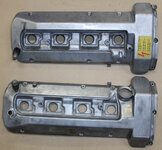
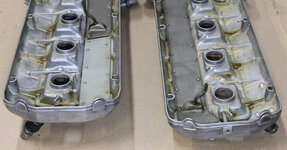
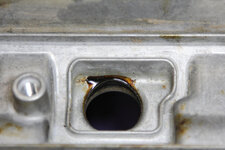
The oil leak went away for a number of years, but eventually returned. It was very minor so I kept delaying the job, as I knew it wouldn't be fun. Finally got around to the project in summer 2019 at the 150kmi service. Photos below... the brown shellac was on *everything*. It took HOURS to scrape it all off. I'd estimate 8-10 hours over several days, just to clean the sealing surfaces on the cylinder heads, and the valve covers. That did not include the normal time for the rest of the work. What a nightmare. I had already cleaned most of the cylinder head surfaces before I took photos, so it doesn't look too bad in the pictures, but trust me - it was a mess. I got photos of the valve covers before I started cleaning.

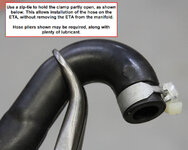
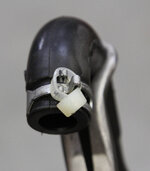
While in there, I also replaced all the fossilized PCV hoses/tubes and vacuum lines. I was also able to replace the ETA hose without pulling the ETA, but it took about three dozen attempts before it worked. With new OE/Genuine MB valve cover gaskets installed, plus new copper washers on the bolts, all torqued to spec, the valve covers have been leak-free, 4kmi later.

Please - do not EVER apply sealant of any kind to M119 valve cover gaskets. It simply is not necessary. I've seen this multiple times. The worst is RTV which "glues" the cover to the head, making it difficult to remove without damaging anything - then you get to spend hours cleaning once it's removed.

:banana1:
 

Attachments

  • ETA_hose_trick1.jpg
    ETA_hose_trick1.jpg
    128.1 KB · Views: 169
  • ETA_hose_trick2.jpg
    ETA_hose_trick2.jpg
    81.6 KB · Views: 183
  • head_cleaning1.jpg
    head_cleaning1.jpg
    301.5 KB · Views: 182
  • head_cleaning2.jpg
    head_cleaning2.jpg
    243.7 KB · Views: 168
  • head_cleaning3.jpg
    head_cleaning3.jpg
    220 KB · Views: 159
  • head_cleaning4.jpg
    head_cleaning4.jpg
    142.4 KB · Views: 165
  • head_cleaning5.jpg
    head_cleaning5.jpg
    212.1 KB · Views: 159
  • head_cleaning6.jpg
    head_cleaning6.jpg
    200.5 KB · Views: 155
  • head_cleaning7.jpg
    head_cleaning7.jpg
    192.4 KB · Views: 151
  • head_cleaning8.jpg
    head_cleaning8.jpg
    111 KB · Views: 148
  • head_cleaning9.jpg
    head_cleaning9.jpg
    238.5 KB · Views: 147
  • valve_cover_clean1.jpg
    valve_cover_clean1.jpg
    288.9 KB · Views: 146
  • valve_cover_clean2.jpg
    valve_cover_clean2.jpg
    310.2 KB · Views: 140
  • valve_cover_clean3.jpg
    valve_cover_clean3.jpg
    208.7 KB · Views: 137
  • valve_cover_clean4.jpg
    valve_cover_clean4.jpg
    183.1 KB · Views: 130
  • valve_cover_goop1.jpg
    valve_cover_goop1.jpg
    225 KB · Views: 141
  • valve_cover_goop2.jpg
    valve_cover_goop2.jpg
    213.9 KB · Views: 137
  • valve_cover_goop3.jpg
    valve_cover_goop3.jpg
    193 KB · Views: 133
  • valve_cover_goop4.jpg
    valve_cover_goop4.jpg
    237.9 KB · Views: 133
  • valve_cover_goop5.jpg
    valve_cover_goop5.jpg
    143.8 KB · Views: 127
  • valve_cover_goop6.jpg
    valve_cover_goop6.jpg
    169.3 KB · Views: 125
  • valve_cover_goop7.jpg
    valve_cover_goop7.jpg
    166.7 KB · Views: 149
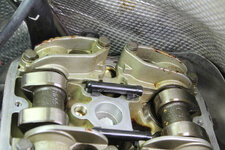
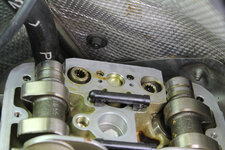
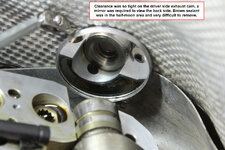
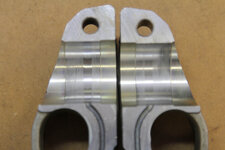
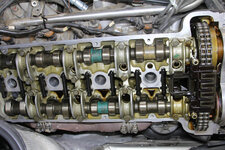
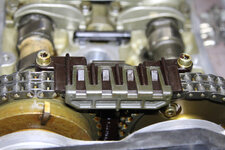
While the valve covers were off, there was another fun discovery! When the PO had replaced the valve cover gaskets previously, he either forgot to re-install the "fingered" chain rails between the cam sprockets, or they had been missing and he didn't know they were required. Somehow, there was no damage from running the engine like this for at least 40kmi. And no visible evidence that it caused any other issues. No noise either, I had no idea there was a problem for the 6+ years driving the car in this condition.

I measured timing chain stretch while it was apart: 3 cams pinned perfectly at 45°! The passenger exhaust cam pinned at 44°. Can't ask for any better than that. I had already dropped the lower oil pan when the car was purchased in 2013 and there was no rail debris, so a previous owner/mechanic had already been in there at some point. Additional evidence that someone had been in there previously - when I dropped the lower pan back in 2013, the oil sump pickup was the newer/updated style, and still soft rubber, not fossilized. I replaced the oil level sender O-ring at the block again (first in 2013, again 2019) just because it was easy and cheap, and I didn't want to drop the pan again.

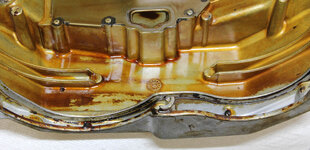
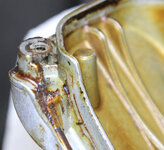
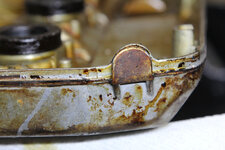
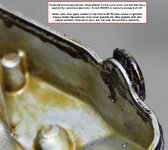
In the past I've had issues getting the lower oil pan to seal properly. Using Hylomar didn't help. This time I tried something new, using Right Stuff (or Loctite 5900, or the MB black sealant) between the pan gasket and lower/steel pan. I used *no* sealant on the top side of the gasket against the upper/aluminium pan. So far it has been 100% leak free. I plan to use the same method in the future. I forgot to take photos of this, ooops. If I ever have to remove the pan in the future, it won't be difficult to clean the steel pan on the workbench, and the upper aluminum pan should have little if any residue to remove. UPDATE: As of 2026, the pan gasket is still leak free!

:banana2:
 

Attachments

  • cams_driver.jpg
    cams_driver.jpg
    348.6 KB · Views: 109
  • cams_passenger.jpg
    cams_passenger.jpg
    336.9 KB · Views: 117
  • guides_missing1.jpg
    guides_missing1.jpg
    230.5 KB · Views: 112
  • guides_missing2.jpg
    guides_missing2.jpg
    234.1 KB · Views: 105
  • guides_replaced1.jpg
    guides_replaced1.jpg
    181 KB · Views: 96
  • guides_replaced2.jpg
    guides_replaced2.jpg
    184.9 KB · Views: 102
Last edited:
A couple things:

1.) Plastic oiler tubes? Why haven't you replaced those?

2.) Nice trick with the ETA hose. I'm sorry to say I'm pretty proficient at R&R'ing the ETA, not that it's something I care to be good at.

Why didn't you have the valve covers media blasted or something like that? I would think it would be the most expedient means of removing that goop from the valve covers.

I've got the "pile 'o' hoses" on the shelf for the wife's R129/M119 waiting to be done. I look at it and see that ETA hose and it forces me to find something else to do...

Nice job!

Dan
 
I know, I know... should have replaced the oil tubes while I was in there. But I only had a few sets handy and they were earmarked for 5.0L engines. I'm also curious how long the plastic tubes will last. If one ever pops, I will replace all 16 with aluminum. At least next time, the valve cover job will be a breeze.

Media blasting would probably have been ideal. Unfortunately I am not set up for media blasting at home, and I don't know any local shops that do this... but I really should find some. I'd also be a little nervous about media particulate getting into the PCV passages, which are sealed with rivets - not easy to clean if anything gets inside. The media would also need to be mild enough to not remove the gray paint on the covers... through about 1994 the covers were painted, but somewhere during 1995 (USA model year) production this changed to bare/unpainted as a cost reduction.

:jelmerian:
 
Holy crap! That is a mess. I do t know what is worse, the licorice all over the place or the plastic oilers. When I did this job a very reputable shop here in houston did about 5k worth of work getting her ready for the seller. I redid some of their work when I noticed some black rtv on the seals. Not alot, that was in the pan along with the tabs when they replaced the chain guides. So I redid that work and much more, requiring NO RTV, and leak free.
 
FWIW. Subaru and Toyota use RTV to secure the timing cover and oil pan on the GR86/BRZ. They also used too much, so it squeezes out inside the motor, comes lose and clogs up the oil pickup assembly causing oil starvation. Many of these motors have experienced complete failures due to this.
 
Thank you for all those tips.
What did you use to clean up head and covers? I have plenty of brown as well as blue stuff on my engine
 
Thank you for all those tips.
What did you use to clean up head and covers? I have plenty of brown as well as blue stuff on my engine
The brown stuff was hard and brittle, and no solvent would touch it. Every bit had to be scraped off manually. Plastic scrapers didn't work so I had to use screwdrivers, putty knives, and razor blades. The valve cover is easier only because you can clean it on the workbench. Be extra careful on the cylinder head, don't dig into the aluminum sealing surfaces with metal cleaning tools. This literally requires hours of work. For the final surface prep you can use a Scotchbrite pad or similar.

If you have softer goop, like RTV, plastic tools and/or solvent may work. Definitely try that before switching to metal scrapers.

:bananadeath:
 
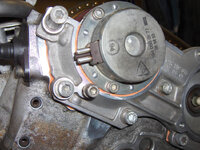
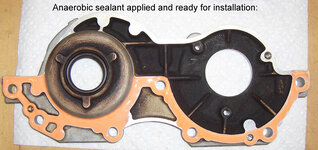
Is it OK to use the orange locktite 574 flange sealer (anaerobic) on the cam solenoid and the front cover ?
 
The previous owner of our 1994 E420 slathered some sort of brown shellac all over the valve cover gaskets (possibly Indian Gasket Shellac Compound?). Whatever the stuff is, it hardens like epoxy. As a bonus, he also didn't tighten the bolts properly. I discovered this immediately after purchase, but thankfully the minor leak stopped after tightening the bolts so I didn't have to immediately spend time scraping brown crap off the heads and covers. This was back in 2013 when we bought the car, with 114kmi on it.
(snip)
That’s weird, I have the same type of gook on my valve covers… 🤔
 
Please see this post. Everything is detailed in the thread.

Also note that the bolts MUST have sealant applied to the threads, as shown in the post. 21Nm torque for each bolt.
Hi Gerry. I attempting to solve a variety of oil leaks. Started with the valve covers, cam covers, etc. For the sealant, I bought Elring Klinger EL-Liq 74...which seems to be the 001 989 89 20 10 equivalent. However, this stuff seems a runny....like it does not have the consistency that I would expect. Do you have experience with this stuff?
1777498487189.png
 
I have only used the MB stuff, but I have the exact same bottle that you show, which I will be using in the not too distant future for sealing the cam adjusters to the front cover of my M104 (G-wagen). I haven't opened the bottle yet, though. Perhaps the @gsxr can comment.
 
The Elring anaerobic should work fine. If the consistency is odd, shake the bottle and see if that helps (or not). I like to let it cure 24+ hours before starting the engine.

:v8:
 

Who has watched this thread (Total: 5) View details

Back
Top