• Hi Guest !

    Welcome to the 500Eboard forum.

    Since its founding in late 2008, 500Eboard has become the leading resource on the Internet for all things related to the Mercedes-Benz 500E and E500. In recent years, we have also expanded to include the 400E and E420 models, which are directly related to the 500E/E500.

    We invite you to browse and take advantage of the information and resources here on the site. If you find helpful information, please register for full membership, and you'll find even more resources available. Feel free to ask questions, and make liberal use of the "Search" function to find answers.

    We hope you will become an active contributor to the community!

    Sincerely,
    500Eboard Management

400E ‘92 400E ECU Help

brann

E500E Newbie
New Member
Hello everyone!

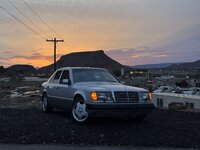
I purchased a ‘92 400E with 192k miles on it 4 or 5 months ago. I am fairly young and it’s the first car I’ve ever owned that’s older than I am. I have virtually zero mechanical experience but bought the car because I love how it looks but also with the intention of teaching myself how to work on it, since I also have a w204 C63.

I have lurked here for a while and have a million different questions but am going to try to keep this as short, on topic, and simple as possible. I purchased the car for about $1500 and have driven it something like 2000mi without any significant issue. While it’s been good to me, I feel that I can tell something is about to slip and am trying to prevent that from happening. It’s running differently than before and leaking too much oil/power steering fluid.

When I purchased the car, it came with a spare ECU not installed, I was told it is the OEM Bosch ECU (part # 012 545 30 32). I just removed the black ECU cover for the first time and it appears all 4 different modules are also OEM as they all say Bosch and/or have Mercedes logos. From what I have gathered here and elsewhere, the bottom or innermost module is the one that was replaced for the sake of ‘tuning’. The part number on the installed module is (014 545 15 32). I have attached a picture of this and the one in my hand is the spare one I was provided.

Essentially, my question is: which ECU I should be running to ensure optimal engine performance? The car currently runs but does not sound or feel super healthy. The engine bay has been caked in oil and power steering fluid since I purchased the car and I am just trying to take preventative measures to ensure it remains running as long as possible. I will get to correcting the leaks as quickly as possible.

All help and advice is very much appreciated. I am not mechanically inclined but I am eager to learn and will do my best to understand everything to the fullest extent.

Thank you all for your time!
 

Attachments

  • IMG_8358.jpeg
    IMG_8358.jpeg
    1.7 MB · Views: 5
Congrats on the new car!

012-545-30-32 and 014-545-15-32 are functionally equivalent, both are correct for your 1992 400E. The later (014-) part number replaced the earlier (012-) module. There's a decent chance one or both of those need the capacitors inside replaced. If the fuel pump relay clicks rapidly at idle, that means the capacitors have definitely failed. Click here for details on a forum member that offers a capacitor replacement service that is very reasonably priced. No "tuning" of any kind is possible for these ECU's. There's an EPROM available that increases the redline slightly along with increased top speed limiter, but neither are useful for USA street-legal speeds.

You should really pressure wash the front of the engine to remove as much of the caked oil & grime as possible. If you are leaking power steering fluid, the most common leaks are the short hose below the reservoir to the pump, and the low pressure S-shaped return hose to the frame rail. Sometimes the front shaft seal on the pump leaks. All are DIY repairs, not a big deal, just messy and time consuming. Search the forum for details on these jobs.

Engine oil leaks are often from the cam advance solenoids (click here) and that's another item to add to your list. The P/S reservoir has to come off to remove the driver side solenoid, so you can bundle the jobs together if you can afford to have the car out of service for a few days to a week.

I assume there were no service records and you have no maintenance history. If so, eventually you should pull the valve covers to inspect the chain rails... expect to find several broken. It's a BIG job to replace the chain rails. Not a lot of cost in parts, but a ton of hours (like, 10-20 hours for a 1st-time DIY'er). Search the forum for info on this as well. The chain itself (and tensioner) almost never need replacement.

You'll need to provide more info about what you mean, "runs but does not sound or feel super healthy". Check the caps & rotors, and cut the extra vent slots as shown in this thread. And, learn how to check fault codes... get a hand-held blink code reader if you don't already have one. Details are in the sticky threads of this subforum.

Welcome to the forum!

:welcome4:
 
Congrats on the new car!

012-545-30-32 and 014-545-15-32 are functionally equivalent, both are correct for your 1992 400E. The later (014-) part number replaced the earlier (012-) module. There's a decent chance one or both of those need the capacitors inside replaced. If the fuel pump relay clicks rapidly at idle, that means the capacitors have definitely failed. Click here for details on a forum member that offers a capacitor replacement service that is very reasonably priced. No "tuning" of any kind is possible for these ECU's. There's an EPROM available that increases the redline slightly along with increased top speed limiter, but neither are useful for USA street-legal speeds.

You should really pressure wash the front of the engine to remove as much of the caked oil & grime as possible. If you are leaking power steering fluid, the most common leaks are the short hose below the reservoir to the pump, and the low pressure S-shaped return hose to the frame rail. Sometimes the front shaft seal on the pump leaks. All are DIY repairs, not a big deal, just messy and time consuming. Search the forum for details on these jobs.

Engine oil leaks are often from the cam advance solenoids (click here) and that's another item to add to your list. The P/S reservoir has to come off to remove the driver side solenoid, so you can bundle the jobs together if you can afford to have the car out of service for a few days to a week.

I assume there were no service records and you have no maintenance history. If so, eventually you should pull the valve covers to inspect the chain rails... expect to find several broken. It's a BIG job to replace the chain rails. Not a lot of cost in parts, but a ton of hours (like, 10-20 hours for a 1st-time DIY'er). Search the forum for info on this as well. The chain itself (and tensioner) almost never need replacement.

You'll need to provide more info about what you mean, "runs but does not sound or feel super healthy". Check the caps & rotors, and cut the extra vent slots as shown in this thread. And, learn how to check fault codes... get a hand-held blink code reader if you don't already have one. Details are in the sticky threads of this subforum.

Welcome to the forum!

:welcome4:
Thanks so much for the very thorough response, I have spent months reading your replies/threads and am honored! I’m relieved to hear the two ECUs are practically interchangeable as I was led to believe it had some sort of aftermarket ECU. I will absolutely start with everything you listed, thank you again.

Funny enough, I just finished pressure washing/scrubbing the front and bottom of the engine last night and it’s looking much better. Took me a full week to get it in clean, manageable shape. I did that with the intention of pinpointing the source of the oil leak but haven’t been able to thus far today. In full transparency, I also don’t exactly know what I’m looking at when inspecting the various hoses and rubber lines, much less everything else. The terminology is something I’m still working on so forgive me.

I could tell something was wrong and it “does not sound or feel super healthy” a few weeks ago when my radar detector powered down due to “low power” and the blinker indicator started to flicker while the car was being driven. This led to me inspecting the alternator (still OEM it appears) and finding it caked in oil/black gunk. It also stutters quite a bit at high RPM before shifting when I put the accelerator on the floor, even before the pedal clicks.

The serpentine belt appears to be getting coated in P/S fluid as well as oil from an undiscovered location and it flings both fluids everywhere, resulting in everything along the front of the engine being covered in a mixture of the two. The oil leak seems to originate from the bottom half of the engine or the timing covers, I’m not exactly sure. The top of the oil pan had something like a 1/2” of gunk build-up before I washed it.

When I started the car to move it after cleaning the engine bay last night the P/S wasn’t working very well and the battery light was on, which I’ve never seen before. I’ve been letting the engine bay dry ever since and have been too scared to start it today. Is it possible I got water into the electrical system? That’s what I’m most worried about at the moment.

Apologies for the information dump. I love this car and only want to drive it mildly with confidence.

Edit: Attached a photo for added context!

Edit 2: I also do have the original service manual which is dated to the first 100,000mi, signed from the ‘90s. I have nothing from that point to now however, unfortunately.
 

Attachments

  • IMG_7087.jpeg
    IMG_7087.jpeg
    1.4 MB · Views: 6
Last edited:
Water won't hurt anything, EXCEPT if you got the ignition system wet (distributors, spark plug wires, etc). This will eventually dry out. Once dry, it should be back to normal (where "normal" is, what it was doing before it got wet).

The battery light on the cluster indicates the alternator isn't charging. If everything has dried out and you still have this problem, first remove the voltage regulator (make sure to disconnect the battery first!). If you are lucky, just the regulator is worn out and a new one will cure it. I *think* you can do this without pulling the alternator off the engine, but I forget... haven't done this in forever.

Removing the alternator is a bit of a PITA, you may need to remove the sway bar (not fun), and miiiight need to pull the fan clutch / fan shroud (even less fun, special tools needed). Definitely get the charging system sorted out first. Should be right around 14.0 volts at the battery with the engine running. If the slip rings inside the alternator are excessively worn, or if you have a failed diode or bearing, you'll need to replace the alternator. If that's the case I'd consider looking for a good used 143A-150A unit as an upgrade (or rebuilt, if your budget allows). The stock 110A unit was kinda borderline for this application.

Monitor the P/S fluid level in the reservoir. It should never drop. If the level drops, you definitely have a P/S leak somewhere (and, it's very likely you do). As mentioned above, it's not expensive to fix, just messy. Also take a look at the steering box output shaft, it should be 100% dry. If not, you may have a P/S leak from the output shaft seal - again, not expensive to fix. The HOW-TO thread has all the info you need.

Now that the engine is clean(er), you may be able to figure out what engine oil leaks you have. There may be several. The front crankshaft seal is another common leak. The seal isn't expensive, but once again, it's a lot of work - and, some special tools are needed. Lots of info in this thread.

If you don't already have a link to the factory service manuals (FSM)... click here.

:banana1:
 
Water won't hurt anything, EXCEPT if you got the ignition system wet (distributors, spark plug wires, etc). This will eventually dry out. Once dry, it should be back to normal (where "normal" is, what it was doing before it got wet).

The battery light on the cluster indicates the alternator isn't charging. If everything has dried out and you still have this problem, first remove the voltage regulator (make sure to disconnect the battery first!). If you are lucky, just the regulator is worn out and a new one will cure it. I *think* you can do this without pulling the alternator off the engine, but I forget... haven't done this in forever.

Removing the alternator is a bit of a PITA, you may need to remove the sway bar (not fun), and miiiight need to pull the fan clutch / fan shroud (even less fun, special tools needed). Definitely get the charging system sorted out first. Should be right around 14.0 volts at the battery with the engine running. If the slip rings inside the alternator are excessively worn, or if you have a failed diode or bearing, you'll need to replace the alternator. If that's the case I'd consider looking for a good used 143A-150A unit as an upgrade (or rebuilt, if your budget allows). The stock 110A unit was kinda borderline for this application.

Monitor the P/S fluid level in the reservoir. It should never drop. If the level drops, you definitely have a P/S leak somewhere (and, it's very likely you do). As mentioned above, it's not expensive to fix, just messy. Also take a look at the steering box output shaft, it should be 100% dry. If not, you may have a P/S leak from the output shaft seal - again, not expensive to fix. The HOW-TO thread has all the info you need.

Now that the engine is clean(er), you may be able to figure out what engine oil leaks you have. There may be several. The front crankshaft seal is another common leak. The seal isn't expensive, but once again, it's a lot of work - and, some special tools are needed. Lots of info in this thread.

If you don't already have a link to the factory service manuals (FSM)... click here.

:banana1:
You’re the man dude, thank you.

It’s definitely leaking a bunch of P/S fluid. Before I topped the reservoir off (when it was empty/low on fluid) I would hear the P/S pump struggling when I turned the wheel but now I seem to hear it the whole time the car is running, regardless of touching the wheel. The leak drips onto the belt and onto some hoses below before dripping onto the floor. Directly beneath the P/S reservoir.

I’ve been worried the constant noise I’m hearing is actually the oil pump since the oil pressure gauge has been behaving abnormally ever since I cleaned the engine bay the first time, but it certainly sounds just like the P/S pump in noise and location (not sure where the oil pump is). Given my lack of education I’m not exactly sure how the pressure gauge should be behaving and finding that out here and elsewhere has been a bit difficult. My urge to think wishfully just points to the change in temperature versus the Summer, I live in the desert about 100mi outside of Vegas. I think it used to be pegged at 3 the whole time it was running and now it mostly sits around 0 once the engine is warm and being driven, but 3 for a while after a cold start. Might bounce up to 2 on the occasional acceleration.

I started the car yesterday after letting it dry for about 2 days and the battery light was off and everything seemed fine aside from some scentless ‘smoke’ emitting from the engine bay which I hope was just steam. It went away after 10mins or so.

The battery is practically brand new. It measures 12.54V while the car isn’t running and ~12.29V while it is. To my knowledge this almost definitely implicates the alternator but I’ve also seen some threads about the voltage regulator you mentioned, so I’m hoping that is the issue. Despite the measurement on my multimeter the battery dash light has remained off.

Would the lack of dash light point more to the regulator than the alternator by chance? Thanks for all your time.
 
You should fix the PS leak ASAP. It's not particularly difficult and not expensive, just VERY dirty / messy, and tedious. Very, very likely that most of your leak is from the short hose between reservoir and pump. You'll need to clean this up and see if the pump front seal is leaking or not - if so, do everything at the same time. Note that your 1992 engine has a manual belt tensioner... this is a bit tricky to R&R. Take pictures of the position of the linkage rod & washer if you remove it or you'll have fun figuring out how to put it back. Also, DO NOT overtighten it when installing. Err on the looser side (2nd mark, not between 2nd and 3rd). FSM docs are here.

The oil pressure gauge should be at zero with engine off. On cold start it will go up to 3 and stay there. As the oil reaches operating temp (which takes longer than coolant reaching operating temp), the gauge should be around 1.0-1.5 at hot idle. But it should never be at zero. 95% of the time, the sending unit has failed. Replace with OE/Genuine, or OEM Hella/VDO, only. Something like $75 and not too difficult to replace. There's a slight chance the gauge reading could be wonky if your lower harness is failing, but that's a big job to repair. Replace the sender first and see what happens. Click here for the HOW-TO writeup.

And yep, 12.3v with the engine running indicates the alternator not charging. This is PROBABLY because the alternator failed (specifically, the voltage regulator probably died). There's a slight chance a failing lower harness could be causing a problem. Unfortunately, there's no way to verify without removing the alternator. Get the alternator out and take it to your local McParts/FLAPS, they will test it for free. If it tests good, then I would dig into the lower harness repair. If it tests bad, you can either replace with a standard rebuilt unit (110A), or upgrade to a 143A-150A unit. Click here for the HOW-TO writeup on the alternator R&R.

:shocking:
 
Last edited:

Who has watched this thread (Total: 2) View details

Back
Top