• Hi Guest !

    Welcome to the 500Eboard forum.

    Since its founding in late 2008, 500Eboard has become the leading resource on the Internet for all things related to the Mercedes-Benz 500E and E500. In recent years, we have also expanded to include the 400E and E420 models, which are directly related to the 500E/E500.

    We invite you to browse and take advantage of the information and resources here on the site. If you find helpful information, please register for full membership, and you'll find even more resources available. Feel free to ask questions, and make liberal use of the "Search" function to find answers.

    We hope you will become an active contributor to the community!

    Sincerely,
    500Eboard Management

Still running too hot

Ok JB, you said that your dash gauges were in sync but have u hooked up a scanner on Arkady's car and see what his dash gauge reads versus digital ??

See if we can close this debate by testing digital read outs on another E500E, please!
No, I have not. But I'll try and get another measurement. Though, if it reads the same, I doubt Dave will give up, since he still has more measurements :-P

I don't mind proving them wrong, as I don't mind (trying...) to prove you wrong. It's just annoying sitting in this crossfire. And yeah, they know their Mercedes W124 stuff. All of them.

Anyway, anyone remember, a long time ago, in a thread far far away, that it was about my engine getting too hot? Whether it's 97-100C or 100-105C isn't my main concern ;-)
 
:jelmerian:
Though, if it reads the same, I doubt Dave will give up
I'm in with Dave. If he doesn't give up, then I won't

Anyway, anyone remember, a long time ago, in a thread far far away, that it was about my engine getting too hot? Whether it's 97-100C or 100-105C isn't my main concern ;-)

Uh-oh..the man is getting sensitive on us:-P
 
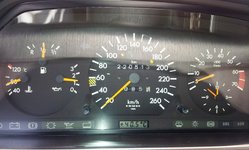
After driving our E420 last night and pondering the gauge layout, I noticed something. All three of the gauges in the F/O/T pod have non-linear gradutions. However, nobody has ever - to my knowledge - claimed the unmarked fuel gauge lines were anything other than 1/4 and 3/4. Even the oil pressure scale is non-linear, although to a lesser extent.

It would make absolutely no sense for the temp gauge to have a linear scale with non-linear graduations, which is basically what the mechanic's claim is. If that were true, the upper unmarked line would be ~95C, and the lower unmarked line would be something like 45C. And then of course the fuel gauge unmarked lines would indicate 1/8 and 7/8, right? But then the oil pressure numbers would be wrong! Can't be 0, 1, 2, 3.... they would have to be 0, 0.8, 2.2, and 3. Quick, someone tell Mercedes that they shipped 3+ million W124's with the gauge faceplates wrong!

proxy.php


But anyway, yes, a temp over 100C during extended flat-road cruising (i.e., light load for 15+ minutes) indicates something isn't right. 90-95C might be acceptable in those conditions in high ambient temps with the AC on, but otherwise, nope. I still would want to pressure test the system and the cap. You know, the ol' "start with the basics". Didn't the genius mechanics know to do that first? That's pretty standard diagnostics for any cooling complaints.

:fish:
 
a temp over 100C during extended flat-road cruising (i.e., light load for 15+ minutes) indicates something isn't right. 90-95C might be acceptable in those conditions in high ambient temps with the AC on, but otherwise, nope.
Having moved from the relatively cool Portland, OR to Houston, TX, I have learned a lot in terms of how the cars behave on a daily basis in these very different climes. Dave is 100% correct with the previous statement. You should NEVER see temps above 100C except when idling (traffic jam) in high outside temperatures (85-90F or higher) with the A/C on. Any temp over 100C in any other condition (perhaps hard driving up mountainous grades would be another exception) is ABNORMAL.

My E320 wagon had regular temps in the 100-110C range for the first couple of years here in Houston, until I changed the viscous fan clutch. Now, over the past 2 years, I have only seen the temp gauge kiss the 100C line only one or two times -- again on the very hottest days (95F) outside, with the A/C blazing, sitting for 3-5 minutes at a traffic light. For all other everyday driving, the E320 with the new fan clutch is right on the 85-90 range.

With regard to the gradients -- Dave is also 100% correct. The line in the middle DOES correspond to 100C, and the same goes for the oil pressure and fuel tank lines. While they are not equidistant from one another, they DO correspond generally to the logical splits in between the marked lines on the gauges. Years ago I did test temps on my E500 with a digital thermometer, and I confirmed that the middle (100C) line is indeed corresponding to, yes, 100C temperatures (give or take the normal margin of error).

Anyone saying that that line is anything other than 100C (mechanic or not) is incorrect. MB designed the intermediate lines to correspond to the logical divisions. This is not complicated. Remember -- Germans are logical people :)

Let's put this to bed once and for all.

Cheers,
Gerry
 
proxy.php


But anyway, yes, a temp over 100C during extended flat-road cruising (i.e., light load for 15+ minutes) indicates something isn't right. 90-95C might be acceptable in those conditions in high ambient temps with the AC on, but otherwise, nope. I still would want to pressure test the system and the cap. You know, the ol' "start with the basics". Didn't the genius mechanics know to do that first? That's pretty standard diagnostics for any cooling complaints.

:fish:

Last prod, I promise !

Well, if we were to go by the genius mechanic's claim then ,Jelmer, your temp is fine! Your photo then indicate 96-97c , right??:loony: If you believe this why worry?:fish:

proxy.php
 
Last edited:
If that line is 95C, then I don't worry, I just find it odd and annoying. If it's 100C then I'm worried.

I never really meant to start this whole discussing, to be honest. I just wanted to let you guys know that in MY car, with MY gauge, it looked like 95C...
 
That last photo sounds familiar to me!!! My 500E in Spain stays around 100C at about that speed but my outside temp is around 32 to 35 C... Is that normal or I should worry??
 
The discussion is still going. Some people claim it's no reason to worry, since it's way below the red line Mercedes thought would be "dangerous". I personally believe it's way too high - it should remain below or at the 100C (or 95C or whatever :P) line when moving.

32-35C is hot, but with revs above 1500RPM the viscous fan should move such insane amounts of air that it should keep your engine below 100C. Best to check if the viscous fan is working properly and continue from there. See the wiki about that.
 
It's a fact of life that the E500E (with cooling system in good working order) runs overall a bit hotter than other 124s. This is exacerbated in hotter climates/seasons and particularly when the A/C is running and/or the car is running hard at high speeds. I lived with the E500 in a moderate climate and NEVER saw temps pass 100C. In the MUCH hotter climate of Houston, I have seen it pass 100C many times when ambient temps get much north of 85F, and definitely 90F or higher. There are a number of factors that contribute to the higher running temps of the E500E, but a lot of it has to do just simply with a big engine in a small space, with less space and reduced airflow in the engine compartment. To this end, owning a 560SEL and 560SEC, I also see the larger frontal area of the 560SEL (larger grille, etc.) reduce the running temperatures a few degrees over the lower-hood, smaller-grill 560SEC coupe....

In my opinion, BOTTOM LINE, the E500E in proper order should really not go much above 100C, EVER. However, anyone who tells you that their car stays 100% of the time between 80-90C (unless they live in a very cold/mild climate) either is not telling the truth, or has something wrong with their sensors/gauges. A working cooling system should keep the car in most all situations (i.e. hot climates) between 90 and 100C, with PERHAPS a rise above 100C if the car is standing for a period of minutes in traffic (i.e. a long traffic light, or traffic jam) with the A/C on a hot day that is say 30C ambient temperature outside. In my view, 105C or higher is definitely out of spec and indicates that work is needed.

This does not apply to the 6-cylinder engines. A properly working 6-cylinder cooling system on the 124 really should never go above 100C even on the hottest days, and even in standing traffic. 90C is pretty normal for the 6-cylinder models in everyday driving, standing traffic, and high-speed operation even in hot climates.

Yes, there is extra "zone" between the 100C and 120C mark where the car is not supposed to consistently run, but it's also OK in certain situations or if the cooling system is not operating 100% up to spec. But all cars have this "safety margin" before the red/danger zone, not just MB. But just because there is safety margin, doesn't mean the car should be operating there consistently. It just means there is a bit of overhead before things get critical. The rule of thumb is that ~90C is normal, and in hot climates/seasons anything below the 100C is acceptable; anything over 100C and it should be an indication that the system is not working up to spec/as efficiently as it should, or it's a REALLY hot day and you've been sitting in traffic a REALLY long time....

Cheers,
Gerry
 
One quick question.. Does the lower plastic panel on the engine helps to cool up the temperature of the engine on autoban/city??
 
What panel do you mean? The large panel below the engine? I believe that's only to keep oil and junk from falling onto the road.
 
Cooling is better with the panel REMOVED. The car is more aerodynamic with the panel in place though, especially at high speeds.
 
This was taken after 45 min stuck in a traffic jam in extreme heat condition (40+) while the A/C is on.

To maintain this cooling , the car had the following parts replaced :

1-New ACM fan clutch
2-New Water Pump
3-New Thermostat
4-New Radiator
5-New Auxiliary Fans
6-New head Gasket
7-Oil changed to 20W-50
 

Attachments

  • 80.jpg
    80.jpg
    208 KB · Views: 37
Wow. I'd wonder if the temp gauge is accurate, but even if it was 10-15° off, that's still excellent!!

:deniro:
 
Ok, you guys can shoot the new guy(not really but, on here I am) on this but here goes. I lost the water pump on the GA 500E I just picked up on the way back. Came out to a pond in the garage this last Sunday morning. Got around to dis-assembling last night. This one has 180k on it with the original water pump. Has had a new radiator & T-stat. As a guy who loves MB & has owned several, I find it ridiculous that they chose to put a catch can on the vent side of the water pump diaphragm. The hose leading to it is a good idea as it keeps coolant off the engine compartment when the diaphragm starts to go but catching it is simply a patch/cover up that leads to what I & many others owners have experienced. I personally would rather see a small drip & know my pump was going then have a catch can cover it up until it becomes catastrophic. Now, this leads me to something I personally would check to reveal what kind of shape your WP is in. Check that little catch can located on the PS side cross member in front of the oil pan & see if there is any coolant in it. If so, that would indicate your pump is going in my book. I am guessing the vent comes from the dry side of the diaphragm (as all others do) & you would only see fluid there if it has ruptured. A small amount at first then eventually catastrophic failure. Your cooling would degrade gradually although the coolant loss could be so gradual as to not be noticeable. Just a thought but easy to check. Mine was full ...obviously.

PS: Found the source of my engine sludge which is what I figured anyway, front crank seal. I cleaned off most of the grime last night & one of those will be going on as well.
J
'01 CL500
'92 500E
'90 Porsche Carrera(964) widebody(supercharged)
'03 Porsche GT3 Cup(track wench):bowdown:
Various other American & British lumps
 
Last edited:
This is highly interesting!
I always wondered for what that overflow tank is/was. Never looked into the pump and wasn't aware there is a diaphragm. Also IMHO (might be wrong) on later models that overflow tank was removed.
 
JW, would you mind describing it slightly more... graphic? It might be just me (still a bit sick somehow), but I have trouble following your descriptions. I'd love to take a look if it's very simple, as I still suspect my waterpump (even in 20C I get to the 100C line all the time, without the viscous fan cutting in *sigh*)
 
Take a look at the water pump & on the left hand side, under the pulley snout, you will see a black hose (fuel line size) coming off & running towards the passenger side & down. The catch can is a small, square metal box and this hose runs into the top of it. The can is actually mounted above the passenger side front corner of the oil pan flange. It's going to be easier to see from the bottom I think. Lots of stuff above it.
 
It's right there, can't you see it? Nothing in the way except the alternator, crank pulley, balancer, lower radiator hose, belt, smog pump... etc...

:D :D

proxy.php
 
We're actually starting to approach some kind of mild summer here in so cal coastal (at least, where I live), and I've noticed something about my temps:
- when ambient temps are over 72F and to upper 70s, and if I'm in stop-n-go street driving after a ride on the freeway, engine temp is pretty much at 100C, or slightly above, goes down when I get back on the freeway.
- when ambient temps are below 72F, the engine temp never even gets to 100C, even with AC on full blast.
- when ambient temps are in the 80s and 90s, the engine temp is at about 105C, or just a little higher; not on warm up, but eventually with both freeway and street driving.

Any concern? Above behavior pretty much with or without AC. I thought it was normal, but after seeing some of the temps posted by GVZ and others, thought I'd at least ask.

I changed the fan clutch recently with oem, it works and was pricey (fun project)!

Coolant gets changed out every 2 years, I don't recall what ratio, but I am religious about it together with swapping out the t-stat; I'm in about 8 months on current coolant, also have water wetter in the mix.

Perhaps the gauge may be messed up? My fuel gauge has been doing the dance, left turn signal light will sometimes get "stuck" even though the handle has popped back to off position. Need to look at that eventually (too busy now).

onaJ
 
As noted before, the needle shouldn't get above the 100C (yes yes, I give in, it's 100C :p) mark during driving.

Quickest test to do is to blow your radiator and AC condensor with compressed air, that'll make a huge difference. After that, you'd get the t-stat & radiator dance (which isn't a bad idea, anyway. If the radiator is 10 years old, simply replace it) ...

Edit: Wait a sec! There's something similar between your situation and mine! I had my visco clutch replaced a while back with a Febi or whatever, which sucked but kept my engine cool. I returned that one and got it replaced by a OEM (Sachs). After this, the viscous fan won't come on at the right temperature, and seems to switch off too early too. Could that be related? When driving at freeway speeds, say 100km/h, the engine rpm should be low enough to keep the viscous fan engaged. There's no way in hell that it won't have enough capacity to get the temperature down (since Dave's tests showed that the fan itself spins even faster than the engine RPM).

Could you do a quick test for me? When at 100C (at standstill), check if the clutch is engaged (it should be). Slowly get the revs up to 2000-2500rpm, and enjoy the roar. Does it also cut out again slightly below the 100C mark with you? If so, that might indicate the clutches themselves are different!
 
Could you do a quick test for me? When at 100C (at standstill), check if the clutch is engaged (it should be). Slowly get the revs up to 2000-2500rpm, and enjoy the roar. Does it also cut out again slightly below the 100C mark with you? If so, that might indicate the clutches themselves are different!

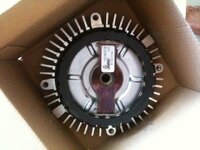
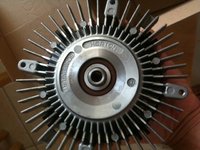
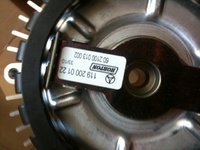
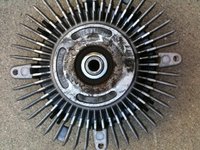
Sure, I'll try it this weekend. Attached pics of new and old clutch. The old one doesn't look that bad, but it didn't work. New one had worked as expected last time it cooled down.

I'm not 100% convinced yet what I'm experiencing is abnormal, and what others are reporting may have skewed results one way or another. Not jumping to conclusions yet, but because I baby my car, trying to make an informed decision if further action needs to be taken.
 

Attachments

  • new clutch 1.JPG
    new clutch 1.JPG
    118.6 KB · Views: 6
  • new clutch 2.JPG
    new clutch 2.JPG
    124.7 KB · Views: 5
  • new clutch 3.JPG
    new clutch 3.JPG
    104.9 KB · Views: 5
  • old clutch 2.JPG
    old clutch 2.JPG
    168.4 KB · Views: 6
  • old clutch.JPG
    old clutch.JPG
    180.5 KB · Views: 8
I'm not 100% convinced yet what I'm experiencing is abnormal, and what others are reporting may have skewed results one way or another. Not jumping to conclusions yet, but because I baby my car, trying to make an informed decision if further action needs to be taken.
Same with me. I'm not sure if what I'm seeing is actually bad. I just know that comparing 036's car with mine, his runs much cooler in exactly the same circumstances.Only a short while longer, though, and I'll rip out that damned viscous fan and install my electric one :D That at least removes some parts of the equation.
 
I still think you need to see if the water pump is leaking into the catch can. It's a 100+ F here right now & mine stays around 95c or so sitting in traffic with the A/C roaring away. My '93 was the same way the 12 years I owned it. Never got hot. When the "new" car's WP went last week, the temp would start climbing even when full of coolant. When the diaphragm is ruptured, even slightly, it is not going to be as effective and that is what mine demonstrated until it finally let go completely.
 
JW, what exactly failed? And wouldn't you see coolant loss as a symptom, along with the increased temps...?

:detective:
 
Diaphragm in the WP went. The catch can was full of coolant. They start leaking gradually and then rupture catastrophically. That's what mine did but due to MB's "better" idea, you don't know as when they leak gradually at first, it goes in the can. Your coolant loss from the initial small pin hole would be so small as not to be noticeable until it's too late & you get the pond in your garage like I did. That catch can is the tell tale whether you have impending doom. Mine DID NOT go back on. I'll take a few drops of coolant on the garage floor as a warning like my good old muscle cars give me any day over covering it up until it's too late.
J
 
If there were a leak, even a small one, then there'd be a noticeable reduction over a period of time in the water/coolant. I'm new to this thread at this point, and my coolant level has been constant since I had a leak in one of the hoses fixed last year. Jelmer would likely notice reduced coolant as well, at least, I assume he would :razz:

Jano
 
Oh, one more note. The increase in temps when it begins failing is less from the resultant small loss of coolant then it is from the ineffectiveness of the wp due to losing the seal of the system that the diaphragm provides. You have then effectively introduced water to both sides of the diaphragm. Kind of similar to the result of bad SLS cannon balls when you get fluid on both sides of the diaphragm in them. I'm no physics professor but that is my best guess after replacing several of both over the years:blink:
 
I have noticed my constant's level drop a bit, but that's only after numerous 1/4 mile track days in hot weather and after 10 laps in hot weather at Willow Springs. Normal driving, the constant's level is normal, maybe a tad lower if the Summer months.
 
Jano,
That catch can holds "maybe" 1/2 a pint. I guess if he was watching it really close, he might notice a slight loss. I'm just suggesting sliding under the car, pulling the hose off the catch can & sticking a Q-tip or something down in it to see if it has coolant in it.
J
 
I'm sure a leaking waterpump would lead to a catastrophic overheat, but I'm very sure I don't have a coolant leak.

My current theory:
- Viscous fan kicks in too late
- Engine gets "hotter" than usual
- Only viscous fan in idle isn't enough to get rid of heat
- At freeway speeds the fan doesn't kick in, and driving wind isn't enough

I especially notice this when the aux fans kick in (with JimF's CH92) at 100C (confused yet? :p). It stops the temperature from climbing, but won't get it down by simply idling. Most blown air is simply cold. Revving the engine a bit blows a new load of hot water into the radiator, and temp goes down slightly. A few seconds later, it goes up ("stored" heat in the engine block). Do this trick a few times and it'll stay lower. My guess is that the waterpump simply doesn't pump enough water around to get rid of so much heat at idle. The cooling system simply isn't designed to work with an engine block that got hotter than usual (again, due to failure of the viscous fan).

I'm really interested in your findings of the temp scale and viscous fan kick in / shut off moments!
 
I have noticed my constant's level drop a bit, but that's only after numerous 1/4 mile track days in hot weather and after 10 laps in hot weather at Willow Springs. Normal driving, the constant's level is normal, maybe a tad lower if the Summer months.

That's explainable. If it's hot and you ask a lot of the engine, it might - temporarily - get a bit hotter. Water expands slightly, gets pushed into the overflow can. I'm pretty sure you'll find it in the little overflow can near the coolant tank.
 
I'd measure the CH resistor... maybe it's a CH98 instead of the CH92. (?)

:wormhole:
 
No, no. Don't drag me into this discussion again! It activates more-or-less around the middle line. Which, for my car, was around 95-97C. The CH92 is meant for the SL600, which might have slightly different components, leading to a different activation temperature.

But, for everyone's enjoyment, I'll measure the resistor :p
 
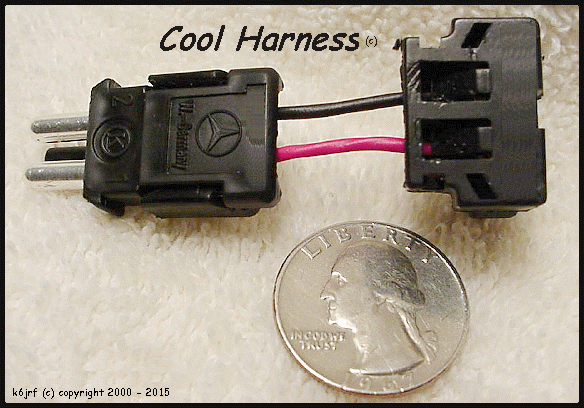
Or just look at the CH's wire colors, one of the wires will be a different color, representing the CH temperatures.

CH-92, both wires are Black
CH-95, one wire is Red/Fuchsia
CH-98, one wire is Brown

CH-95:
proxy.php
 
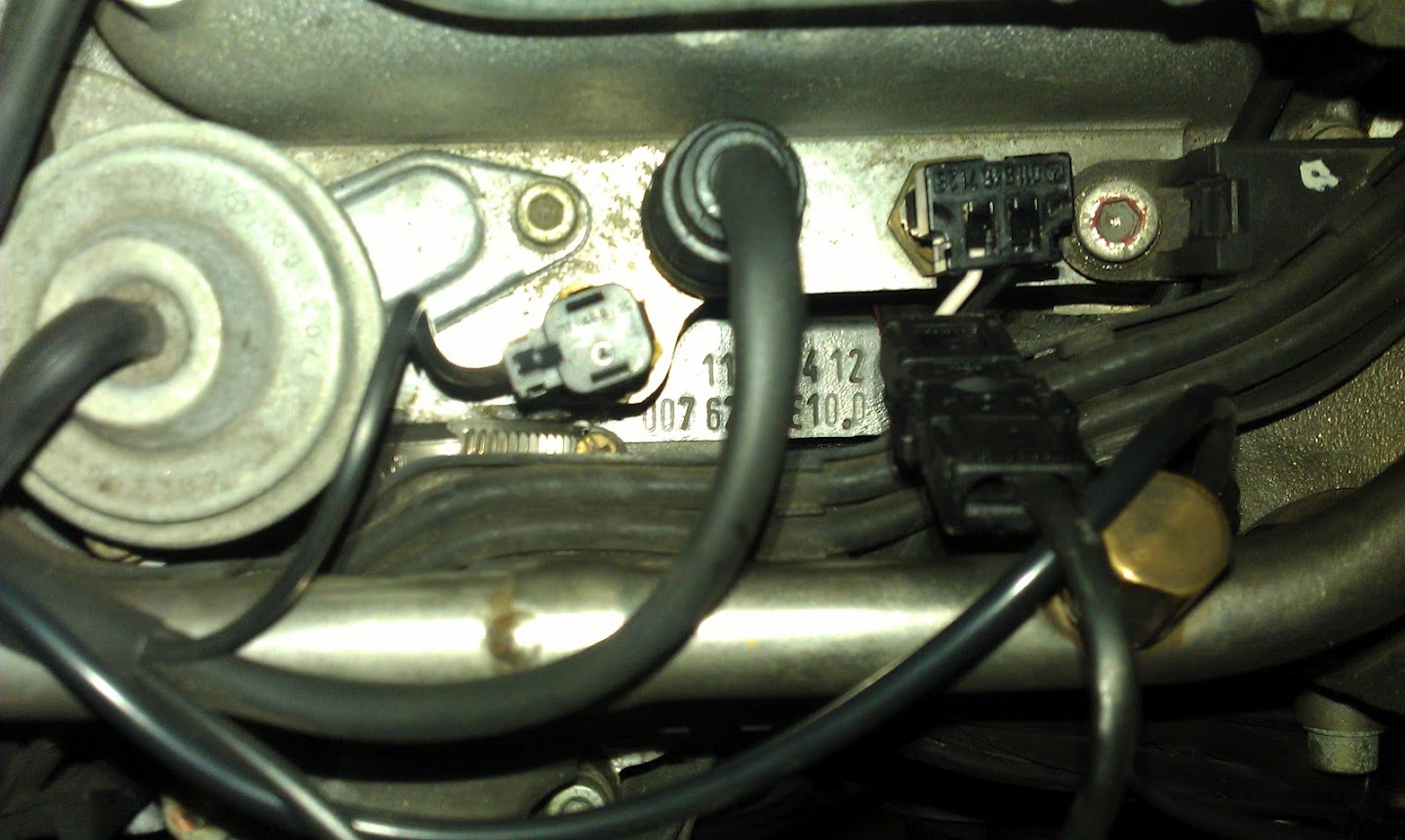
As always, please call me special:
proxy.php


White/black. Murphy came and visit, 9V battery is nearly dead in my multi meter. Did get a 1.06Ω/1.09Ω measurement, but dunno if that's accurate (I'll measure again tomorrow).

[sub]Thanks for making me head out to my car twice, at near-midnight ;)[/sub]
 
You're looking for a value between approx 1000 and 2000 ohms... if your meter is reading kohms, that would be 1060/1090, which is awfully close to the 1100 ohm resistor used on the 92C unit:
http://www.k6jrf.com/MB_CTS.html

The engagement temp depends entirely on how accurate the 2-pin temp sensor is to begin with, though... if it's turn the fans on early or late, the CoolHarness will just turn it on earlier in either case, but not when you're expecting it to.

:hornets:
 
Hmm, white you say, now I'm at a loss.

When did you buy the CH and was it directly through Jim Forgione? When I got my CH92 back in 2005, Jim had three color identifiers for his CH models I mentioned before. Maybe Jim changed the colors? I would contact Jim and find out about the white wire - jforgione@prodigy.net
 
The two-pin sensor is brand new, so I'm guessing it's pretty accurate. My meter read 1.09kOhm and 1060ohm. Tomorrow I'll try again with a fresh battery.

I've sent an email to Jim. In *all* our communication we're talking about a CH'92 for a '93 500E. I doubt very much he sent the wrong unit, most likely didn't like black/black anymore ;-)

I'm beginning to doubt anything in this car at this point. I might've neglected to mention that *sometimes* the fans don't kick in at 100C, but slightly above. How can that be? [sub]Could I be chasing a ghost? Is my cooling system fine, but is it simply my dash gauge that's faulty? I need a reliable base-line, which I don't have...[/sub]
 
...Diaphragm in the WP went. .. They start leaking gradually and then rupture catastrophically. .. then it is from the ineffectiveness of the wp due to losing the seal of the system that the diaphragm provides...You have then effectively introduced water to both sides of the diaphragm. Kind of similar to the result of bad SLS cannon balls when you get fluid on both sides of the diaphragm in them.

I've read this entire thread with much amazement on how everyone has its own understanding of theories base on their own experiences. But, JW's post (quoted above) threw me off the loop. Can anyone let me know what "diaphragm" in the water pump, similar to SLS ball, could get ruptured? Where is the diaphragm located that when it is ruptured water goes to both side? Is there a diaphragm in the water pump?

I'm really confused.
 
I've read this entire thread with much amazement on how everyone has its own understanding of theories base on their own experiences. But, JW's post (quoted above) threw me off the loop. Can anyone let me know what "diaphragm" in the water pump, similar to SLS ball, could get ruptured? Where is the diaphragm located that when it is ruptured water goes to both side? Is there a diaphragm in the water pump?

I'm really confused.

I'm assuming it's a fancy word for a rubber-closing-thingie, which would go bad with old age and heat.

I just realized something, though: JW complains about that catch can, but that's of course one of many tricks MB used to be "green": getting coolant out on the road is bad, hmmmkay!
 
I think he's referring to the shaft seal on the pump... on the engine side there is coolant (and the impeller), on the other side there's the drain tube. The drain tube side is supposed to stay mostly dry although MB does say that a small amount of seepage is normal.

However, the seal failure should not affect cooling other than when it's a major failure such that the system can no longer maintain pressure, and also starts losing significant quantities of coolant.

I am still confused by the discrepancy between Jelmer's dash gauge and electric fan engagement. I would measure the resistance of the 2-pin sensor (B11/7) with engine harness / CoolHarness™ disconnected, when the dash gauge indicates 100C/middle-line, and see what the raw data is. Per FSM job 83-604 pg 7, it looks like it should read 300-400 ohms at 100C. That's a pretty wide spread, it could be that Jelmer's B11/7 is on the far side of tolerance, or out of spec. (??)

:grouphug:
 
Short water pump tutorial with pics:

http://www.agcoauto.com/content/news/p2_articleid/190

The seal (what I call a diaphragm since I'm a hot rodder who plays with old cars, too) will start "dripping" as a sign that the pump is going. You will not see this drip on the .036 since it goes to a catch can (so trees don't die...) You will see decreased cooling performance until it finally fully ruptures. I was just suggesting a simple look see into the catch can to see if you had any coolant in there. No big deal :banger:
J
 
Remember that last time I checked my temperatures, the middle line looked more like 95C. It still could be my dash gauge, though it's damned accurate for 85C. I'm poking Christian to try and get his handheld scanner so we can solve this once and for all.

I can positively rule out any sensor in-accuracy, though. The current readings are exactly as they were before I had both of them replaced.

I'll do my best to make some proper readings tomorrow (or, in a few hours - why am I still here?)!

edit:
(so trees don't die...)
For a 320hp, gas-guzzling, tire-breaking, street-destroying V8, I'm sure catching those few drops will help!
 
Took some new, decent measurements:
At 85C (on the dash) the temp sensor reads 531 ohm. At the horizontal line, it reads ~385ohm, and climbs quickly because of the aux fans wailing about.

The CH is 1090 ohm, so 1.1k.

I think I pissed Jim F off without knowing it:
Jelmer,

Isn't that interesting . . . telling the designer that the wire color is "wrong". So it should have two (2) black wires . . . or how about two (2) purple wires?? Or how about two (2) green wires?? Or, finally, how about a white and black wire?? Get the point? Hope you do. . . explain it to them.
Hello Jim,

We're having a bit of a discussion on 500eboard.com about the CH92 you've sent me ages ago. It seems people expect a CH92 to have both wires black, not white/black as in mine. I've measures the resistor and it comes to 1060/1090 ohms (bad meter with low battery, so large margin of error).

Can you confirm switching to this color combination for the CH92?
 
Maybe JimF needs to read his own website, lol. HE was the one that shows the wire color for each temp setting! Sheesh.
http://www.k6jrf.com/MB_S500.html


Anyway, interesting that at the horizontal line, you are measuring ~385 ohms, which is right on spec for... wait for it... wait for it... 100°C.

proxy.php
 
Back
Top