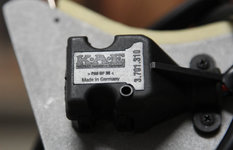
@RicardoD I cannot remember what I read to arrive at this hypothesis:
The regulator is basically a big power transistor. Whatever is in there --- BJTs/MOSFETs/Whatever --- there is enough current that goes through there (depending on the voltage on the yellow wire that feeds it) that the designer fit a big porcupine heatsink on there to prevent overheating of the transistors. The transistors critically rely on airflow to keep it cool and extend its service life.
On the facelift models, there is a dust/pollen filter there that, if not replaced when clogged, can impede airflow and thereby cause the regulator to undergo more thermal stress than usual, thus reducing service life. For that reason, my uneducated guess would be that you would want to maximize the quality/robustness of the regulator that is installed.
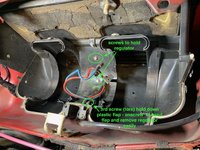
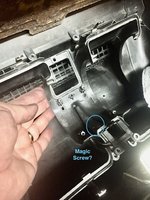
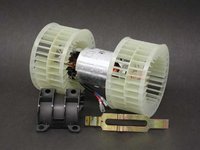
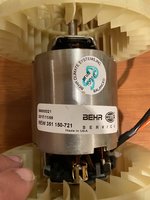
Additionally, at least on the preface lift models, while replacing the blower is straightforward affair (6 hours first time, of which 4 were cleaning, and then 1 hour subsequent time), replacing the regulator has some additional tedium with:
1) fishing the grommet / control wires through the hole in the fake firewall
2) a bit of stress in that that you don't want to crash the porcupine quills into the delicate fins of the heat exchanger
3) the white plastic blower-coffin-seal is really fiddly after it gets removed from its channel
So replacing the regulator is something that is not particularly pleasant to repeat.
The regulator is basically a big power transistor. Whatever is in there --- BJTs/MOSFETs/Whatever --- there is enough current that goes through there (depending on the voltage on the yellow wire that feeds it) that the designer fit a big porcupine heatsink on there to prevent overheating of the transistors. The transistors critically rely on airflow to keep it cool and extend its service life.
On the facelift models, there is a dust/pollen filter there that, if not replaced when clogged, can impede airflow and thereby cause the regulator to undergo more thermal stress than usual, thus reducing service life. For that reason, my uneducated guess would be that you would want to maximize the quality/robustness of the regulator that is installed.
Additionally, at least on the preface lift models, while replacing the blower is straightforward affair (6 hours first time, of which 4 were cleaning, and then 1 hour subsequent time), replacing the regulator has some additional tedium with:
1) fishing the grommet / control wires through the hole in the fake firewall
2) a bit of stress in that that you don't want to crash the porcupine quills into the delicate fins of the heat exchanger
3) the white plastic blower-coffin-seal is really fiddly after it gets removed from its channel
So replacing the regulator is something that is not particularly pleasant to repeat.