

I've seen this issue mentioned on a number of forums for W124 cars without a resolution - you open the driver's door and you get no courtesy (cabin) light or puddle (door bottom) light. Seatbelt warning buzzer and headlight buzzer work. All other doors make the courtesy and puddle lights work on the respect doors.
A check of the pin switch on the door frame shows it's working. Shorting the wires makes no difference. A mystery? Not really.
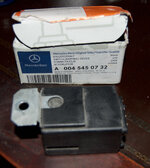
Warning Module N2/4 (004 545 07 32) is responsible for the seatbelt and headlight "on" alarms. The driver's door switch plays a large part in its operation. Unlike the other door switches, which simply provide a ground directly to the courtesy and door bottom lights for their respective doors, the same function for the driver's door is a part of the N2/4 operation. Here's why:
The pin switch for the driver's door provides a ground path to the N2/4 module. The internal circuitry "looks" at both the seat switch and input from the headlight switch. Along with these functions, it grounds the circuits for both the courtesy and lower door lights through a transistor that is driven by the same circuit that controls the buzzers. Now if the signal(s) for the respective buzzer operations aren't present, it doesn't buzz. However, it still turns on the transistor for the lighting circuits so you have cabin and lower door lamps when the driver's door is open. When it closes, the transistor turns off and the lower door light goes out and the courtesy (cabin) light times out through the time delay circuitry in the courtesy light assembly.
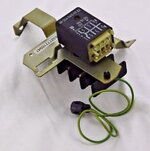
The N2/4 module is located in the instrument panel behind the instrument cluster on the right side. It's mounted on a bracket with another relay and a barrier strip where the signal for the odometer comes from. It's near impossible to get to. If you unplug the module connector and remove the screw holding the bracket on the left to the reinforcement bar you can push the bracket down far enough to get a 1/4" ratchet with an 8mm socket on the screw that holds the relay mounting bracket. Once this is removed, the bracket must be lifted up so the module can be lowered and the relay's mounting bracket is disengaged. It involves some serious gyrations, but it can be done.

Here is a photo with the bracket and module installed. Note that it shown upside down. The metal tab on the module is "J" shaped and has to be inserted into the slot at a 45 degree angle, then the module is moved parallel to the bracket and the screw threaded into the hole in the bracket.
Installation is the reverse of removal. Easier said than done, especially getting the retaining screw back into the relay mounting bracket. Just get it back there first, then use your fingers to get the threaded portion of the screw to drop into the opening where the whiz nut is located on the bracket.
Reconnect the module and regain proper operation of your driver's door courtesy and door bottom lights.
P.S. - Another somewhat common failure is when the lower door light is grounded and the circuit shorted. Since this is downstream of the module and not fused, a direct short can damage the module. If you know the lower door light has been shorted or grounded, you can open the N2/4 module and do a visual check for a burned foil trace. If this is found, soldering a wire in to replace the burned foil may return the module to proper operation. Simply plug it in and try it before reinstalling in to verify that is the problem.
Dan
A check of the pin switch on the door frame shows it's working. Shorting the wires makes no difference. A mystery? Not really.
Warning Module N2/4 (004 545 07 32) is responsible for the seatbelt and headlight "on" alarms. The driver's door switch plays a large part in its operation. Unlike the other door switches, which simply provide a ground directly to the courtesy and door bottom lights for their respective doors, the same function for the driver's door is a part of the N2/4 operation. Here's why:
The pin switch for the driver's door provides a ground path to the N2/4 module. The internal circuitry "looks" at both the seat switch and input from the headlight switch. Along with these functions, it grounds the circuits for both the courtesy and lower door lights through a transistor that is driven by the same circuit that controls the buzzers. Now if the signal(s) for the respective buzzer operations aren't present, it doesn't buzz. However, it still turns on the transistor for the lighting circuits so you have cabin and lower door lamps when the driver's door is open. When it closes, the transistor turns off and the lower door light goes out and the courtesy (cabin) light times out through the time delay circuitry in the courtesy light assembly.
The N2/4 module is located in the instrument panel behind the instrument cluster on the right side. It's mounted on a bracket with another relay and a barrier strip where the signal for the odometer comes from. It's near impossible to get to. If you unplug the module connector and remove the screw holding the bracket on the left to the reinforcement bar you can push the bracket down far enough to get a 1/4" ratchet with an 8mm socket on the screw that holds the relay mounting bracket. Once this is removed, the bracket must be lifted up so the module can be lowered and the relay's mounting bracket is disengaged. It involves some serious gyrations, but it can be done.
Here is a photo with the bracket and module installed. Note that it shown upside down. The metal tab on the module is "J" shaped and has to be inserted into the slot at a 45 degree angle, then the module is moved parallel to the bracket and the screw threaded into the hole in the bracket.
Installation is the reverse of removal. Easier said than done, especially getting the retaining screw back into the relay mounting bracket. Just get it back there first, then use your fingers to get the threaded portion of the screw to drop into the opening where the whiz nut is located on the bracket.
Reconnect the module and regain proper operation of your driver's door courtesy and door bottom lights.
P.S. - Another somewhat common failure is when the lower door light is grounded and the circuit shorted. Since this is downstream of the module and not fused, a direct short can damage the module. If you know the lower door light has been shorted or grounded, you can open the N2/4 module and do a visual check for a burned foil trace. If this is found, soldering a wire in to replace the burned foil may return the module to proper operation. Simply plug it in and try it before reinstalling in to verify that is the problem.
Dan


 )
)


