• Hi Guest !

    Welcome to the 500Eboard forum.

    Since its founding in late 2008, 500Eboard has become the leading resource on the Internet for all things related to the Mercedes-Benz 500E and E500. In recent years, we have also expanded to include the 400E and E420 models, which are directly related to the 500E/E500.

    We invite you to browse and take advantage of the information and resources here on the site. If you find helpful information, please register for full membership, and you'll find even more resources available. Feel free to ask questions, and make liberal use of the "Search" function to find answers.

    We hope you will become an active contributor to the community!

    Sincerely,
    500Eboard Management

Engine oil recommendations

Hi everyone ..
just need some advice .. my engine is m113 .. now i running Castrol gtx High milege 10W-40 .. Dave if you member i had oil consumption with Mobil1 0w40 And Pennzoil 0w40 oils.. and liqui moly leichtlauf 5w40.. well in my situation Mobil1 it was a nightmare ... just worst than any other
but Castrrol High mileage 10w40 it awesome .. 1 quart in 3500 miles and my engine running very smooth and quit .. oil weight 10w40 makes engine run very smooth as silk :) I found my oil now ..
Now .. i have a question winter is coming , i am living in upstate NY .. and weather can get down to 5 °F... Should i switch to Castrol Edge 5w40 ? I am afraid that 10w40 cant handle freezing .. Plus i have battery that 13 years old...
Does 10w40 will harm engine start up ? Or if not .. should i get new battery because ..it will need huge power to pump that thick oil?????
 
10W-40 is NO problem in freezing temps or below zero, if you are using synthetic. Even the MB viscosity charts indicated 10W-40 would be ok with dino to 0°F... but in those temp ranges, synthetic is your friend.

Assuming this is the stuff you are using, which is a blend, it's probably ok:
https://www.castrol.com/en_us/unite...end-motor-oil/gtx-high-mileage-motor-oil.html
https://msdspds.castrol.com/bpglis/FusionPDS.nsf/Files/D611AF263EAC668880257DFD00590B86/$File/BPXE-9UF427.pdf

That said, using a 5W-40 shouldn't be a problem either, although your engine didn't seem happy with LiquiMoly 5W-40. (?)


PS: Binghamton is "upstate NY"? LOL! I'd almost consider it North PA. ;) I have family in the Lake Placid area, which is what I'd consider "upstate"... :D :D
 
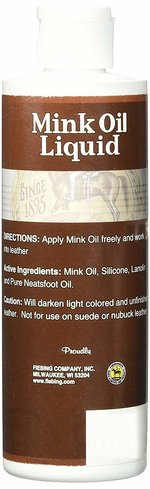
I'm running distilled unicorn tears, which I boil down to achieve a viscosity of 34.6 centistokes, mixed with mink oil from a can I found on a shelf in my grandfather's shed, which he used to soften his baseball glove. I mix until I reach a specific gravity of 0.8972519. I then spoon in an 8 ounce can of "Never Seize", followed by a 100 gram tube of Liqui Moly LM 508 high temp anti-seize. At that point the whole mix goes in the blender to achieve a homogenous solution. Upon decanting this, I then season with a few drops of Gummi-pflege, to avoid cold start lifter sticking. You may not need this if your car is kept at a latitude below 32.16 degrees North.

I've found that I can easily go 40-50,000 miles between oil changes, or 17 years (whichever comes first) and my Blackstone lab spectroscopy results are worthy of etching on a block of polished granite.

As always, your results may be different, but hey, this is what works for me.
 
That is too funny. . .glad there are real engineers to set us straight on OIL.:thumbsup2:

Thanks! you must have originated from the KLINK tribe.
 
I'm running distilled unicorn tears, which I boil down to achieve a viscosity of 34.6 centistokes, mixed with mink oil from a can I found on a shelf in my grandfather's shed, which he used to soften his baseball glove. I mix until I reach a specific gravity of 0.8972519. I then spoon in an 8 ounce can of "Never Seize"....
Any chance you're willing to sell a bit of that mink oil? It's awfully hard to find the original cans online!

:apl:
 
Hi Everyone .. I have a question.. When switching to a heavier oil ... like from original 5w to 10w .. or 15w
High Mileage oil with heavier viscosity can help to bring old engine some life... But some say that heavy oil can harm engine with high tolerance parts ..meaning heavy oil is going to have problem to "seep" inside the parts.. in some case they do is going to help but..on the other hand some parts of engine can have "starve" .
Whats your thoughts guys ? :)
 
My thought is not to worry about things like this, nor over-think it. FAR too many people over-think motor oil. It really doesn't matter.

Just stick with an engine oil grade that was originally spec'd for the car. You really can't go wrong with a 10W-30, 10W-40, 15W-40, 5W-30, etc. type of oil in an M119, as long as it is of a quality brand.

Something like a 20W-50 is probably a bit too heavy for an M119, unless you live in a very hot climate. If I was forced to pick one grade for an M119, it would probably be 10W-40. That will work very nicely in any and all climates, including year-round in Upstate New York.

Synthetic or dino or semi-synthetic ... shouldn't matter. Change it at 3-5K intervals (dino and semi-syn) and 5-10K intervals (synthetic) and you will be just fine.
 
What Gerry said. Don't over-think it, and use the original viscosity recommended when new. For the M119 you generally want an xW-40 oil. I personally use a 10W-40 and would recommend that for almost any climate you will find in USA.

For winter use in NY, stick with synthetics to ensure proper flow during sub-freezing cold starts.

:strawberry:
 
I concur with have been said. Today's engine oil is very good. I always get Mobil1 because I get it for a good price at Costco when they take $10 off the six-bottle case. Walmart also has good price with engine oil. I always add one bottle of MOS2 from liquid molly, to get extra protection. MOS2, a solid lubricant, clings to the surface so that you still have lubrication when the engine is started first time in the morning. It also quiets down the hydraulic lifters. Ask me why I know.

jftu105
 
Last edited:
I concur with have been said. Today's engine oil is very good. I always get Mobil1 because I get it for a good price at Costco when they take $10 off the six-bottle case. Walmart also has good price with engine oil. I always add one bottle of MOS2 from liquid molly, to get extra protection. MOS2, a solid lubricant, clings to the surface so that you still have lubrication when the engine is started first time in the morning. It also quiets down the hydraulic lifters. Ask me why I know.

S-H Toh
Ok why do you know? Most of these additives are gimmicks.

87 300TD om606 compound turbo
94 e420
85 300tdt
 
OK, this is why I know. First, MOS2 is a solid lubricant, not oil. It is fine particles, acting like small balls between surfaces, to reduce friction. It also has excellent damping properties. Secondly, MOS2 clings to surfaces, not permanently, but enough residues of these fine MOS2 particles stay on the surface. When the car is parked overnight, engine oil drops to the bottom, but some MOS2 clings to the mating surfaces. This reduce the wear when you first start the engine before engine oil is circulated again.

I have many old bottles of MOS2 but I never thew them away. Open the cap, looking inside, you will see there is still a thin layer of MOS2 on the bottle surface. Turn the bottle upside down and wait for long enough, I always get a few drops out. You simply cannot empty it completely off the bottle. I use it to lubricate AC circulation fans and any pulley bearings to kill annoying noises.

After I finished the head gasket replacement, I had to bleed all the hydraulic lifters. After the engine ran for over 20 miles, one lifter was still giving out bad noise. The machine shop guy, who did the engine head valve job for me, poured two bottles of MOS2 in. When I return, the engine was purring again. In fact, on the way back, not too long after MOS2 was in, I already notice the lifter noise was gone. Perhaps, it would be gone anyway as long as I run the engine long enough. Even if MOS2 made it happen just a bit sooner, it is still well worth it. That lifter noise was loud and scary.

Finally, some of my cars could park for over a week before I drive it. Occasionally, I noticed the the engine would shake wildly with lifter noises for a good few minutes before it stabilized. I don't see it happen anymore after using MOS2.

Yes, I have tried many snake oil for engines and transmissions. So far, I was bought only by this MOS2. I don't believe in those high priced oils and fluids either, with or without the Mercedes star. LiquiMolly also produces many other additives and treatments, but I don't use them. I tried their oil saver but nothing happened. I never tried their high priced ceramic coating additive to the engine oil. From my engineering training, I don't see how ceramic can be coated permanently in such dirty and oily environment inside the combustion chamber. Slick 50 is the poster child of snake oil for that matter, claiming to form a teflon coating.

jftu105
 
Last edited:
Something like a 20W-50 is probably a bit too heavy for an M119, unless you live in a very hot climate.

Synthetic or dino or semi-synthetic ... shouldn't matter. Change it at 3-5K intervals (dino and semi-syn) and 5-10K intervals (synthetic) and you will be just fine.

I live in SoCal where the climate is hot enough, I guess. As far as I can tell my car has always run 20-50 oil. Dino was used up to around 100K miles changed every 3K miles and after that 20-50 Royal Purple Synthetic changed every 5K miles. I ran one change 6K miles but decided 5K is enough.
My 500E is at 143K miles and I USE NO OIL.

So far I'm very happy w/ Royal Purple
 
I think the differences between oil brands and even grades to a large degree in terms of wear is trivial for the duty cycle and total miles any normal passenger car sees. For low mileage collector cars any preference amounts to a fetish.

I have noted a bit less timing chain stretch with synthetic, which I understand can result from better performance in shear, but otherwise there is no practical difference. People just dont drive cars to engine rebuild or failure very often, no matter what kind of oil they use. Expensive additives are preserving the motor for some owner who is using the car at 600,000 miles, which it will likely never see before hitting the bone yard. Or for racing, where the wear rates are much higher.

Synthetics flow better when cold of course, but even then, the difference is never likely to become apparent within the time that any one person owns the car.


87 300TD om606 compound turbo
94 e420
85 300tdt
 
I think the differences between oil brands and even grades to a large degree in terms of wear is trivial for the duty cycle and total miles any normal passenger car sees. For low mileage collector cars any preference amounts to a fetish.
Yup. In general, what's most important is using the correct viscosity as specified by the engine mfr, and changing at an appropriate interval. This assumes normal usage, not severe service.


I have noted a bit less timing chain stretch with synthetic, which I understand can result from better performance in shear, but otherwise there is no practical difference. People just dont drive cars to engine rebuild or failure very often, no matter what kind of oil they use. Expensive additives are preserving the motor for some owner who is using the car at 600,000 miles, which it will likely never see before hitting the bone yard. Or for racing, where the wear rates are much higher.
As mentioned earlier, in general additives are not the best idea... better to select an oil that has the additive package you want, if you care about such things. One reason I like Red Line 10W-40 is that it already has moly, no need to add it separately. Racing doesn't automatically mean increased wear, but it does put higher loads on the oil, and it's more critical to select a quality oil if you want your engine to survive racing use (especially road-course or autobahn type use with extended WOT at high RPM).


Synthetics flow better when cold of course, but even then, the difference is never likely to become apparent within the time that any one person owns the car.
There are several advantages to synthetics, but for any car parked outside in sub-freezing (worse yet, sub-zero) temps... synthetics would be highly recommended. Watch some of the YouTube videos showing the cold-flow properties of dino vs synthetic. Pumping molasses at every cold start ain't good. I doubt many 036 owners are using their cars like this, but they may have a daily driver parked outside in the snow.
 
atg mentions driving an engine to 600K miles. Looking at Glenn’s 625K high miler. I would expect that Martin aka DrP achieved the first 500K mostly on Dino oil. I would think Glen would agree with me since the synthetics weren’t around at the beginning of our cars lives and DrP just took it to someone or a Dealer for his changes. Glenn said that DrP’s records showed 7,800 mile oil changes.

What I would take away from this is that what ever we use in our cars today (as long as it meets MBZ’s specs) is over babying the motors well beyond what’s required. I would expect one of our cars could hit a million miles someday without a complete tear down. Maybe just a valve job. new timing chain and rails. Of course all of the accessories and rubber would have be changed out.

Glenn’s car is closest to reach that goal but even his car probably will never see it unless it ends up with another DrP to put 50K miles a year on it.
 
Last edited:
Something within this thread should note the design and construction of our engines. They are evolved from the M117 engines. They utilize a high content silicone aluminum block. The excess aluminum forms silicone carbide within the aluminum. The silicone carbide cylinder bores are honed with a diamond lapping paste and the aluminum is etched back. So you have a very hard surface and smooth with porosity to hold oil. This is not a NISKEL coating(aka Porsche). The bore to cylinder wall clearances is very tight- so there is very little piston rock which creates excessive cylinder wall wear and piston ring wear. But, at some point the upper ring land which gets limited oiling and sees most of the combustion carbon wears out. Once it hits the upper service limit, it allows the piston ring to flex dilatationally. This is the end and the ring breaks. On HD diesel engines, they have steel upper ring lands cast into the pistons to get a longer life. The M117's aka 560 sec, I've seen some with some very high mileage numbers. Gerry mentioned in a thread seeing a car in Houston which had 8xx,000 miles on it? Klink noted that too frequent of changes can be just as bad as too late. I've been happy with Motul and Redline products. The engines seem to like synthetics and are quieter.
 
Is there a pure synthetic that has the properties of the Brad Penn racing oil with high zinc, or should we stick with it for the M117?
 
There are synthetics with high-ish levels of ZDDP (RedLine oils are not too bad in this regard).

I know that for my M117, I will continue to use Brad Penn for it. The M117 was designed to be run on dino oil, and it likes thicker stuff. Personally I would not go thinner than 10W-40 or 5W-40 with an M117, but that's just me. Given the colder climate I'm now, I'm probably going to switch to 10W-40 on my Brad Penn. 15W-40 would also be fine.
 
Terry, I thought Doc Pee had used Mobil-1 for his oil changes? Maybe Glen can chime in. It's probably mentioned in the For Sale thread 6+ years ago.

Michael is correct, the M117, M119, and M120 are Alusil blocks, different than Nikasil.

Some mfr's post the ZDDP levels in their oils, some do not. Usually you can find the ZDDP levels on the BITOG forum from people who have posted either UOA or VOA data for a particular oil. Just make sure the analysis is fairly recent; additive packages change over time, and a report from 10 years ago is very likely not going to show accurate data for the same brand/viscosity purchased today.

Remember that the M117 needs higher-than-typical ZDDP levels to protect the valvetrain, and Brad Penn semi-syn is popular for the M117. The M119 (and M104/M120) do not need this.
 
As I recall when I went through the DrP's service records I saw mostly Mobil 1 listed for oil, no weight given. There were also a few Pennzoil changes but again no weights listed.
 
As I recall when I went through the DrP's service records I saw mostly Mobil 1 listed for oil, no weight given. There were also a few Pennzoil changes but again no weights listed.

Glen,

I'm sure DrP did use Mobil 1 at some point but his car and most of our cars started on Dino oil. There was no Mobil 1 in 1992 that I'm aware of.
I know my car had always had Dino oil when I purchased it with 87K miles on it in 2004. I continued with the Dino oil for a few changes before changing to synthetic at somewhere over 100K miles. I would have to check my records to find the actual mileage when I switched over. I know that the first synthetic oil I tried was Mobil 1 15-50 and my car did not do well on it. It actually consumed oil for the first time. Next change was to Royal Purple and it stopped immediately.

My only point I'm trying to make is that the M119 engine is pretty bullet proof. A lot of our 124 cars as well as 129s and 140s were just driven with very little attention as to what oil was used and how often it got changed. These cars can take a liking and keep on ticking on minimum maintenance if they have to.

If we just take care of maintenance and do regular oil changes they have the potential to last a very long time especially with the use of synthetic oils. We can argue all day about what is the best oil to use.

lol
 
Last edited:
Terry, I had to go look it up, but M-1 was apparently introduced back in 1974! Interesting that the first factory fill may have been Corvettes in 1992:

https://mobiloil.com/en/article/why...bil-difference/brand-heritage-mobil-1-history

Bummer they didn't do the 1989 "Million Miles" test on a Mercedes instead of a Bimmer:

"The Million Miles Test: A new BMW 325i is filled with Mobil 1 synthetic engine oil, then runs continuously for four years. After equivalent of a million miles of hard driving, engine was stripped and examined, revealing that there was no sign of any significant wear. "​

Remember, through the 1990's and very early 2000's, M-1 was still a true synthetic with Group IV/V base stocks. This changed in the mid-2000's and the majority of the M-1 engine oil lineup since then has used cheaper Group III base stocks, which are hydrocracked / highly-refined dino oil, not "true" synthetics.

:nobmw:
 
thanks GVZ. Any issue with Redline D4 for our c126 transmission?
Whoa, hold the phone... do we want to sully this "Engine oil" thread with ATF discussions? I thought there was a whole separate fistfight over ATF's.

:jono:
 
Terry, I had to go look it up, but M-1 was apparently introduced back in 1974! Interesting that the first factory fill may have been Corvettes in 1992:

https://mobiloil.com/en/article/why...bil-difference/brand-heritage-mobil-1-history

Bummer they didn't do the 1989 "Million Miles" test on a Mercedes instead of a Bimmer:

"The Million Miles Test: A new BMW 325i is filled with Mobil 1 synthetic engine oil, then runs continuously for four years. After equivalent of a million miles of hard driving, engine was stripped and examined, revealing that there was no sign of any significant wear. "​

Remember, through the 1990's and very early 2000's, M-1 was still a true synthetic with Group IV/V base stocks. This changed in the mid-2000's and the majority of the M-1 engine oil lineup since then has used cheaper Group III base stocks, which are hydrocracked / highly-refined dino oil, not "true" synthetics.

:nobmw:
Ok I guess I should google the group 4/5 stock thing. I presume the redlines and brad penn yada yada gucci oils comply with this.

I should say I like synthetics as they seem to coke less at high temp and probably protect the motor better if coolant is lost. The longer oil change interval is also attractive.

87 300TD om606 compound turbo
94 e420
85 300tdt
 
Red Line uses a Group IV/V (PAO / ester) base stock for almost their entire product lineup, with rare exceptions. They have a new product line of "OEM Approved" oils, but they clearly specify that these are Group III. This is one of the reasons I like Red Line, they don't try to hide what they are selling. Amsoil's expensive line is also IV/V, ditto for Motul's top-shelf stuff. Only a handful of M-1 products are IV/V and last I checked none are thicker than xW-30.

Brad Penn is a unique oddball, they have both dino and semi-synthetic products, and I'm not sure of their base stock... possibly II or III? Some Penn oils have very high ZDDP levels which are needed for certain engines, like the M117, or older American musclecars. While the Penn oils are fine in an M119, there are other choices which are likely better suited to the M119's needs.

You mentioned 2 other plusses for synthetics: coking and OCI. Any turbo engine should run synthetics, they are far more tolerant of extreme heat at the turbo bearings. The longer change interval will offset a chunk of the higher cost per quart. However, you generally can only save $$ with extended OCI's using a Group IV/V oil. As mentioned previously, most Group III oils have a habit of shearing down and starting to "burn" oil after 5k-7kmi or so. If pushing to a 10k-15k interval, the make-up oil added every 1k-2k starts eliminating the cost savings. Long OCI's are more for cars that see a lot of annual mileage, like 10k+. A couple of our daily drivers only see ~5k per year and with a 10k interval end up getting changed every 2 years or so. As always, with extended drains, get an analysis with TBN to make sure you're not running out of additives - especially if the engine uses no oil. (Adding make-up oil boosts TBN.)

:5150:
 
DITto for what DITOG says above. :plusone:

Brad Penn bills the "Penn Grade 1" oil that so many of use use for the M117 as a "semi-synthetic" oil. IMHO it is dino oil, through and through, and contains no synthetic properties. This is the old Kendall "Green Oil" from the 1970s, that is still made. It is 100% dino, and the "semi syn" billing IMHO is misleading.

That said, we all know that it is the old Kendall Green good stuff and it is among the best for what it is. Fortunately they haven't messed with a good thing.

Brad Penn DOES make what they bill as a full synthetic line (could well be Group III, I don't know). I have no experience with it. For the M117, the Penn Grade 1 (Green Oil) is all that one needs to know/use.
 
Terry, I had to go look it up, but M-1 was apparently introduced back in 1974! Interesting that the first factory fill may have been Corvettes in 1992:

https://mobiloil.com/en/article/why...bil-difference/brand-heritage-mobil-1-history

Bummer they didn't do the 1989 "Million Miles" test on a Mercedes instead of a Bimmer:

"The Million Miles Test: A new BMW 325i is filled with Mobil 1 synthetic engine oil, then runs continuously for four years. After equivalent of a million miles of hard driving, engine was stripped and examined, revealing that there was no sign of any significant wear. "​

Remember, through the 1990's and very early 2000's, M-1 was still a true synthetic with Group IV/V base stocks. This changed in the mid-2000's and the majority of the M-1 engine oil lineup since then has used cheaper Group III base stocks, which are hydrocracked / highly-refined dino oil, not "true" synthetics.

:nobmw:

OK, OK,

Dave,

I’ll concede to you I know that you are an exception on the M119 and way ahead of the curve in regards to most of us on oil and most everything tech.

I didn’t want to start another war on oil. BUT I still think most folks were on Dino oil until sometime after 2000. Everyone jumped on the bandwagon at some point after Mobil blitzed the media and Manufacturers started endorsing the product.

I’m done here. Just reading forward.

lol
 
I agree, Terry.

I don't think most people ("mainstream") started using synthetic oil before the early 2000s. In fact, I really don't think it got popular until two things happened:

1) It started becoming factory-fill in many cars (not just MBs)
2) Stealerships and indy shops started offering it as either an option or standard for maintenance performed

I think this started happening around 2000-2005ish.

I don't know what was used in my E500 before I purchased it in 2003, but I do know that I started it on full-synthetic from the get-go. For some years I used Mobil 1 "Euro Formula" (the black label stuff), and in recent years I've been using RedLine, per recommendation from DITOG.

I use RedLine gear oils for the rear ends in all my cars, as well as the transfer case in my G-wagen. I haven't switched off of dino transmission oil in any of my vehicles yet, but I plan to for the E500 and depending on how that goes, likely will for the other cars too.

One note: there is ZERO SHAME in using dino oils for E500E or other duty. Sure, you may not have the longer OCIs that full-synthetics offer, but it's not like using dino oils, with reasonable care (i.e. 3,000-mile + OCIs) is going to hurt your vehicle. It's MUCH more important to use a dino oil of proper weight for your climate and usage, and of a good brand-name quality.

Anyone who says that dino oil is bad, is smoking some serious stuff. :mauiwowie:

Cheers,
Gerry
 
In my climate (Florida) I pretty much run M1 15W-50 in all my cars except the W111, which gets Brad Penn semi-synthetic "green" for the high ZDDP levels that this engine (M127) requires.

This would cover M119 and M112 engines. If I run the recommended 0W-40 M1 "Euro" formula I can see hot idle pressures getting down to 1.0 bar during the hottest times of the year. Moving to 15W-50 keeps that idle oil pressure up around 1.5 bar under the same conditions. I also change at 5,000 mile intervals, which most people would say are too short for synthetic. I see it as cheap insurance. If I have oil changes that occur near seasonal changes, I'll run the 0W-40 M1 during the "winter" months.

I would agree that change intervals are probably far more important than the actual oil being used. I could easily see dino oil being used with regular change intervals probably not making a significant difference in the longevity of the engine. With that in mind, I use Delo in the E300D as it's cheap yet meets all the requirements for that engine. Synthetic would be a waste in my opinion.

Dan
 
Dan, your experience corresponds with mine. I know MB specifies 0W-40 as acceptable, or even preferred, but I simply don't think it's needed outside of the Arctic. In addition to the low pressure at hot idle (which shouldn't be possible, as everyone insists "all xW-40 are the same viscosity when hot!")... several folks reported having hydraulic lifter ticking on some Mercedes engines with 0W-40, that went away after switching to a 5/10/15W-40 of the same brand/type.

Changing the M-1 15W-50 at 5k is a good idea. It's a Group III base, and if you let it run out to 10kmi or beyond, you may find the engine starts "burning" oil somewhere between the 5-7k mark. I had this happen on a couple of cars and thought I had an engine problem. Took tens of thousands of miles across multiple cars to figure out it was an OIL problem, not an engine problem. Switching oils cured the consumption. Group III oils have excellent performance, but IMO are not ideal for extended drain intervals.

:v8:
 
Changing the M-1 15W-50 at 5k is a good idea. It's a Group III base, and if you let it run out to 10kmi or beyond, you may find the engine starts "burning" oil somewhere between the 5-7k mark. I had this happen on a couple of cars and thought I had an engine problem. Took tens of thousands of miles across multiple cars to figure out it was an OIL problem, not an engine problem. Switching oils cured the consumption. Group III oils have excellent performance, but IMO are not ideal for extended drain intervals.

Agreed. While some have chided me for changing too frequently using synthetic oils, with most of my cars requiring two changes a year at about $50/change the economics of moving out to 7,500 or even (gasp!) 10,000 doesn't really save a significant amount of money. At 7,500/year I would save about $25/car. Big deal.

And while I worked in an industry for 20+ years that lives and dies on oil sampling data, I don't see the value in this for the average car, either. Sure it's nice to see what sort of things are showing up in the oil, but does it really matter to me for a daily driver that I'm maintaining more or less to factory requirements? I don't think so. The $20-$25 it costs for a sample isn't a value-added thing for the operation of the car to me.

But, as with any oil thread, it's all a matter of personal preference.

Dan
 
I'm with you 100%, Dan. I like to at least get one oil analysis for any engine I care about, preferably after I've done a couple of oil changes on it, just to see if anything looks odd. Even with extended drains, you generally only need one or two analyses, to establish that the TBN (or, soot level on diesels) is acceptable for a given interval.

If using good synthetics and not going beyond ±10k OCI, you could probably skip the analysis if the vehicle doesn't see any severe service.
 
I'm with you 100%, Dan. I do like to at least get one oil analysis for any engine I care about, preferably after I've done a couple of oil changes on it, just to see if anything looks odd. ...

Exactly.

Oil sampling is really only valid when done over time so one can see trends develop (or not.) If it's a car I really care about and would expect to have for a long time I can definitely see the value. For daily drivers I see it as a waste of money better spent elsewhere.

Dan
 
I actually read an oil thread once where somebody asked a very
Important question: Am I supposed to change the oil?
 
I actually read an oil thread once where somebody asked a very
Important question: Am I supposed to change the oil?
There are some cool horror stories out there where people did not change the oil for tens of thousands of miles. In some cases the result was insane amounts of sludge and goop inside the engine. Poke around the interwebs and you'll find photos & videos.

Any time you are buying a vehicle, remove the oil cap and look inside. Not all engines will have mechanical stuff visible through the cap like on the M119, but if so, you can get a pretty good idea of the engine condition, as well as how the PO's maintained it.
 
There are some cool horror stories out there where people did not change the oil for tens of thousands of miles. In some cases the result was insane amounts of sludge and goop inside the engine. Poke around the interwebs and you'll find photos & videos.

Any time you are buying a vehicle, remove the oil cap and look inside. Not all engines will have mechanical stuff visible through the cap like on the M119, but if so, you can get a pretty good idea of the engine condition, as well as how the PO's maintained it.

Good idea to look at the underside of the cap as well. That can also provide some interesting insight into the way the car was driven, or not.

Dan
 
Too bad you can’t tell the compression & general health of an M119 by doing the oil cap “dancing” trick, like you can with OM61x Motors.

#DITOG
#UncleKent
 
Back
Top