• Hi Guest !

    Welcome to the 500Eboard forum.

    Since its founding in late 2008, 500Eboard has become the leading resource on the Internet for all things related to the Mercedes-Benz 500E and E500. In recent years, we have also expanded to include the 400E and E420 models, which are directly related to the 500E/E500.

    We invite you to browse and take advantage of the information and resources here on the site. If you find helpful information, please register for full membership, and you'll find even more resources available. Feel free to ask questions, and make liberal use of the "Search" function to find answers.

    We hope you will become an active contributor to the community!

    Sincerely,
    500Eboard Management

HOW-TO: Repairing Instrument Cluster Dreaded Dot Disease

natejgreene9871

1993 400e, 1984 300D Turbo, 1976 450sl, 1993 190e
Member
I've been making small improvements to the 400e, and tonight I attempted to fix the dot disease. This issue has been discussed a bunch but I haven't seen any step by step repair guide other than just replace the housing. I like the matte rubberized finish of the later clusters so I didn't consider repainting. It is a very unique brown finish and I don't think it could be easily replicated with a rattle can. It almost seems to be a rubberized spray similar to SEM interior dye.

First carefully remove everything from the back of the cluster and separate the housing

IMG_9174.jpeg

IMG_9178.jpeg

Notice the white dots all over my cluster. I live in a humid climate (southeast) and all the old MB's around here have this issue.


IMG_9181.jpeg

Get a sharp paring knife and dish soap. The soap will serve as a lubricant. You want to squirt the soap all around the seam of the plexiglass. You SLOWLY and carefully insert the knife all around the seam to pop it apart. It is glued in and will make cracking sounds when you separate the two. It sounds like you are going to break it, and you very well may, so go very slow.
IMG_9182.jpeg


You will need to very carefully push from behind the plexiglass as you are working the knife around. Start at the top, this is where most of the glue is. Once the top is broken free, the bottom should pop out fairly easily without having to dig the knife in too much.


IMG_9183.jpeg


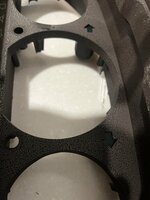
With glass removed you can begin cleaning. I used a new toothbrush and rubbing alcohol. It takes maybe 5 minutes of cleaning/polishing with the brush & alcohol, this isn't a simple "wipe off" procedure.

IMG_9189.jpeg

IMG_9188.jpeg

IMG_9190.jpeg

IMG_9191.jpeg


I also washed under the sink but always finish with rubbing alcohol and a clean paper towel or you will get streaks or splotches. You may even consider using rubber gloves. Any fingerprints you leave inside the housing or on the back side of the plexiglass will be visable.

IMG_9199.jpeg

Dots still slightly visible but much, much better

IMG_9205.jpeg


Make sure everything is very clean with no fingerprints, glue the plexiglass back on. I used very little glue applied with a cocktail stirrer, as I don't want it to run. Just a few spots around the perimeter should do.
Also I don't recommend superglue (cyanoacrilate) as it seems to leave a white hazy residue on surfaces when it dries. Also foaming glue would be bad here.
This seemed to fit the bill

IMG_9206.jpegIMG_9207.jpeg


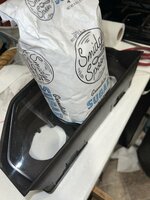
Put the plexiglass back on and weight it down to dry.

IMG_9209.jpeg
IMG_9211.jpeg
 

Attachments

  • IMG_9186.jpeg
    IMG_9186.jpeg
    2.1 MB · Views: 34
Last edited:
Also the dots are on the actual gagues themselves, they have the same paint. I gave them a gentle single wipe in alcohol paper towel. Be careful the paint here seemed to be dissolving a little with the alcohol.
IMG_9213.jpeg


I don't remember where I read this, but I've been told the dots are actually tiny crystals, not mold. The plastic housing reacts with the paint/rubber coating and leaches up through the porous paint. Somehow high humidity accelerates this.

I have also seen this issue on some porsche clusters from the same era (also made by VDO).

So, it is possible to fix this, just be careful separating the plexiglass. Honestly not too bad, took a couple hours
 
Last edited:
The gauge faces, which are painted, will eventually fade -- particularly the yellow KM lettering, but also the black background. The white speedo numbering also turns a yellow color. Age, sun exposure and usage will unfortunately do this. Combined with removal of the DDD dots, new gauge faces will REALLY freshen up a cluster. There are a few sources for new faces. I had great results with the fellow in Poland that I mentioned in my 126 thread.

The latest generation of LED lighting also really helps brighten things up, as does repainting of the light channels, and blocking any light bleeding atop the cluster. The first 2-3 generations of the LED bulbs were not that great, although an improvement on the original incandescent bulbs.
 
The gauge faces, which are painted, will eventually fade -- particularly the yellow KM lettering, but also the black background. The white speedo numbering also turns a yellow color. Age, sun exposure and usage will unfortunately do this. Combined with removal of the DDD dots, new gauge faces will REALLY freshen up a cluster. There are a few sources for new faces. I had great results with the fellow in Poland that I mentioned in my 126 thread.

The latest generation of LED lighting also really helps brighten things up, as does repainting of the light channels, and blocking any light bleeding atop the cluster. The first 2-3 generations of the LED bulbs were not that great, although an improvement on the original incandescent bulbs.
I’ve tried warm LED’s on my w123 cluster for a while but eventually went back to incandescent. Were from Mercedes source. They were decent but I still missed that “candle light” warm color. I am crazy
 
You can get various shades of light, even approximating the warmth of the incandescent. The earlier LED bulbs were very finicky and only inserted one way. The newer ones have more color options and can be inserted either directions. Vast improvement. But I too like incandescent. The heat from them does wonders on the plastic light guides, though.
 
@natejgreene9871 thanks for the HOW-TO and the info about the dots being some kind of crystal ---- very helpful.
Out of curiosity, I wonder - is it worth it to treat the black surfaces of the bezel after cleaning with some type of coating or matte black paint? Anyways - my car does not have DDD yet but it may in the future and this guide will prove useful.
 
@natejgreene9871 thanks for the HOW-TO and the info about the dots being some kind of crystal ---- very helpful.
Out of curiosity, I wonder - is it worth it to treat the black surfaces of the bezel after cleaning with some type of coating or matte black paint? Anyways - my car does not have DDD yet but it may in the future and this guide will prove useful.
I definitely think repainting the whole housing is an option. It just depends on how picky you are about the finish and color. Again, it is a really odd coating, more of a rubber than a paint. It is also definitely brown, not black.

I assume the matte rubber is to eliminate glare. I really like it, it looks very nice.

The only other coating I have seen that looks similar is called SEM spray. It is a flexible rubber used to color dashes and stuff. You’d have to do some serious experimenting with color. I’d love to know what the actual spray is if anybody has a contact at VDO..


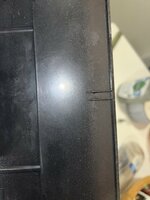
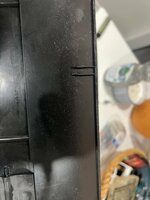
If you look at the bottom of the cluster you can see the “spray line”. Notice the difference in color between the black plastic and brown rubberized coating.

IMG_9198.jpeg
IMG_9197.jpeg
 
Last edited:
The landau black SEM paint or in flexible is good stuff, I have used them both. If someone reads this take note: use rubbing alcohol to remove all of the factory coating. Sand paper will scratch the plastic and is not a great substitute for elbow grease and sore hands from removing the factory spray coating.
 
The landau black SEM paint or in flexible is good stuff, I have used them both. If someone reads this take note: use rubbing alcohol to remove all of the factory coating. Sand paper will scratch the plastic and is not a great substitute for elbow grease and sore hands from removing the factory spray coating.
Rubbing alcohol didn’t seem to remove the factory coating in my case? I scrubbed it with alcohol and a toothbrush
 
I used liberal amounts of rubbing alcohol and it removed the factory coating and DDD on my C126 cluster. It took a LOT of work to remove the coating and prepare the surface for the black paint. I would say that it was at least two hours of work to remove the old coating/DDDs. Don't use a toothbrush, use a rag.

It's all laid out in my HOW-TO.
 
Yep Honch, open a can of elbow grease (sore thumb and forefingers for a day or so) and use rags for sure. The isopropyl will soften the coating if it sits there for a bit. Since it evaporates you must reapply with the saturated rag in spots. Use generic Q-tips too to get in there where it counts. nothing that will scratch up the plastic.
 
If you want to remove it, use the 99.9% alcohol. If you want to preserve it, dilute the regular 70% alcohol.
 
I've been making small improvements to the 400e, and tonight I attempted to fix the dot disease. This issue has been discussed a bunch but I haven't seen any step by step repair guide other than just replace the housing. I like the matte rubberized finish of the later clusters so I didn't consider repainting. It is a very unique brown finish and I don't think it could be easily replicated with a rattle can. It almost seems to be a rubberized spray similar to SEM interior dye.

First carefully remove everything from the back of the cluster and separate the housing

View attachment 175406

View attachment 175407

Notice the white dots all over my cluster. I live in a humid climate (southeast) and all the old MB's around here have this issue.


View attachment 175408

Get a sharp paring knife and dish soap. The soap will serve as a lubricant. You want to squirt the soap all around the seam of the plexiglass. You SLOWLY and carefully insert the knife all around the seam to pop it apart. It is glued in and will make cracking sounds when you separate the two. It sounds like you are going to break it, and you very well may, so go very slow.
View attachment 175409


You will need to very carefully push from behind the plexiglass as you are working the knife around. Start at the top, this is where most of the glue is. Once the top is broken free, the bottom should pop out fairly easily without having to dig the knife in too much.


View attachment 175410


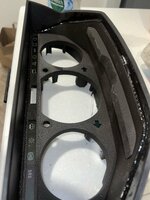
With glass removed you can begin cleaning. I used a new toothbrush and rubbing alcohol. It takes maybe 5 minutes of cleaning/polishing with the brush & alcohol, this isn't a simple "wipe off" procedure.
View attachment 175413

View attachment 175412

View attachment 175414

View attachment 175415


I also washed under the sink but always finish with rubbing alcohol and a clean paper towel or you will get streaks or splotches. You may even consider using rubber gloves. Any fingerprints you leave inside the housing or on the back side of the plexiglass will be visable.

View attachment 175416

Dots still slightly visible but much, much better

View attachment 175417


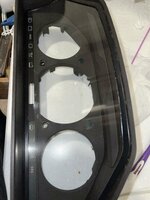
Make sure everything is very clean with no fingerprints, glue the plexiglass back on. I used very little glue applied with a cocktail stirrer, as I don't want it to run. Just a few spots around the perimeter should do.
Also I don't recommend superglue (cyanoacrilate) as it seems to leave a white hazy residue on surfaces when it dries. Also foaming glue would be bad here.
This seemed to fit the bill

View attachment 175418View attachment 175419


Put the plexiglass back on and weight it down to dry.
View attachment 175420
View attachment 175421
This is fantastic, thank you. Whilst I have 12 or 14 spare w124 clusters, I have no spare w201 ones. And my 2.5-16 has a serious case of the dreaded WDD

I will get a look at this over the weekend and see if I can get in there to clean it up
 
Back
Top