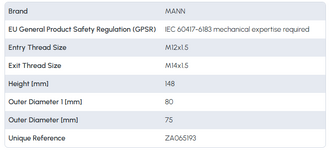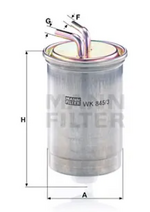

Fuel filter on the 93 400E was of unknown age, despite digging through the PO's records. I did find where it was recommended to be replaced several times by their indie but they redlined the work. Anytime I get a new (to me) car if I can't substantiate maintenance work I do it myself so I have a baseline. So I ordered a Mann filter and got ready....
WARNING: This work requires working with and handling components containing flammable liquids, i.e., gasoline. This means it is your responsibility to take any and all precautions to work safely around flammables. If you're not sure how to do this, DON'T. Work is done at your risk.
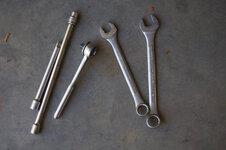
Tools Required:
10mm socket
Ratchet and long extension (12" or more)
Philips head screwdriver
17mm open end or flare nut wrench
19mm open end or flare nut wrench
Drain pan

Parts Required:
Fuel filter Mercedes part # 002 477 44 01 or equivalent, or correct filter for your application

(Optional) 2 - 12 x 16 x 1.5mm copper sealing rings (MB #007603012102 007603-012110 )
Procedure:
1.) Raise the rear of the car off the ground using ramps or jack stands and secure it.
2.) Under the right rear of the car below the rear passenger compartment, locate the plastic shield that covers the fuel pump and filter. There will be three or four 10mm plastic nuts holding it in place. Two on the forward edge, one in a very deep recess on the trailing edge, and possibly one on the right side. Remove these nuts.


3.) With the nuts removed, lower the cover and place it out of the way. You should now be able to see the filter and fuel pumps. Inspect the rubber mounts for damage or cracks. Closely inspect all fuel hoses and make note of any that are cracked or show signs of leaks or damage so they can be replaced immediately. Failure to do so could result in catastrophic damage (FIRE!!!)


4.) Using the 17mm and 19mm wrenches, loosen the compression fitting on the end of the fuel filter. This is typically the fitting towards the rear of the car. The 19mm wrench will hold the filter in place and the 17mm wrench will be placed on the compression fitting nut. I like to position the wrenches into a close "V" with each other so I can use my hand to squeeze the wrenches together. This is a lot more efficient and also prevents any wild lunges that might occur when putting force into a wrench and it slipping off the nut/bolt. Do not remove the line, just crack the compression fitting nut loose. You may get a few drops of fuel out of the fitting when you do this.
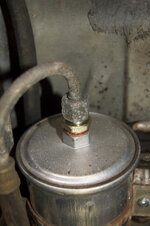
5.) Again using the two wrenches as before, loosen the banjo bolt on the front of the filter. The 19mm wrench will hold the filter in place and the 17mm wrench will be placed on the banjo bolt. Again, just crack the fitting loose, do not unscrew it yet. You will probably get fuel out of this joint as well, and possibly more than a drip or two. Have the drain pan handy!


6.) Use the Philips head screwdriver to loosen the two screws that hold the clamp on the filter and fuel pump. There is one outboard of the filter, and another between the filter and the fuel pump. Loosen both. These have captive nuts so you don't have to remove them. Loosen them enough to have the heads clear of the clamp and you know you have them loose enough.

7.) Prepare your drain pan. I like to have something ready to support it so that it's close to the fuel filter and pump to minimize splashes. Loosen the compression fitting on the filter first. Then, loosen but do not remove the banjo bolt on the forward end of the filter. NOTE: There are two copper sealing rings on the banjo bolt - one is captive and the other is against the fuel filter fitting. Do not move the bolt out of the fitting enough to knock or drop the outer sealing ring off the banjo bolt. If you do be absolutely sure you put it back in place, or the banjo bolt will not seal.
8.) I like to let the filter drain out as much as possible. This may take several minutes. Once the filter is drained, move your drain pan out of the way so you can access the filter. Note that the filter has a rolled edge and will only come out of the clamp in one direction. Slip the filter out of the clamp and place it in the drain pan to finish draining. if there is a rubber or plastic sleeve on the filter remove it and place it on your new filter.

9.) With the plastic or rubber sleeve in place on the new filter, make note of the orientation so that you can insert it into the clamp in the proper direction. My filter was missing the sleeve, so I placed a few thin strips of nylon tape to isolate the filter from the bracket. Once this is done, thread the compression fitting and banjo bolt down hand tight. Don't forget to verify that both copper sealing rings are in place on the banjo bolt.


10.) Tighten the philips head screws that clamp the filter and fuel pump in place. Using your wrenches, tighten the compression fitting and banjo bolt. No Charles Atlas strength is required here, just make sure they are tight.
11.) Turn on the key and listen for the fuel pumps. inspect the compression fitting and banjo bolt to make sure there are no leaks or dripping, if so, tighten the fittings. While rare, it is possible for the copper sealing rings to develop cracks or just wear out, causing them to fail to seal the banjo bolt. Be prepared to replace them if necessary.
12.) After verifying there are no leaks or drips, put the cover panel back in place and tighten the 10mm plastic nuts. Snug them down, as over tightening them will cause them to strip out. Note that the cover has been cleaned and received a liberal application of 303. No one will ever see it, but I'll know it's there....

Uh-uh-uh!! Not so fast! Or as they say in the commercials, "But wait!! That's not all!"
While you're rolling out from under the back of the car, take a moment and look up under the rear fender. See that rubber tube sticking out?

That's a body drain. Stick your finger in it and move it around, and be sure not to be under it when you do. Lots of crud may come out of it. Once it's cleared, take a look in there with a light and make sure the holes are clear. There will be three small holes in the drain tube. If by chance your body drain(s) are missing, immediately get replacements. If you look at the rocker panels near the jack points you'll see more body drains, with these being angled towards the rear of the car.

Again, make sure these are clear with a dull object and if missing immediately replace them! These are critical to keeping the car clean and dry internally, and if clogged or missing can cause all sorts of nasty things to take place, the worst being corrosion.
13.) Clean up your mess, dispose of the drained fuel in an appropriate manner, and enjoy an adult beverage of your choice.
Dan
WARNING: This work requires working with and handling components containing flammable liquids, i.e., gasoline. This means it is your responsibility to take any and all precautions to work safely around flammables. If you're not sure how to do this, DON'T. Work is done at your risk.
Tools Required:
10mm socket
Ratchet and long extension (12" or more)
Philips head screwdriver
17mm open end or flare nut wrench
19mm open end or flare nut wrench
Drain pan
Parts Required:
Fuel filter Mercedes part # 002 477 44 01 or equivalent, or correct filter for your application
(Optional) 2 - 12 x 16 x 1.5mm copper sealing rings (MB #
Procedure:
1.) Raise the rear of the car off the ground using ramps or jack stands and secure it.
2.) Under the right rear of the car below the rear passenger compartment, locate the plastic shield that covers the fuel pump and filter. There will be three or four 10mm plastic nuts holding it in place. Two on the forward edge, one in a very deep recess on the trailing edge, and possibly one on the right side. Remove these nuts.
3.) With the nuts removed, lower the cover and place it out of the way. You should now be able to see the filter and fuel pumps. Inspect the rubber mounts for damage or cracks. Closely inspect all fuel hoses and make note of any that are cracked or show signs of leaks or damage so they can be replaced immediately. Failure to do so could result in catastrophic damage (FIRE!!!)
4.) Using the 17mm and 19mm wrenches, loosen the compression fitting on the end of the fuel filter. This is typically the fitting towards the rear of the car. The 19mm wrench will hold the filter in place and the 17mm wrench will be placed on the compression fitting nut. I like to position the wrenches into a close "V" with each other so I can use my hand to squeeze the wrenches together. This is a lot more efficient and also prevents any wild lunges that might occur when putting force into a wrench and it slipping off the nut/bolt. Do not remove the line, just crack the compression fitting nut loose. You may get a few drops of fuel out of the fitting when you do this.
5.) Again using the two wrenches as before, loosen the banjo bolt on the front of the filter. The 19mm wrench will hold the filter in place and the 17mm wrench will be placed on the banjo bolt. Again, just crack the fitting loose, do not unscrew it yet. You will probably get fuel out of this joint as well, and possibly more than a drip or two. Have the drain pan handy!
6.) Use the Philips head screwdriver to loosen the two screws that hold the clamp on the filter and fuel pump. There is one outboard of the filter, and another between the filter and the fuel pump. Loosen both. These have captive nuts so you don't have to remove them. Loosen them enough to have the heads clear of the clamp and you know you have them loose enough.
7.) Prepare your drain pan. I like to have something ready to support it so that it's close to the fuel filter and pump to minimize splashes. Loosen the compression fitting on the filter first. Then, loosen but do not remove the banjo bolt on the forward end of the filter. NOTE: There are two copper sealing rings on the banjo bolt - one is captive and the other is against the fuel filter fitting. Do not move the bolt out of the fitting enough to knock or drop the outer sealing ring off the banjo bolt. If you do be absolutely sure you put it back in place, or the banjo bolt will not seal.
8.) I like to let the filter drain out as much as possible. This may take several minutes. Once the filter is drained, move your drain pan out of the way so you can access the filter. Note that the filter has a rolled edge and will only come out of the clamp in one direction. Slip the filter out of the clamp and place it in the drain pan to finish draining. if there is a rubber or plastic sleeve on the filter remove it and place it on your new filter.
9.) With the plastic or rubber sleeve in place on the new filter, make note of the orientation so that you can insert it into the clamp in the proper direction. My filter was missing the sleeve, so I placed a few thin strips of nylon tape to isolate the filter from the bracket. Once this is done, thread the compression fitting and banjo bolt down hand tight. Don't forget to verify that both copper sealing rings are in place on the banjo bolt.
10.) Tighten the philips head screws that clamp the filter and fuel pump in place. Using your wrenches, tighten the compression fitting and banjo bolt. No Charles Atlas strength is required here, just make sure they are tight.
11.) Turn on the key and listen for the fuel pumps. inspect the compression fitting and banjo bolt to make sure there are no leaks or dripping, if so, tighten the fittings. While rare, it is possible for the copper sealing rings to develop cracks or just wear out, causing them to fail to seal the banjo bolt. Be prepared to replace them if necessary.
12.) After verifying there are no leaks or drips, put the cover panel back in place and tighten the 10mm plastic nuts. Snug them down, as over tightening them will cause them to strip out. Note that the cover has been cleaned and received a liberal application of 303. No one will ever see it, but I'll know it's there....
Uh-uh-uh!! Not so fast! Or as they say in the commercials, "But wait!! That's not all!"
While you're rolling out from under the back of the car, take a moment and look up under the rear fender. See that rubber tube sticking out?
That's a body drain. Stick your finger in it and move it around, and be sure not to be under it when you do. Lots of crud may come out of it. Once it's cleared, take a look in there with a light and make sure the holes are clear. There will be three small holes in the drain tube. If by chance your body drain(s) are missing, immediately get replacements. If you look at the rocker panels near the jack points you'll see more body drains, with these being angled towards the rear of the car.
Again, make sure these are clear with a dull object and if missing immediately replace them! These are critical to keeping the car clean and dry internally, and if clogged or missing can cause all sorts of nasty things to take place, the worst being corrosion.
13.) Clean up your mess, dispose of the drained fuel in an appropriate manner, and enjoy an adult beverage of your choice.
Dan
Last edited by a moderator: