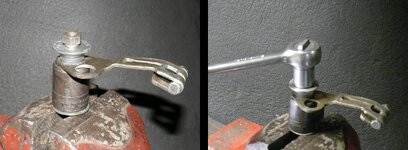

NOTE: I did a much less complete HOW-TO on this topic several years ago, which you also may find of interest. That HOW-TO is here.
Moderator update:
Today, while out driving my 560SEC on errands, I noticed something new and strange. After parking the car and going into a store, the car wouldn't start when I came back out with the transmission in PARK. I moved the gear lever from P to R and then N, and back to P. At that point, the car started up as normal.
I shrugged it off as perhaps not having the gear shift lever all the way in the PARK position, so that the neutral safety switch wasn't sensing it was in the correct position to start.
But then a few minutes later, at another store, the car did the same thing again. And again, moving the gear lever to N and then back to P allowed the car to start with no issue. Visions of a bad neutral safety switch started swimming through my head. I have never replaced the NSS on the 560SEC in the 12.5 years that I've owned it, so I was figuring it was probably about due for a change. And I was kicking myself, because I don't have a spare in my parts stock (I do have a spare for the special E500 NSS, which is specific to those cars).
But then I started playing with the gear lever at the next light, and noticed it was a bit looser and floppier than normal. This led me to deduce that the issue was probably not the NSS, but rather a worn hard plastic shift linkage bushing -- one of two that each car has.
Now THIS, was something that I was fully prepared to handle -- both by having plenty of spare parts in my stock (I have five of these bushings) and also the special pair of "bushing pliers" that make what used to be a one-hour job, a 10-minute job.
So, when I got home I rolled the car up on my Rhino Ramps (not as good as Race Ramps, but they get the job done). Sure enough, a cursory inspection showed what I expected -- the rear-most shift linkage bushing was totally missing !! And a check of the front bushing at the NSS showed that it was getting middle-aged, but was still good enough for probably another year or two.
The Texas heat and climate is murder on these shift linkage bushings, and they typically last 1-3 years here I have found. And with all my vehicles using them, I finally broke down a couple of years ago and purchased the special pliers that help make installation and removal of the bushings unbelievably easy. And I also stock at least 5-6 of the bushings, and several of the metal retaining clips in case I lose my clips (which I have actually done before during removal).
Taking my time, this job required 20 minutes.
Tools required for this job:
Parts required for this job:
Here I am, manipulating the "floppy" gear shift lever. The floppiness manifests itself as excessive "side to side" play as you move the lever from gear to gear.

As I got started, I checked the condition of the front-most shift linkage bushing. It appeared intact and in decent condition, so I decided to leave it alone.

With the front bushing OK, I worked my way back along the transmission and then the drive-shaft to the rear-most bushing. Here's what I found.


Uh-oh ... the bloody thing was TOTALLY GONE. No wonder the car wasn't sensing when it was in park, to provide a signal to start...
So, it was time to get started on the bushing replacement. First, I removed the bushing retaining clip. You can do this with your fingernail, or with a long, flat-blade screwdriver to prise the sides of the clip apart, and then slide it off the end of the shift linkage shaft.

Here are a couple of photos of the shift linkage shaft and arm with the clip removed.


Then, you need to prise the end of the shift linkage shaft out of the hole in the end of the arm. You do this because this hole in the end of the arm is where the bushing resides, and you're going to press it into.

I needed to dip into my parts stock to get the needed parts for the job. Since the clip was in good condition, I decided to re-use it, but I did have extras of the factory clips too. You can see a comparison of the old (dark) and new factory clips in the second and third photos below.


And here are the shift linkage bushing pliers, with a new bushing next to them.

To use the pliers, you "load" them up with a new bushing. Here's the process, along with a sample installation by squeezing the ends together.


Here is the actual installation of the bushing with the pliers, in the shift linkage arm. You line up the bushing with the hole in the end of the arm, and you squeeze sharply two or three times to force the bushing into the hole.

When you're done, it should look something like this.

After the bushing is squeezed into the hole, you need to re-insert the end of the shift linkage rod THROUGH the hole in the bushing, so that the grooved end (which accepts the clip) pokes out the other side.

Then you get the clip ready, and insert it onto the end of the shift linkage and move it into place so that it locks. It's quite easy for the shift linkage rod to slip out of the hole in the bushing while trying to line up and install the clip, so I wedged the handle of my flat-blade screwdriver between the shift rod and the side of the transmission tunnel, to "lever" (that's pronounced "leever" not "leh-ver" mind you) the shift rod and keep it inserted into the hole all the way. This makes the clip installation MUCH easier.


And, the final product, all done. Success !! And onto the next job.

Cheers,
Gerry
Moderator update:
Post #1 covers replacing the REAR bushing.
Post #7 covers replacing the FRONT bushing.
Make sure to read the tip in post #12 also.
Today, while out driving my 560SEC on errands, I noticed something new and strange. After parking the car and going into a store, the car wouldn't start when I came back out with the transmission in PARK. I moved the gear lever from P to R and then N, and back to P. At that point, the car started up as normal.
I shrugged it off as perhaps not having the gear shift lever all the way in the PARK position, so that the neutral safety switch wasn't sensing it was in the correct position to start.
But then a few minutes later, at another store, the car did the same thing again. And again, moving the gear lever to N and then back to P allowed the car to start with no issue. Visions of a bad neutral safety switch started swimming through my head. I have never replaced the NSS on the 560SEC in the 12.5 years that I've owned it, so I was figuring it was probably about due for a change. And I was kicking myself, because I don't have a spare in my parts stock (I do have a spare for the special E500 NSS, which is specific to those cars).
But then I started playing with the gear lever at the next light, and noticed it was a bit looser and floppier than normal. This led me to deduce that the issue was probably not the NSS, but rather a worn hard plastic shift linkage bushing -- one of two that each car has.
Now THIS, was something that I was fully prepared to handle -- both by having plenty of spare parts in my stock (I have five of these bushings) and also the special pair of "bushing pliers" that make what used to be a one-hour job, a 10-minute job.
So, when I got home I rolled the car up on my Rhino Ramps (not as good as Race Ramps, but they get the job done). Sure enough, a cursory inspection showed what I expected -- the rear-most shift linkage bushing was totally missing !! And a check of the front bushing at the NSS showed that it was getting middle-aged, but was still good enough for probably another year or two.
The Texas heat and climate is murder on these shift linkage bushings, and they typically last 1-3 years here I have found. And with all my vehicles using them, I finally broke down a couple of years ago and purchased the special pliers that help make installation and removal of the bushings unbelievably easy. And I also stock at least 5-6 of the bushings, and several of the metal retaining clips in case I lose my clips (which I have actually done before during removal).
Taking my time, this job required 20 minutes.
Tools required for this job:
- Bushing installation pliers
- Hands and strong fingers
Parts required for this job:
- Shift linkage bushing, MB part number 115 992 03 10
- Optional, but desirable: shift linkage bushing clip, MB part number 000 994 29 60
Here I am, manipulating the "floppy" gear shift lever. The floppiness manifests itself as excessive "side to side" play as you move the lever from gear to gear.
As I got started, I checked the condition of the front-most shift linkage bushing. It appeared intact and in decent condition, so I decided to leave it alone.
With the front bushing OK, I worked my way back along the transmission and then the drive-shaft to the rear-most bushing. Here's what I found.
Uh-oh ... the bloody thing was TOTALLY GONE. No wonder the car wasn't sensing when it was in park, to provide a signal to start...
So, it was time to get started on the bushing replacement. First, I removed the bushing retaining clip. You can do this with your fingernail, or with a long, flat-blade screwdriver to prise the sides of the clip apart, and then slide it off the end of the shift linkage shaft.
Here are a couple of photos of the shift linkage shaft and arm with the clip removed.
Then, you need to prise the end of the shift linkage shaft out of the hole in the end of the arm. You do this because this hole in the end of the arm is where the bushing resides, and you're going to press it into.
I needed to dip into my parts stock to get the needed parts for the job. Since the clip was in good condition, I decided to re-use it, but I did have extras of the factory clips too. You can see a comparison of the old (dark) and new factory clips in the second and third photos below.
And here are the shift linkage bushing pliers, with a new bushing next to them.
To use the pliers, you "load" them up with a new bushing. Here's the process, along with a sample installation by squeezing the ends together.
Here is the actual installation of the bushing with the pliers, in the shift linkage arm. You line up the bushing with the hole in the end of the arm, and you squeeze sharply two or three times to force the bushing into the hole.
When you're done, it should look something like this.
After the bushing is squeezed into the hole, you need to re-insert the end of the shift linkage rod THROUGH the hole in the bushing, so that the grooved end (which accepts the clip) pokes out the other side.
Then you get the clip ready, and insert it onto the end of the shift linkage and move it into place so that it locks. It's quite easy for the shift linkage rod to slip out of the hole in the bushing while trying to line up and install the clip, so I wedged the handle of my flat-blade screwdriver between the shift rod and the side of the transmission tunnel, to "lever" (that's pronounced "leever" not "leh-ver" mind you) the shift rod and keep it inserted into the hole all the way. This makes the clip installation MUCH easier.
And, the final product, all done. Success !! And onto the next job.
Cheers,
Gerry
Last edited by a moderator: